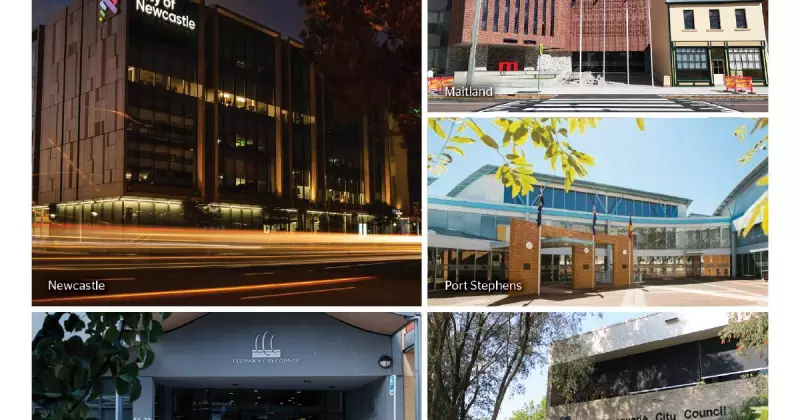
Newcastle and its surrounding urban areas suffer from a unique problem in New South Wales: a lack of a single, unified voice advocating for the entire region. While cities like Tamworth, Bathurst, and Dubbo have one council speaking for them, the Greater Newcastle area is fragmented across five separate local government areas (LGAs).
The Case for a Unified Regional Authority
Columnist Bradley Perrett, writing in January 2026, proposes the creation of a Greater Newcastle Council. This body would represent the combined populations of the Cessnock, Lake Macquarie, Maitland, Newcastle, and Port Stephens council areas. Its primary role would be strategic, long-term planning and identifying spending priorities for the whole urban area, effectively acting as a powerful advocate to drag the state government's attention north from Sydney.
Perrett emphasises that this would not be another layer of bureaucracy. Local councils would retain their existing responsibilities, like managing parks. However, the new council would handle major cross-regional projects. For instance, if a new basketball stadium was needed for Greater Newcastle, this body would find the best site anywhere in the region, not just within Newcastle's LGA, and recommend it to the state.

Why LGA Boundaries Hinder Progress
A core argument is that LGA boundaries should be irrelevant for major planning decisions. The future of Mayfield's port-side industrial land affects the entire lower Hunter. Housing zoning decisions in Thornton impact families searching for homes in Cardiff. This is especially true for transport infrastructure.
The formerly proposed Wallsend-Mayfield arterial road, for example, sits entirely within the Newcastle LGA. Yet, most of its users would likely come from Lake Macquarie and Port Stephens. Similarly, a bypass south of East Maitland would benefit local residents but see most traffic from Newcastle and Lake Macquarie LGAs. A regional planning body would recognise and fight for these assets based on their utility to the whole population.
Learning from History and Facing Opposition
This is not a new idea. A precursor, the Northumberland County Council, existed from 1948 to 1964. Established by a state Labor government, it created a detailed, long-term plan for the lower Hunter. Perrett suggests its abolition, and the subsequent centralisation of planning in Sydney, is a key reason the state government now "attends nicely to Sydney but hardly at all to Newcastle."
Opposition to a new Greater Newcastle Council would likely come from local councils reluctant to lose their planning departments and from a state government comfortable in its current neglect of the region. Perrett also dismisses the idea of using local MPs, who he argues would simply toe their party's line, as evidenced by local Labor MPs defending the state's move to sell off land reserved for the Wallsend-Mayfield road.
The proposed council's membership could reflect LGA populations, with three councillors each from Lake Macquarie and Newcastle, and two each from Cessnock, Maitland, and Port Stephens. Assigned to focus on the metropolitan area, Perrett believes councillors would rise above parochial interests, perhaps uniting behind priorities like restoring rail services to Cessnock.
Ultimately, Perrett warns that without a strong, unified planning voice, the Hunter risks being merged into the Central Coast by default. A Greater Newcastle Council is presented as the essential mechanism to reclaim control over the region's own future and ensure it receives the attention and investment it deserves.