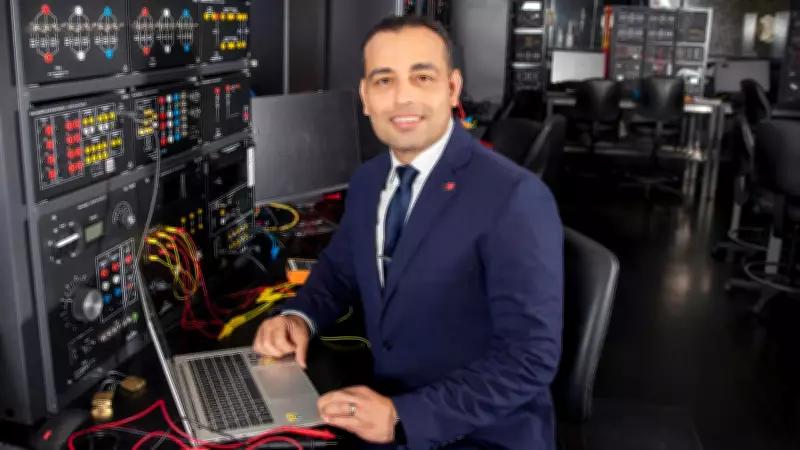
A Swinburne University researcher has developed a solution to Australia’s energy crisis by creating neighbourhood power networks that operate independently from the national grid. Professor Mehdi Seyedmahmoudian’s research focuses on community microgrids and “energy valley” models, allowing local areas to generate, store and exchange renewable energy.
Rethinking the electricity grid
Australia’s electricity grid was originally built for one-directional power flow from large fossil-fuel plants to consumers. However, in just over a decade, the energy landscape has transformed dramatically. Rooftop solar, batteries, electric vehicles and digital technologies have turned households into both consumers and producers of electricity. This shift is essential for cutting emissions, but it also creates challenges for grid reliability and coordination.
Professor Seyedmahmoudian’s work, conducted through the Siemens Swinburne Energy Transition Hub, addresses these challenges by rethinking energy generation, sharing and management at the local level. Instead of relying on distant power plants and constrained transmission lines, energy can be balanced locally, reducing pressure on the network and improving resilience during peak demand and grid disturbances.

Australia’s unique position
Australia has one of the highest rates of rooftop solar adoption globally, with batteries and electric vehicles rapidly increasing. The physical infrastructure for a decentralised energy system already exists, but intelligent coordination is needed. Professor Seyedmahmoudian’s team combines advanced power electronics, artificial intelligence and digital energy platforms to allow buildings, EVs and distributed resources to operate as grid-aware assets. These systems respond to network conditions in real time, supporting voltage stability, reducing congestion and preventing outages.
Next-generation EV charging
The team is also developing next-generation EV charging technologies, including grid-integrated fast chargers and wireless charging systems designed to operate safely on weak distribution networks while supporting the broader power system.
Community-level benefits
At the community level, these technologies enable households to share locally generated solar energy, trade electricity within peer-to-peer markets and participate in coordinated demand-response programs. This not only improves network performance but also gives consumers greater control over their energy use and costs. By shifting towards locally coordinated energy systems, communities can reduce reliance on major network upgrades, lower energy costs and improve resilience during extreme weather events.
From research to reality
Professor Seyedmahmoudian works closely with industry and government to translate these solutions from research into real-world deployment. He has also launched unique industry short courses to train engineers in modern grid and electrification technologies, helping build a skilled workforce for Australia’s energy future.
Australia’s energy transition means that the challenge is no longer simply producing clean energy, but managing it intelligently and reliably. The research led by Professor Seyedmahmoudian shows that the answer lies in rethinking the role of the electricity grid itself, with future systems increasingly managed at the local level. By combining advanced power electronics, artificial intelligence and digital platforms, these systems allow energy to be generated, shared and balanced within communities while still supporting the broader national grid. The result is a network that is more flexible, resilient and capable of adapting to changing demand and weather conditions.
As Australia moves toward a cleaner and more electrified economy, these solutions will play a critical role in keeping the lights on – reliably, sustainably and affordably for communities across the country.