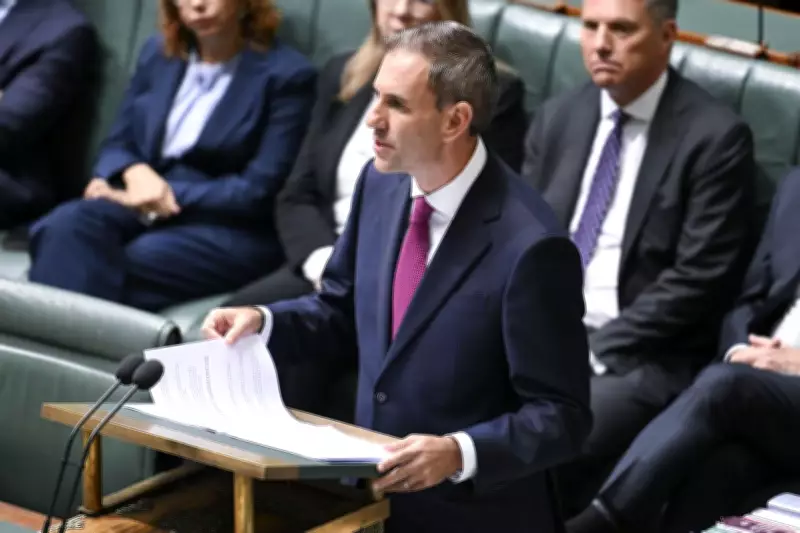
Treasurer Jim Chalmers is facing mounting criticism from economists who have raised alarms about what they describe as $94 billion in hidden borrowing embedded within the federal budget. The revelation has sparked a heated debate about fiscal transparency and the true state of Australia's public finances.
Hidden Borrowing Concerns
Leading economists have identified what they term 'concealed liabilities' totaling approximately $94 billion, which are not immediately apparent in the budget's headline figures. These include off-balance-sheet items, deferred expenditures, and contingent liabilities that could significantly impact the nation's debt trajectory.
Dr. Sarah Thompson, an economist at the University of Melbourne, stated: 'The budget presents a rosy picture, but when you dig deeper, there are substantial future obligations that taxpayers will ultimately bear. This hidden borrowing undermines trust in the government's fiscal management.'

Impact on Fiscal Credibility
The concerns center around several key areas. Infrastructure projects with public-private partnerships often involve future government payments that are not fully accounted for in current budget papers. Additionally, government guarantees on loans and insurance schemes create potential liabilities that could crystallize in times of economic stress.
Analysts argue that the lack of transparency makes it difficult for markets and the public to assess the true sustainability of Australia's fiscal position. 'If these hidden borrowings were included, the deficit would be significantly larger,' noted Mark Johnson, chief economist at a Sydney-based consultancy.
Government Response
In response, Treasurer Chalmers defended the budget, stating that all relevant information is disclosed in accordance with standard accounting practices. 'Our budget is transparent and follows international best practices,' he said. 'The suggestions of hidden borrowing are misleading and do not reflect the comprehensive reporting we provide.'
The Treasurer emphasized that the government remains committed to fiscal responsibility and that the budget includes measures to strengthen the economy and support Australians in need.
Economic Implications
The debate comes at a time when the Australian economy faces headwinds from global uncertainty, persistent inflation, and rising interest rates. The Reserve Bank of Australia has been closely monitoring fiscal developments as it assesses monetary policy settings.
Economists warn that undisclosed liabilities could eventually lead to higher taxes or spending cuts to maintain fiscal sustainability. 'The government needs to be upfront about these costs to allow for informed public debate,' said Dr. Thompson.
The opposition has seized on the issue, calling for a parliamentary inquiry into budget transparency. Shadow Treasurer Jane Smith accused the government of 'hiding the true cost of its spending from Australians.'
Looking Ahead
As the budget moves through parliament, the focus on hidden borrowing is unlikely to dissipate. Independent experts have called for a review of budget reporting standards to ensure all material risks are disclosed.
The controversy highlights the broader challenge of balancing short-term economic stimulus with long-term fiscal prudence. With Australia's debt levels already elevated, the debate over hidden borrowings will remain a key issue in the lead-up to the next election.