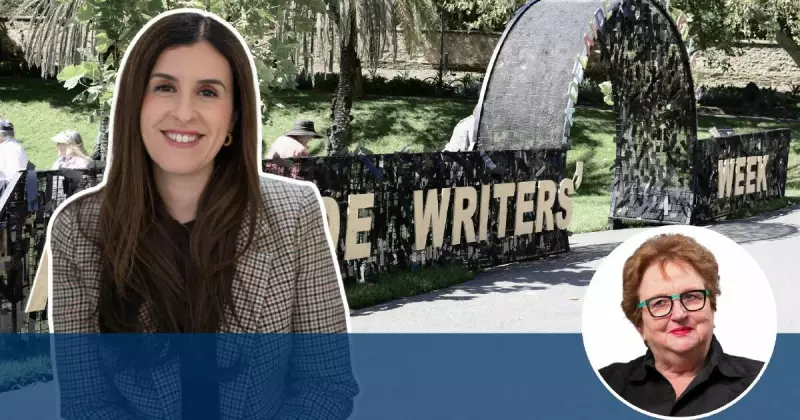
Former Howard government minister and ex-Adelaide Festival board member Amanda Vanstone has delivered a scathing critique of the events leading to the cancellation of the 2026 Adelaide Writers Week, dismissing claims of a free speech infringement as a "con or misunderstanding."
The Core Misunderstanding on Free Speech
In an opinion piece dated January 15, 2026, Vanstone asserts it is "insulting" to suggest Palestinian-Australian writer Randa Abdel-Fattah faced a restriction on free speech. She clarifies that while Abdel-Fattah can legally say whatever she likes, there is no inherent right to demand a taxpayer-funded platform to amplify those views.
"Protestors are keen to talk about their rights, less so the rights of others," Vanstone writes, posing a pointed question about cultural safety for Jewish Australians in the wake of recent trauma. She highlights a perceived hypocrisy, asking how Abdel-Fattah's supporters could demand a Jewish person be uninvited yet object when the same happens to her.

This marks the third consecutive year the festival has been embroiled in controversy over pro-Palestinian or anti-Israel guests. Vanstone questions why writers focusing on other global conflicts or issues, like women's rights in Iran, are not similarly championed.
Inflicting Damage and The Accountability Gap
Vanstone argues that authors who withdrew in solidarity with Abdel-Fattah did not merely offer support but actively chose to "inflict damage" and "exact a price." She contends their protest came at the cost of the loyal public, other participating writers, and festival staff scrambling to manage logistics.
The former senator challenges the notion that arts boards and funding governments should have no oversight. They have a responsibility, she says, for the prudent use of taxpayer money and the long-term standing of publicly funded events. She criticises an "isolated mindset" in some arts circles, quoting one colleague's description of the old Australia Council as "Centrelink for the arts."
Vanstone also takes aim at the left-leaning Australia Institute, which withdrew its funding in protest. She notes the irony of a funded body objecting to a funder having a say, and questions whether the arts community would accept the same influence from mining companies.
Echo Chambers and The True Mirror of Society
Drawing on two decades in politics, Vanstone disputes the claim that the outcry over Abdel-Fattah's invitation represents broad public opinion, calling it evidence of an "echo chamber." She criticises the "unshakeable self-confidence" of arts signatories to an open letter on the issue.
Responding to the idea that "the arts are a mirror to our soul," Vanstone firmly disagrees. That mirror, she argues, does not come from a publicly funded bureaucrat or from anyone who denies cultural safety to a group. Instead, she points to acts of everyday heroism, like that of Bondi lifeguard Jack Doolan during the recent tragedy, as the true reflection of the national soul.
Vanstone concludes by reiterating that while artists have a right to their views, taxpayers are not obliged to fund the amplification of opinions that cause hurt and division, particularly during a period of national grief.