Middle East Conflict Escalates and Spreads to Europe Following US-Israel Air Strikes
The conflict in the Middle East has dramatically escalated and spread into European territories after the United States and Israel launched coordinated air strikes against Iran. The operation, codenamed Operation Epic Fury, resulted in the deaths of Ayatollah Ali Khamenei and several senior Iranian leaders, sending shockwaves across global sectors from shipping and air travel to oil markets.
Global Trade and Travel Disrupted Amid Rising Tensions
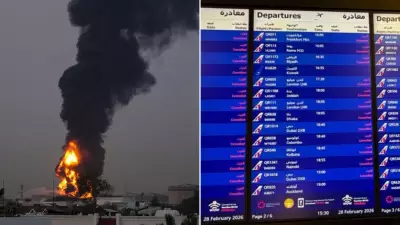
Warnings have been issued about surging energy costs and significant disruptions to business operations in strategic waterways, which serve as vital global trade hubs. The strikes have triggered immediate repercussions, with flight hubs and routes being closed, particularly in the United Arab Emirates, where Dubai is a major stopover for international travellers.
Iran has responded by expanding its missile attacks, with defence systems intercepting rockets in Turkish airspace and an Iranian drone striking a United Kingdom base in Cyprus, located in western Europe. This escalation marks a dangerous spread of the conflict beyond the Middle East, raising alarms about further instability.

Australians Urged to Halt Europe Travel Plans
Australians have been strongly advised to reconsider or postpone their travel plans to Europe for at least the next five months due to the ongoing conflict. Professor Ron Bartsch, Chairman of Avlaw Consulting and former head of Safety and Regulation at Qantas, highlighted that Australia is particularly vulnerable to these disruptions because it heavily relies on Middle Eastern routes to access Europe.
"What's going to happen now is that obviously Qantas and Virgin's sharing arrangements will try to deviate more towards other alternate routes through Bangkok, Singapore, Hong Kong, and the Philippines in order to reach Europe," Bartsch explained to the Herald Sun. "The longer this military operation goes on means airfares will increase accordingly."
He further noted that aviation fuel costs are expected to rise, and flight availability will be restricted due to supply and demand pressures. This situation is projected to have a knock-on effect on Australian travellers for at least the next four to five months, impacting both affordability and accessibility of international travel.
As the conflict continues to unfold, global observers are closely monitoring developments, with concerns mounting over broader economic and security implications. Stay informed with the latest updates as this situation evolves.