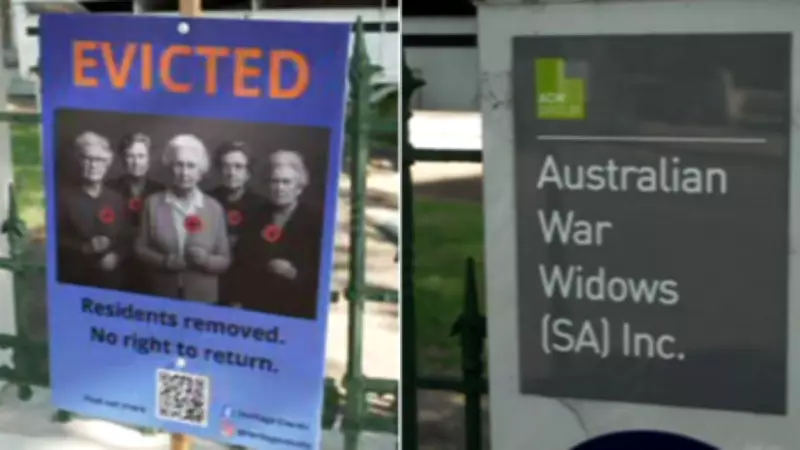
War Widows' Legacy Erased as Adelaide's Historic Rose Park Site Makes Way for Luxury Tower
War widows in Adelaide's eastern suburbs are expressing deep distress that their cherished history is being systematically erased, as their long-standing homes are slated for demolition to accommodate a new luxury retirement tower. For more than six decades, the Rose Park site in South Australia has provided affordable housing and a tightly-knit community for women who lost their partners in war, but families now fear this legacy will vanish entirely when demolition commences in the coming months.
A Sanctuary of Support and Friendship
Kath Harrison was one of the many women who built their lives at Rose Park, finding solace and strength in the community. "The friendship that I've gained and the things that I've done and the people that I've met through the guild have made a life for me," she told 7NEWS in 2012 before her passing. She firmly believed the War Widows Guild was established to empower women to stand independently, not to leave them reliant on charity. Her family asserts that the current situation fundamentally contradicts the organization's original purpose.
Her daughter, Dianne Vowles, emphasizes that the site profoundly shaped her mother's entire adult life. "It meant the world to her because she lived here for so long, and she lived here with people she had so much in common with. She loved it," she said. Dianne describes how the women shared their grief and celebrated milestones together, forming unbreakable bonds rooted in the premature loss of their husbands. She views the site as a sanctuary—a place her mother considered almost sacred due to the shared hardships endured.

"She'd be horrified—she really would. It's very sad," Dianne added, noting that her mother always envisioned the site remaining a home for future war widows and veterans lacking family support.
Generational Bonds and Outrage
Kath's granddaughter, Carly Vowles, grew up immersed in this supportive community. "When you came here you didn't just have the grandmother you were staying with—you had a dozen grandmas who would come out," she recalled. Carly believes the redevelopment demonstrates a blatant lack of respect for the women who sacrificed so much. "For everything they sacrificed, and their families sacrificed, they should be given the respect they deserve—and they're not getting that," she stated.
Carly expresses that her grandmother "would be spitting chips—and that's putting it politely," and imagines all former residents would feel "sad and hurt" witnessing the transformation. She advocates for restoration rather than replacement: "Restore the buildings, keep up the maintenance—let the war widows live out their lives here. Let future war widows live here."
Heritage Protection Amended for Development
The land was gifted to aged-care provider ACH Group two decades ago. The organization now plans a $120 million development featuring 72 premium retirement apartments, a stark contrast to the low-cost accommodation historically offered to war widows. Jean Rouse Villa, named after the guild's first paid-up member, had previously been heritage protected. However, this protection was amended in May last year, shortly before the development application was submitted.
Local resident Rebecca Gigney voiced community concerns, stating, "We feel that the important social and historical significance of this site should be protected." The impending demolition has ignited broader discussions about preserving social heritage versus modern development priorities in urban areas.