Ukrainian skeleton athlete Vladyslav Heraskevych has been excluded from the Milan Cortina Games following his refusal to comply with a last-minute request from the International Olympic Committee to use an alternative helmet. The helmet in question was customised to honour more than 20 Ukrainian athletes and coaches who have lost their lives during the ongoing war with Russia, a conflict that began shortly after the conclusion of the 2022 Beijing Winter Olympics.
Emotional Confrontation at the Track
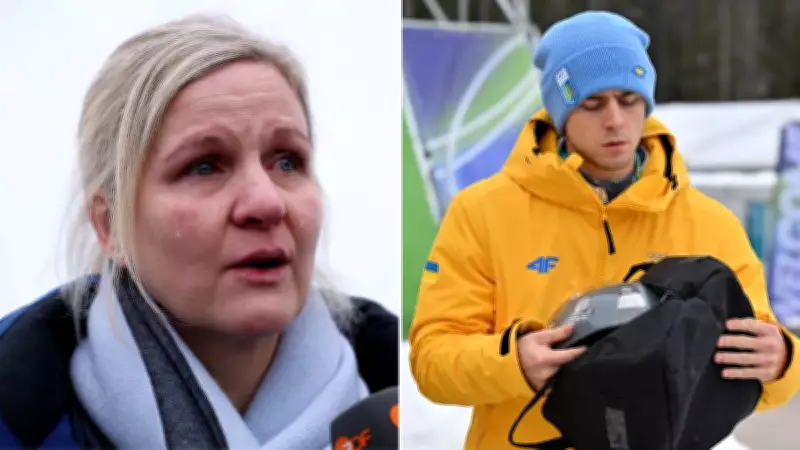
On Thursday morning, approximately 75 minutes before the scheduled start of the men's skeleton race, IOC President Kirsty Coventry awaited Heraskevych at the top of the track around 8:15am. The two engaged in a brief private discussion in a secluded area, but Coventry was unable to persuade the athlete to change his stance on the helmet. Following the meeting, Coventry addressed reporters with visible emotion, tears streaming down her face as she spoke.
IOC's Statement and Rationale
The International Olympic Committee issued a formal statement expressing regret over the decision, emphasising that it was made after multiple exchanges and in-person meetings with Heraskevych, including the final discussion with President Coventry. The IOC clarified that the core issue was not the message of remembrance itself, but rather the location where Heraskevych intended to express it, citing a rule prohibiting political statements on the Olympic field of play.

The statement read: "Despite multiple exchanges and in-person meetings between the IOC and Mr Heraskevych, the last one this morning with IOC President Kirsty Coventry, he did not consider any form of compromise. The IOC was very keen for Mr Heraskevych to compete. This is why the IOC sat down with him to look for the most respectful way to address his desire to remember his fellow athletes who have lost their lives following Russia’s invasion of Ukraine. The essence of this case is not about the message, it is about where he wanted to express it."
Athlete's Response and Appeal
Heraskevych, who arrived at the Olympics with the customised helmet depicting the faces of fallen Ukrainian athletes, defended his position by asserting that the helmet did not violate any IOC rules. He wore it during training sessions on Tuesday and Wednesday, fully aware that the IOC could ultimately prevent him from participating in the competition. After receiving the official decision from the International Bobsled and Skeleton Federation, he briefly addressed reporters, describing his feelings as "emptiness" and announcing his intention to appeal to the Court of Arbitration for Sport.
Historical Context and Support
This incident contrasts with a previous situation at the 2022 Beijing Olympics, where Heraskevych displayed a "No war in Ukraine" sign after his final run. On that occasion, the IOC sided with him, interpreting his action as a call for peace and not a violation of the Olympic charter. The current dispute has garnered support from other teams, with Latvia coach Ivo Steinbergs confirming that his team submitted a protest to the IBSF, requesting Heraskevych's reinstatement.
Impact on Competition
The men's skeleton event proceeded with its first two runs on Thursday, followed by the final two runs scheduled for Friday night. Heraskevych, considered a legitimate medal hopeful, was forced to withdraw, leaving a notable absence in the field. The IOC reiterated its desire for his participation but maintained that the rules regarding political expressions in competition settings must be upheld.
Coventry further elaborated to reporters, stating, "It's a message of memory and no one is disagreeing with that," highlighting the delicate balance between personal tributes and Olympic regulations. The situation underscores the ongoing tensions between athletic expression and institutional policies in international sports, particularly in contexts involving geopolitical conflicts.