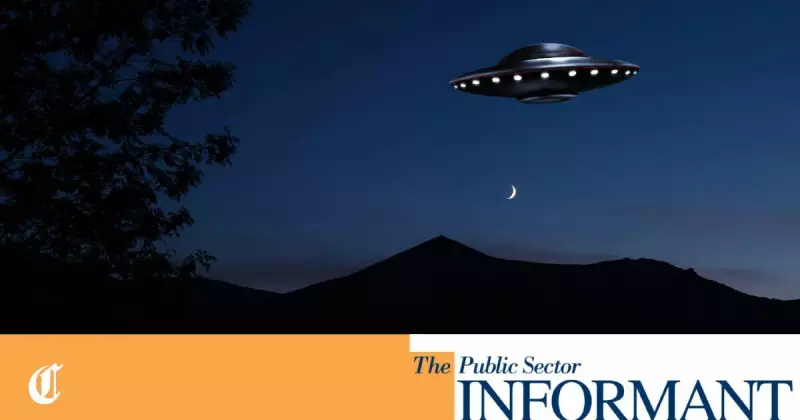
Public Service Evolution: From UFOs to Remote Work Realities
The Australian public service is undergoing a significant transformation, marked by the abandonment of extraterrestrial investigations and the widespread adoption of flexible work arrangements. Defence has quietly confirmed that it has not looked into a UFO report since 1996, effectively closing the book on official alien inquiries. This revelation came via a freedom of information response released on Christmas Eve, reiterating a decades-old stance that there is no compelling reason to allocate resources to such matters.
Defence Draws a Clear Line on UFOs
Despite this firm position, the department admitted to attending briefings on Unidentified Aerial Phenomena (UAPs). An Australian diplomat participated in a Five Eyes forum on aliens in Washington last year, though they reportedly skipped a specific US briefing. For ordinary citizens, this means that unless a mysterious glowing orb poses a direct risk to aviation safety, it is best to simply go about your day. The era of government-led UFO hunting appears to be definitively over.
Spellcheck Slip-Ups and Compliance Concerns
In other public service news, a minor but notable error surfaced in early drafts of hate speech legislation. The term Antisemitism was mistakenly spelt as Antisemitsm, though this was quickly corrected before the bill reached Parliament. Public servants worked diligently over the festive break to rectify such issues, demonstrating their commitment even as many Australians enjoyed holidays.

More seriously, the National Anti-Corruption Commission found itself in hot water after committing a significant non-compliance with finance law. The agency spent $30 million on new offices in Canberra, Brisbane, and Perth without proper authorisation. While it assured Finance Minister Katy Gallagher that the fraud risk was low, this incident raises questions about accountability within bodies designed to enforce rules.
The Rise of Remote Work in Canberra
The most striking shift in the public service is the move towards flexible work arrangements. According to the 2025 State of the Service report, 68 per cent of public servants now work from home at least some of the time. This trend, coupled with ongoing construction in Canberra, has transformed the city into a near ghost town during weekdays. The traditional five-day commute is becoming an endangered species.
However, this hybrid work model is not uniformly applied across all departments. While policy agencies enjoy the flexibility, staff in Defence and Services Australia continue to report to physical offices. More than a third of Defence employees and over half of Services Australia staff do not work from home at all, often due to the practical demands of their roles, such as driving tanks or staffing service counters.
Implications and Future Trends
Services Australia has invested in portable satellite technology to support remote work, particularly for critical service delivery in remote areas. This innovation hints at a future where bureaucratic functions could be performed from virtually anywhere, perhaps even speeding up processes like Medicare claim approvals.
Additionally, the post-COVID normalisation of sick leave is evident, with the average public servant now taking 13.8 days of personal leave annually. This reflects a broader cultural shift towards prioritising wellbeing, even if it means more time spent recovering on the couch rather than working from it.
As Australia Day approaches, public servants face the perennial dilemma of whether to work or take the day off. Regardless of their choice, the landscape of the Australian public service is clearly evolving, blending traditional responsibilities with modern work practices and leaving UFOs firmly in the past.