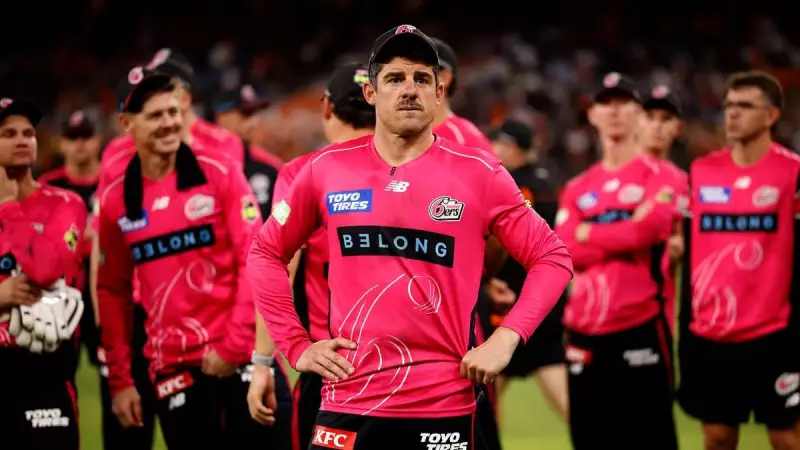
Sydney Sixers coach Greg Shipperd has launched a pointed critique of the Big Bash League finals scheduling, arguing the packed travel demands left his team with no opportunity to train before their crushing grand final defeat to the Perth Scorchers.
A Demanding Finals Itinerary
The Scorchers secured their sixth BBL championship with a dominant six-wicket victory over the Sixers on Sunday, chasing down a modest target of 133 with 15 balls remaining. The match unfolded before a massive crowd of 55,018 spectators at Perth's Optus Stadium.
However, the Sixers' path to the decider was marred by an exhausting travel schedule. In just eight days, the team was required to fly from Sydney to Brisbane, then to Perth, back to Sydney, and finally back to Perth again. This gruelling itinerary left little room for preparation or recovery.

No Time for Preparation
"It wasn't ideal," Shipperd stated bluntly when discussing the finals travel. "Some of the scheduling was not what we were looking for. You don't get a chance to train the day before the game, which I would have thought not many other sports are letting that happen at this elite level."
The coach revealed that the Sixers had previously provided feedback to Cricket Australia about scheduling concerns earlier in the season, questioning whether other teams had been similarly proactive. "I don't know whether other teams are lazy in that respect or we were thinking that we were going to be playing finals, and so we were worrying about that sort of thing," he added.
The Impact on Performance
The Sixers certainly appeared off their game during the final. After being bowled out for a below-par 132, they watched helplessly as the Scorchers raced to 0-80 within the first nine overs, effectively sealing the match early.
Captain Moises Henriques was so concerned about the team's preparation that he opted to skip a planned joint press conference with Scorchers skipper Ashton Turner on the Saturday afternoon before the match, highlighting the intensity of the lead-up.
Missed Opportunities for Improvement
Shipperd suggested one possible solution could have been to schedule the grand final on the Monday public holiday. "If it was a holiday, yes, we could have played on Monday and given our team that sort of break to freshen up going into the game," he explained, though he was quick to add that this was "not a major excuse for us in the context of the season."
The coach also raised questions about the umpiring decisions during the Scorchers' innings, particularly when rain began to intensify during the fourth over. "We thought that there was an opportunity to come off," Shipperd noted. "The umpires, I think, may have set a benchmark down in Hobart where they played through blinding rain. They probably played that same card tonight, when there may have been a possibility to come off and just reset."
This comprehensive critique from the Sixers' camp highlights growing concerns about player welfare and competitive fairness in domestic cricket tournaments, sparking important conversations about how elite sporting schedules are managed.