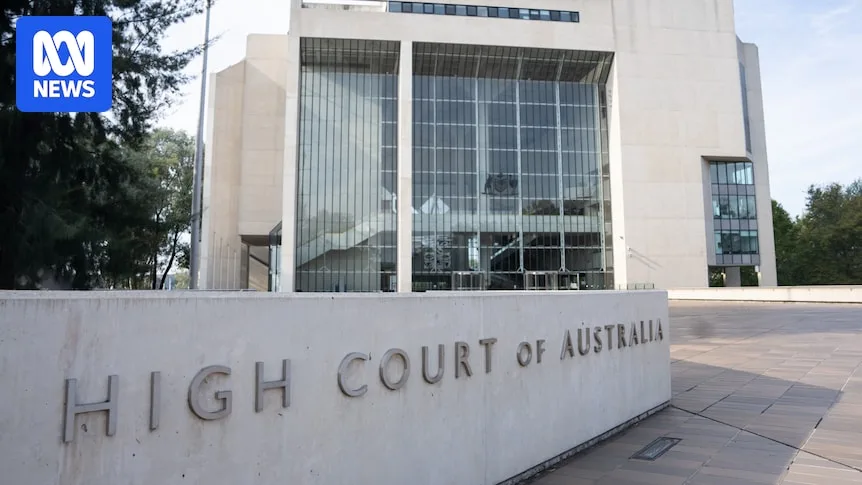
The High Court is hearing arguments today in the case of Michael O'Connell, a Canberra man originally convicted of murder but later found guilty of manslaughter for the death of his partner, Danielle Jordan. O'Connell was initially sentenced to 15 years in prison for murder, but the ACT Court of Appeal reduced the conviction to manslaughter, resulting in a 10-year sentence.
Jordan died from injuries sustained when she fell from O'Connell's car as he attempted to drive off. Evidence presented during the trial showed that O'Connell picked her up from the road and rushed her to hospital, claiming she had fallen down stairs. He provided varying accounts of the incident, including that Jordan fell from the stationary car or jumped onto the back when he wasn't looking. However, a 14-year-old witness testified that Jordan was on the bonnet of the car as O'Connell drove away.
The Court of Appeal accepted that version of events but found the elements of murder could not be sustained, acquitting O'Connell of murder. Weeks later, in an unusual move, the court substituted a manslaughter conviction and imposed a 10-year sentence. O'Connell's lawyers argue that the Court of Appeal lacked the statutory power to make this substitution after acquitting him of murder.

O'Connell's legal team will urge the High Court to either order a new trial on the manslaughter charge or rule that the manslaughter verdict was legally impossible after the acquittal. They contend that under section 297 of the Crimes Act, the Court of Appeal should have determined that neither a retrial nor a manslaughter conviction was available.
Separately, the ACT Director of Public Prosecutions (DPP) has filed a counter appeal, challenging the original Court of Appeal decision that overturned the murder verdict. The DPP argues that the court based its decision on grounds not raised during the trial or appeal, and that the majority disregarded the jury's advantage in assessing evidence regarding O'Connell's state of mind and reckless indifference. The DPP seeks to reinstate the murder charge.
The South Australian DPP has been granted leave to intervene in the case. The High Court's decision will address the scope of appellate courts' powers to substitute verdicts and the validity of the manslaughter conviction.