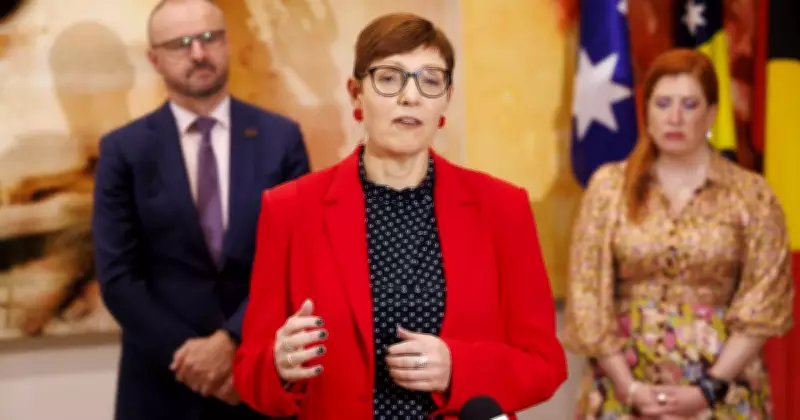
The ACT government has announced it will establish a citizens jury to help shape decisions about who can access voluntary assisted dying (VAD). The jury will focus on capacity assessments, particularly for individuals with dementia or mental illness.
Citizens Jury to Deliberate on VAD Capacity
Minister for Human Rights Tara Cheyne revealed that the citizens jury will be convened in early 2025. It will bring together a representative group of Canberrans to consider the complex ethical and practical questions surrounding capacity assessments for VAD. The jury's recommendations will inform the government's approach to implementing the territory's VAD laws, which were passed earlier this year.
The decision to use a citizens jury reflects the government's commitment to community engagement on sensitive issues. Cheyne stated that the jury would allow for informed deliberation on how to assess decision-making capacity in people with conditions that may affect their cognitive abilities over time.

Focus on Dementia and Mental Illness
The jury will specifically examine capacity assessments for people with dementia, mental illness, or other conditions that could impact their ability to make an informed decision about VAD. This includes considering advance care directives and the role of medical professionals in determining capacity.
Currently, the ACT's VAD law requires that a person must have decision-making capacity at the time of requesting and accessing VAD. However, there are concerns that people with progressive conditions like dementia may lose capacity before they can access the scheme. The citizens jury will explore whether and how advance requests for VAD should be allowed.
The jury will also consider safeguards to prevent coercion or abuse, ensuring that any expansion of VAD access is done safely and ethically.
Community Engagement and Expert Input
The citizens jury will be composed of randomly selected Canberrans who reflect the demographic diversity of the territory. They will hear from experts in medicine, law, ethics, and advocacy, as well as from people with lived experience of dementia, mental illness, and caring for loved ones with these conditions.
The process is designed to be deliberative, with jurors given time to discuss and weigh evidence before arriving at their recommendations. The government has committed to seriously considering the jury's findings, though it will not be bound to implement them.
Cheyne emphasised that the jury is not a substitute for parliamentary decision-making but rather a way to ensure that community values are reflected in the implementation of VAD laws.
Timeline and Next Steps
The citizens jury is expected to begin its work in early 2025, with recommendations due later that year. The government will then consider the jury's report alongside other expert advice and public consultation before making any changes to VAD regulations.
This initiative follows similar deliberative processes in other jurisdictions, including Victoria, which used a citizens jury to help shape its VAD laws. The ACT government hopes that this approach will build public trust and ensure that the territory's VAD scheme is both compassionate and robust.
For more information on the citizens jury and how to apply to be a juror, visit the ACT government's website.