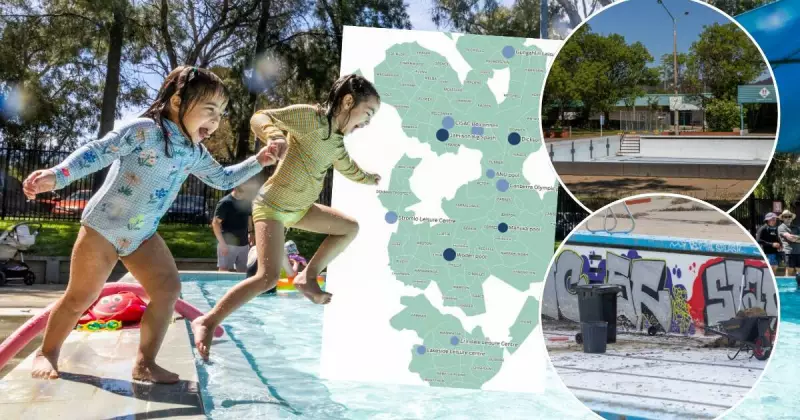
Canberra is on a path that could see its beloved outdoor public swimming pools become a relic of the past, with community advocates and a local journalist sounding the alarm. The warning comes as private developers secure key sites, replacing large, community-focused outdoor facilities with smaller, often indoor, alternatives attached to residential towers.
A Looming Crisis for a Growing City
The ACT government's own projections indicate the territory's population will swell to approximately 800,000 people by 2065. This growth is expected to be split, with around 430,000 residents on the northside and 370,000 on the southside. However, the current trajectory of pool closures and redevelopments suggests this future population will be severely underserved.
If the trend continues, the southside may be left with only the historic 30-metre Manuka Pool to serve hundreds of thousands. On the northside, the Dickson aquatic centre stands as the sole certain outdoor option. Community members are asking: is this anywhere near adequate?

The Disappearing Pools of Canberra
Several iconic pools are already under threat or have been lost. The 50-metre outdoor pool at Phillip remains open for now, but its long-term fate is sealed. Stage one of a Geocon residential redevelopment on the site has been approved. The plan is to replace the large outdoor lap pool with a 25-metre indoor pool, smaller toddler and warm water pools, and a splash pad.
Meanwhile, the Big Splash water park at Macquarie presents a stark image of neglect. Its 50-metre outdoor pool sits empty and vandalised. The lessee aims to redevelop the land with commercial residences, likely a hotel, and include an indoor pool.
Adding to the losses, both the Civic indoor and outdoor pools are scheduled for demolition to make way for the ACT government's new entertainment precinct. This means three major outdoor pools are set to vanish permanently from the city's landscape.
Community Calls for Government Action and Strategy
A public meeting held recently demanded the ACT government collaborate with citizens to formulate a comprehensive, long-term aquatics strategy. Sarah Ransom from the Save Phillip Pool Community pinpointed the core issue, stating that the old model of mixing private and public facilities is no longer viable.
"Land is too valuable. All of our facilities are just going to be bought up by developers, because that's the economic imperative," she said. Critics argue developers are primarily interested in profit from high-density housing, treating aquatic facilities as a mere token inclusion, often inferior to the public assets they replace.
Concerns also extend to the government's regulatory arm, Access Canberra, which is perceived as failing to enforce lease conditions at sites like Big Splash, allowing them to deteriorate. The call is for the government to reclaim and properly manage such sites for public benefit, not private profit.
While the promised $138 million Commonwealth Park aquatic centre is in development, details remain vague. The government has confirmed a 50-metre lap pool will be included, but questions linger about its design, user-friendliness, and whether it will feature amenities like diving boards. There are also doubts about the inclusion of a dive pool due to reported issues with the water table, meaning a valuable training and recreational asset from the Civic pool could be lost forever.
As Canberra endures summer heatwaves, the absence of accessible, affordable outdoor pools becomes acutely felt. Not every household has a private pool, and these public green spaces offer more than just a swim—they provide community hubs, shaded rest areas, and vital relief from the heat. The debate is clear: should Canberra's aquatic future be shaped by developers or by a strategic government plan focused on public good for its growing population?