Significant portions of the Australian Public Service have fallen short of goals to move essential functions back within government, according to a major annual review. The findings, released by the Australian Public Service Commission (APSC), show a mixed performance in fulfilling a key election promise to cut reliance on external labour.
Targets Missed Despite Overall Savings
The APSC's annual update on the Strategic Commissioning Framework, made public on Wednesday, delivered a sobering assessment. It revealed that more than a third (36 per cent) of agencies either only partially met, or completely failed to meet, their targets for the 2024-25 financial year.
These targets were part of a broader Albanese government pledge to slash spending on consultants, contractors, and labour hire by $6.4 billion over four years—a figure later revised up to $6.8 billion in the recent mid-year budget update. The specific goal for 2024-25 was to bring over $527 million worth of core work back in-house.

The breakdown of agency performance was stark: nine agencies did not meet their targets, while 18 only partially met them (achieving between 16% and 61% of their goal). A further 18 substantially met targets (61%-99%), 12 agencies fully met them, and 18 exceeded expectations.
Big Winners and Notable Struggles
Despite the patchy agency performance, the APS-wide result surpassed its goal. Total reported savings on external labour reached $542.3 million, exceeding the target by 2.8 per cent. This success was largely driven by two major departments.
The Department of Defence hit its substantial reduction target of $308 million. The Australian Taxation Office (ATO) performed even better, saving just over $80 million and surpassing its target by $48.5 million.
However, several other departments faced significant challenges. The Department of Health, Disability and Ageing was one of the worst performers, achieving only 16% of its $8.9 million target, saving a mere $1.4 million. The department cited IT upgrades for the new My Aged Care system as a reason for needing temporary specialist expertise.
Services Australia managed only 27.5% of its $9.3 million target, bringing about $2.5 million of work in-house. At the extreme end, eight agencies, including the Australian Institute of Health and Welfare and the Great Barrier Reef Marine Park Authority, reported zero savings.
On the positive side, standout performers included Geoscience Australia, which exceeded its target by six times, and the Department of Social Services, which delivered savings four times its goal.
Government Response and Future Challenges
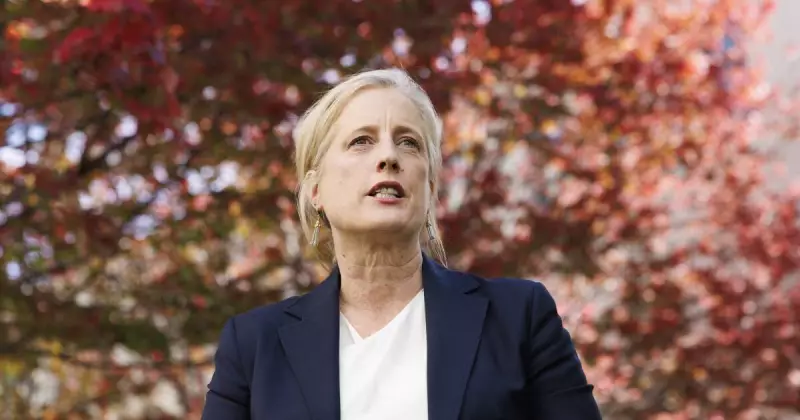
Finance and Public Service Minister Katy Gallagher acknowledged the results, stating the government had delivered on its promise to find savings. "There were big contributions from the ATO and Defence, which probably had the most room to bring some of those services back in house," Senator Gallagher told reporters in Canberra.
She expressed confidence that agencies would meet future challenges, despite a new, slightly lower collective target of $438.9 million set for 2025-26. Agencies have blamed recruitment difficulties, specific technical requirements, and the need for part-time or temporary roles for their failures.
The mid-year update also included plans to significantly expand Australian Government Consulting, the government's in-house consulting service. Its staffing level is set to grow from 30 to 150 by 2029-30.
A separate audit report released simultaneously provided a baseline, showing the external APS workforce cost the bureaucracy $6 billion in 2023-24, representing one in every sixteen dollars of departmental expenses. Contractors made up the largest share, accounting for 66 per cent of this external labour expenditure.
The data underscores the complexity of reshaping the public service's workforce model, revealing both substantial progress and persistent hurdles in the government's push to rebuild internal capability.