Senior federal bureaucrats have confirmed the ACT government never engaged in discussions about incorporating a dive pool into the planned aquatic facility at Commonwealth Park. This revelation came during a Senate estimates committee hearing on Monday night, where both the head of the National Capital Authority and a senior infrastructure department official testified about the lack of dialogue on this specific feature.
No Formal Discussions About Dive Facilities
National Capital Authority chief executive Karen Doran and Department of Infrastructure first assistant secretary Kim Forbes both stated unequivocally that the ACT government had not raised the possibility of a dive pool for the Commonwealth Park site. Ms Forbes, who participates in senior officials group meetings with ACT representatives, noted that the topic simply never came up in their conversations.
"I sit on a senior officials group meeting with the ACT government, and it's not been discussed," Ms Forbes told the committee. Ms Doran added that while the NCA hadn't been consulted about dive facilities, her agency's understanding from site investigations indicated that a five-metre-deep dive pool would not be feasible at the Commonwealth Park location due to geological constraints.

Geological and Heritage Challenges Identified
The rocky terrain and high water table present significant obstacles for constructing deep dive facilities at the Commonwealth Park site. Being situated on the shores of Lake Burley Griffin means that excavation would encounter groundwater at relatively shallow depths, making deep pool construction problematic from both engineering and environmental perspectives.
"It is a fairly rocky area and it's also got a water table, being on the shores of the lake, that you would hit at a certain depth," Ms Doran explained to the committee. She further noted that height considerations for any potential dive tower would also need careful evaluation due to the site's proximity to Parliament House and potential impacts on heritage vistas.
Political Scrutiny and Community Expectations
ACT Independent senator David Pocock expressed skepticism about the thoroughness of site investigations, questioning whether geological challenges were being overstated. He suggested that experienced Canberra contractors could likely manage excavation through rocky terrain if properly engaged.
"I'm sorry, I just doubt how much they've actually looked into this and if digging through rock is the problem, surely we've got some Canberra contractors who can do that," Senator Pocock stated during the hearing. He also challenged assumptions about potential visual impacts on Parliament House vistas, suggesting more detailed analysis might be required.
Funding Limitations and Future Possibilities
The financial framework for the aquatic centre project presents another constraint. The Commonwealth and ACT governments have agreed to split the $138 million cost on a 50/50 basis, with federal contributions capped at this arrangement. While the ACT could theoretically request additional funding for dive facilities, Ms Forbes indicated that the Commonwealth's financial commitment is fixed under current agreements.
"They could come back, but at the moment our contribution is capped and it's on a 50/50 basis," Ms Forbes clarified when questioned about potential future funding requests. This financial structure limits the ACT government's ability to expand project scope without identifying alternative funding sources.
Community Consultation and "Like-for-Like" Expectations
Community groups have expressed concerns about whether the new facility will truly replace all existing amenities from the Canberra Olympic Pool. The Friends of Canberra Olympic Pool organization reported that during consultation sessions, ACT bureaucrats suggested "like for like" facilities would be included in the Commonwealth Park development, with "nothing off the table" regarding potential features.

However, Ms Forbes clarified that federal officials understood "like-for-like" requirements to focus primarily on maintaining a competition-standard 50-metre pool rather than replicating all existing facilities. "The like-for-like requirements that we put in were more around ensuring that there was a 50 metre pool rather than a smaller pool, to make sure it was a competition-level facility," she explained.
Site Selection Process Questioned
The hearing also explored how Commonwealth Park emerged as the preferred location for the aquatic centre. While ACT Chief Minister Andrew Barr recently stated that the NCA approached the territory government with the site suggestion, Ms Doran described the process as more collaborative. She acknowledged difficulty pinpointing exactly who initiated discussions about Commonwealth Park as a potential location.
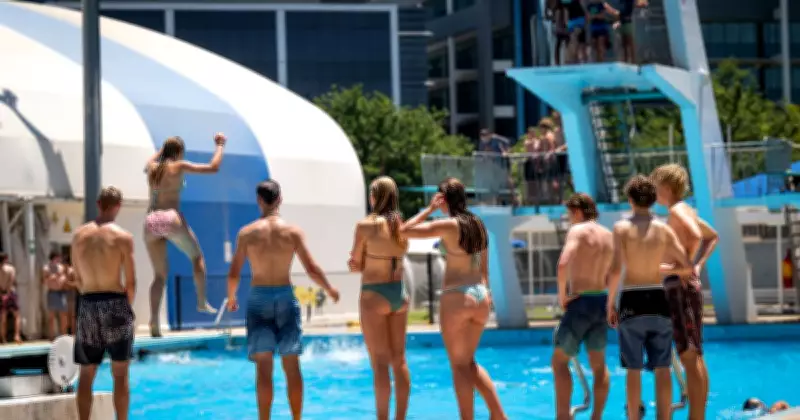
Meanwhile, community advocacy continues through a petition sponsored by Independent Member for Kurrajong Thomas Emerson. The petition calls for amending the aquatic centre tender to include a five-metre-deep dive pool with springboards and platform diving facilities, mirroring current amenities at Canberra Olympic Pool. This petition has already garnered more than 800 signatures, demonstrating significant public interest in preserving dive facilities.
Historical Context and Future Implications
The debate over dive facilities has historical precedent in Canberra, with previous promises of a new dive pool at Stromlo failing to materialize. Senator Pocock expressed concern that the ACT government might similarly defer decisions about dive facilities at Commonwealth Park, describing this as "kicking it down the road."
The NCA maintains that while design decisions ultimately rest with the ACT government, all submissions will be assessed against National Capital Plan requirements. A spokesperson previously emphasized that "the design and facilities provided by the pool are a matter for the ACT government, the National Capital Authority does not have any restrictions on this."
As planning continues for the Commonwealth Park aquatic centre, the absence of formal discussions about dive facilities raises questions about how community expectations will be balanced against geological, heritage, and financial constraints. The project represents a significant investment in Canberra's recreational infrastructure, with decisions about its final configuration likely to generate continued public and political scrutiny.