24 Hours in Sorong: The Gritty Gateway to Raja Ampat's Paradise
On the western tip of New Guinea in Indonesia's Southwest Papua province lies Sorong, a hardscrabble frontier town that serves as a crucial port for the oil and gas industries. For many travellers, this represents the "end of the road" as far as Indonesian infrastructure is concerned, yet it receives a surprisingly substantial flow of visitors.
The Unlikely Transit Hub
An estimated 45,000 foreign and domestic travellers flew from Bali and other Indonesian destinations to Sorong last year alone. However, very few come to actually see this port settlement. Instead, they pass through it as the essential gateway to Raja Ampat, a paradisiacal chain of islands renowned as a scuba diving mecca with the planet's highest marine biodiversity.
Online reviews of Sorong are consistently scathing, with visitors describing it as rundown, pedestrian-unfriendly, and lacking in attractions, appealing architecture, or reliable law and order. One typical review warns: "Sorong is a complete nightmare, with local thugs grabbing your bags and demanding money for porter services."

Finding Fascination in Frontier Towns
Despite these warnings, I find port towns—particularly those across Asia—utterly fascinating. There's something compelling about the random aromas of fish guts and gasoline, the tropical sweat on your skin, the peeling paint, muddy potholes, and the raw energy and bustle of such places. In the world of travel, authentic destinations like Kampot in Cambodia or Point Victoria in Myanmar offer similar gritty appeal.
When I booked my trip to Raja Ampat earlier this year, I deliberately arranged to fly into Sorong a full day earlier to experience this frontier town for myself.
Arrival and Initial Impressions
"Get out of my way!" I found myself yelling at the gang of taxi drivers who formed a defensive scrum outside Sorong's airport arrival hall, poised to pounce on every tourist emerging from the terminal. Fortunately, I had pre-arranged for a driver to collect me, and he was holding a placard with my name. The moment we made eye contact, he whisked me away from the chaotic scene.
After checking into Bamboo House guesthouse—a tidy home with bunk beds and clean communal bathrooms available for around $30 per night—I opened my phone's maps app to search for "things to do" in Sorong. The pickings proved remarkably slim, with most attractions concentrated in a waterfront area approximately 3 kilometres away.
Exploring Sorong's Waterfront
One listed attraction, Mina Pier, featured seriously concerning reviews. One disgruntled tourist wrote: "There was no proper toilet and the water wasn't running," while another warned: "It's dark at night, and there are no lights. Please be careful. I fell into the sea and broke my arm."
Instead, I made tracks to nearby Marina Pier, which the guesthouse manager had recommended as having a large waterfront restaurant with harbour views. The streets of Sorong presented a quite grotty and dishevelled appearance, with everything looking old, tired, and in desperate need of repair. Footpaths were riddled with manholes and chicanes, running parallel to open sewers, while every storefront remained covered in steel grills.
The traffic proved surprisingly sparse for an Indonesian city, with antiquated yellow vans—half their curb weight seemingly composed of rust—offering the only means of public transport.
Sorong's Saving Grace: Its People
Yet Sorong possesses one undeniable saving grace: its people, who are absolute gems and, with the notable exception of the airport taxi drivers, remarkably polite to tourists. Calls of "Hello sir," "Hello Mister," or "Hello Bule" (meaning white man) echoed from nearly everyone I passed.
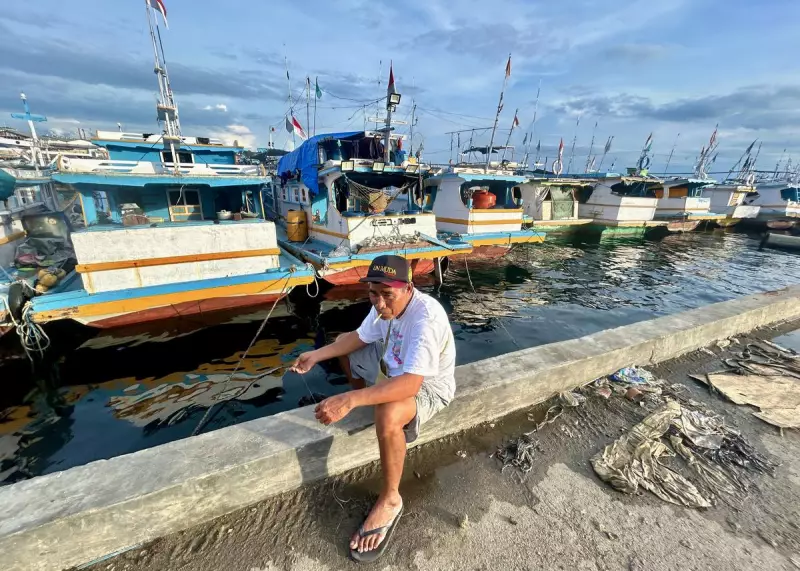
Even the drunks sucking bottles of homebrew or chewing betel nuts—a narcotic many Melanesians enjoy—were full of good cheer. It took me 45 minutes to reach Marina Pier, the closest thing Sorong has to a tourism hub. This interesting little place featured rows of baby-blue fishing boats, ships sounding their horns, and men with hangdog features repairing fishing nets along the pier.

Dining at Marina Star
After snapping several photographs, I backtracked to the Marina Star Restaurant, a double-storey wooden building on the waterfront with a distinct beer garden atmosphere. I plonked myself at a table as the sun began setting behind clouds, painting the sky in a spectacular array of primary colours.
I ordered a bottle of water, which arrived at room temperature—effectively warm. My French fries came accompanied by hot sauce but no salt, while the plate of stir-fried black pepper beef swam in a gooey brown gravy. Marina Star will never win a Michelin star, and Sorong will certainly never receive a tidy town award.
Reassessing Sorong's Reputation
But is Sorong truly as dreadful as the online reviews suggest? In my considered opinion, it's not. The town offers ATMs, convenience stores, restaurants, and clean hotels—essentially all the basic facilities travellers require. And the local people, aside from those aggressive taxi drivers (who display similar disrespect to tourists across much of Asia), are genuinely wonderful.
However, with all the alcohol consumption and betel nut chewing prevalent, Sorong probably isn't the safest place for solitary walks after dark. Would I ever return? Well, I don't really have a choice—my boat from Raja Ampat must dock here when I complete my island journey.