Australian Medical Expert Explains Overseas Treatment for Bondi Attack Heroes
An Australian medical specialist has provided insight into why two men celebrated as heroes of the Bondi terror attack subsequently travelled overseas for treatment of their severe gunshot injuries. Ahmed Al Ahmed and Gefen Bitton were among forty individuals wounded when father and son Sajid and Naveed Akram allegedly opened fire at Archer Park on December 14.
The Heroic Actions and Severe Injuries
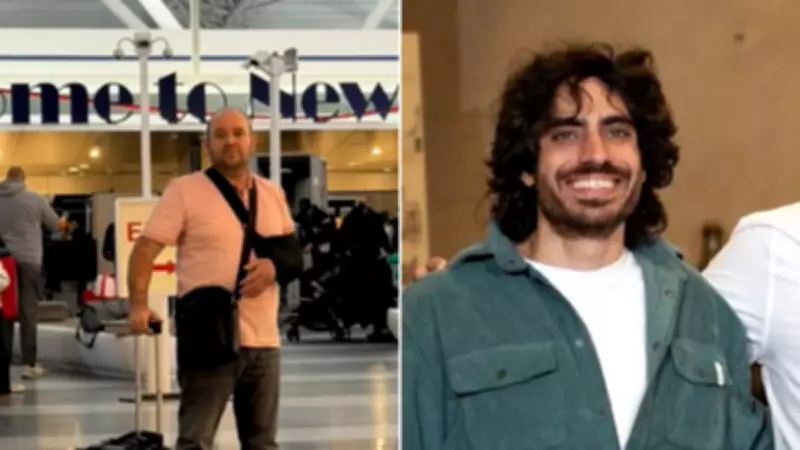
Ahmed Al Ahmed, aged 43, leapt from behind a parked vehicle and wrestled a firearm from Sajid Akram, consciously deciding not to shoot his assailant. Moments after this brave intervention, Al Ahmed was shot five times during the violent confrontation.
Gefen Bitton, a 30-year-old Israeli national, had the opportunity to escape the dangerous situation but instead chose to run toward Al Ahmed to provide assistance. Bitton was allegedly shot three times by Naveed Akram and collapsed at the scene beside the man he was attempting to help.

Complex Recovery Journeys and International Transfers
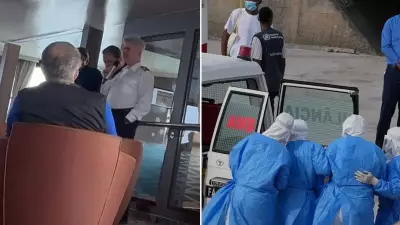
Bitton spent more than three weeks at St Vincent's Hospital, undergoing at least eight surgical procedures while maintained in an induced coma. His family ultimately made the difficult decision to transfer him to Tel Aviv for continued specialist treatment. Reports indicated the family believed he would have improved survival prospects in Israel, where medical professionals possess greater experience managing gun-related injuries due to higher incidence rates.
Al Ahmed was discharged from St George Hospital on December 28 before publicly revealing his need to travel to the United States for what he described as a "second opinion" regarding his ongoing care. "It is a long journey, but a necessary one," he wrote on social media, sharing an image from the aircraft as it departed for New York.
Expert Analysis of Australia's Trauma Medicine Landscape
Dr Derrick Tin, Associate Professor of Critical Care Medicine at the University of Melbourne and a respected disaster medicine specialist, explained that these cases underscore how uncommon gunshot wounds remain within Australia, particularly when contrasted with nations like the United States.
"From personal experience, I saw more gunshot wound injuries in a month in the US, than in a decade working in emergency departments in the UK and Australia," Dr Tin stated.
While Australian medical professionals do encounter such injuries—most frequently in contexts of assault, self-inflicted harm, or accidental discharges—Dr Tin noted that many healthcare providers complete their entire careers without treating a single gunshot victim. "I think that's a reasonable assumption given the relatively low firearms-to-population ratio in Australia," he explained.
Strengths of Australian Emergency Response Systems
Despite variations in injury patterns, Dr Tin emphasised that Australian hospitals maintain strong preparedness for managing serious trauma when it occurs. "Australian emergency response systems, especially in capital cities, are extremely robust," he affirmed, highlighting the effective integration between pre-hospital emergency care, specialised trauma services, and medical retrieval networks.
When questioned about why certain patients injured during violent incidents later seek treatment abroad, Dr Tin clarified that such decisions typically stem from multiple factors and do not indicate deficiencies in Australian medical capabilities.
"Patients are referred overseas for several reasons: access to highly specialised reconstructive or rehabilitation services, continuity of care in a home country, family support, or transfer to centres with niche expertise," he detailed.
Concentration of Trauma Experience and System Adaptation
Dr Tin indicated that major trauma centres across Australia's capital cities generally possess the most extensive experience treating gunshot wounds. "Experience is generally highly concentrated in trauma teams and hospitals that receive the bulk of penetrating trauma injuries," he observed.

In nations with more frequent firearm violence, clinicians develop what specialists term "high-volume pattern recognition" with healthcare systems structured around recurring trauma cases. "Australia's strength is strong trauma governance and surge capability, but less day-to-day exposure," Dr Tin commented.
He explained that while foundational trauma training forms part of all critical care specialties, detailed gunshot wound management is more commonly acquired through:
- Trauma placements and emergency medicine fellowships
- Specialised trauma training programs locally or internationally
- Military or tactical medicine exposure
- Advanced medical simulation exercises
System Reflection After Rare Critical Events
Dr Tin noted that rare but extreme incidents like the Bondi terror attack inevitably prompt healthcare systems to evaluate whether their care protocols remain adequate and appropriately focused on relevant trauma types. "Even the best-prepared systems refine their response after rare, high-impact events," he stated.
"Major trauma incidents prompt the system to reflect, adapt, and strengthen for the next event."
He further emphasised that comprehensive preparedness extends beyond clinical capabilities alone. "It is about resilient systems that can care for both victims and responders—physically and psychologically," Dr Tin concluded, highlighting the holistic approach required for effective trauma response and recovery support.