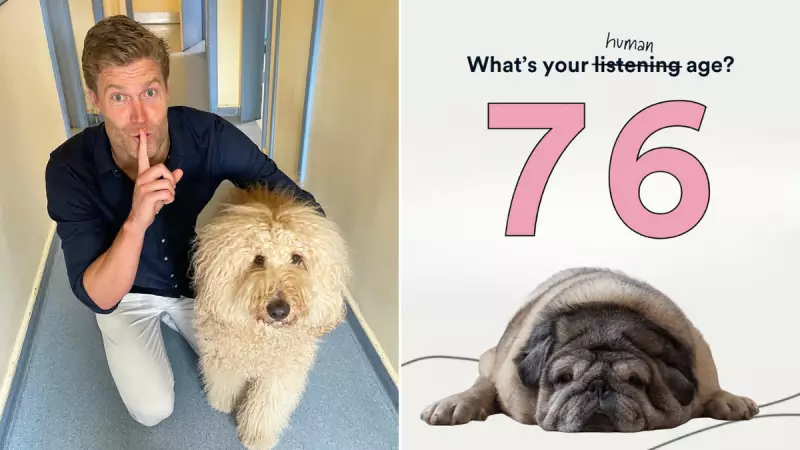
In a revelation that has surprised pet owners across Australia, beloved veterinarian and television personality Dr Chris Brown has officially debunked one of the most persistent myths in pet care: the idea that one human year equals seven dog years.
The End of the Seven-Year Rule
On Friday, Dr Brown took to his Instagram account, Drool By Chris Brown—which also shares its name with his dog treats brand—to set the record straight. "I don't know how to break it to you, but it turns out one human year doesn't really equal seven dog or cat years," he wrote to his followers. He then provided a simple, more accurate guide for calculating a pet's age in human terms.
Sharing a detailed chart, Brown explained that canine development is far more rapid in the early stages. "So much is achieved in the first year of life that by one year of age, they're already the equivalent of a 30-year-old person," he stated. The ageing process remains swift into the second year, with dogs hitting the equivalent of a human's 40th birthday.

"From there on, things slow down a little," Brown added. "They mature (well, almost!) and sort of meander through their middle age." He humorously concluded by asking pet owners how their companions measured up against this new scale, noting that "All that fur hides the wrinkles anyway!"
Pet Owners React to the New Calculation
The new method, which Brown sparked using the popular Spotify 'What's your listening age' trend as a conversation starter, was met with a mix of surprise and relief from fans. Many found comfort in the revised timeline, with one commenter writing, "Omg I love this! It makes me feel better thinking my boys lived a good long life."
This insight is part of Brown's ongoing mission to share expert tips and tricks for caring for four-legged family members through his social media platform.
Top Dog Myths Debunked by the Expert
Beyond the age myth, Dr Chris Brown used the opportunity to clarify several other common misconceptions about canine health and behaviour.
Does a Dry Nose Mean Your Dog Is Sick?
According to Brown, while dehydration and loss of appetite—both signs of illness—can cause a dry nose, they are not the only causes. Factors like sun exposure, low humidity, strong winds, and most commonly, simple ageing, can also reduce moisture. "Yes a well hydrated dog (or cat) will often have a wet nose but a runny nose due to a serious virus can have them licking a nose and causing record levels of wetness," he explained. He emphasised that key signs of illness are actually a lack of interest in food and exercise, along with vomiting or diarrhoea.
Is Drinking Pool Water Actually Dangerous?
Brown provided reassuring news for owners of pool-loving pups. If a pool is well-maintained and chlorine levels are kept low, the water is rarely problematic if ingested. "In truth, compared to the mystery puddles and questionable ponds our best mates love to sample, pool water is practically Perrier," he quipped. He noted that recently treated or heavily shocked pools might cause mild, short-lived stomach upset, but generally, the risk is low.
Are Dogs Really Scared of Vacuum Cleaners?
Addressing a common household stressor, Brown confirmed that vacuum cleaners are indeed a source of anxiety for many dogs, but for specific reasons. "The noises that really get under our pets' skin tend to share a few things in common ... they're loud, unpredictable, occasional and often high-pitched," he said. This category also includes power tools, smoke alarms, thunderstorms, fireworks, and other barking dogs.
To help pets feel calmer, Brown recommends a gradual desensitisation process. This involves exposing the dog to the noise at a very low volume over time, allowing them to slowly adjust. Another effective strategy is to try and associate the frightening sound with something positive, like a treat or playtime.