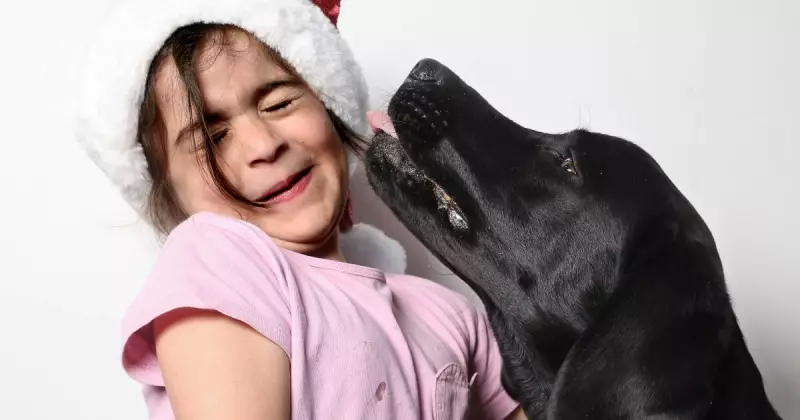
A seven-month-old black Labrador puppy named Zeus is on a special journey in the Hunter region, with the potential to change a life. The pup is being raised and socialised by volunteer carers with the goal of him graduating as a fully-fledged seeing eye dog.
From playful pup to potential guide
Zeus is currently in the care of Jen Bootle and her husband Jeff Doyle in Black Hill. They took him in when he was around 13 weeks old and have watched him grow into a bright and promising candidate. "He's a very good-looking puppy," Ms Bootle said with a laugh. "He's very bright and showing a lot of potential."
The couple, who have had dogs for over two decades, decided to volunteer after seeing an advertisement for Seeing Eye Dogs, which is a program run by Vision Australia. "We have a beautiful place here and no dogs now," Ms Bootle explained. "My husband Jeff and I are community-orientated. We took on Zeus as we thought we'd be helping someone."

The crucial role of puppy carers
Vision Australia breeds more than 200 puppies each year for its Seeing Eye Dogs program. Not all will make the cut to become guide dogs; some may go on to become therapy or support dogs. The organisation is currently seeking volunteers in the Hunter to care for 25 puppies.
Puppy carers like Jen and Jeff look after the dogs until they begin their formal training at between 12 to 15 months of age. Their primary job is socialisation. "The whole time they are with their carers, the focus is on socialisation," said Vision Australia puppy development trainer Jess McKenzie.
Zeus has been exposed to a wide range of environments. "Zeus travels on the train, bus, ferry, light rail and in the car. We get him out as much as we can," Ms Bootle said. "We've been welcomed everywhere we've been in the Hunter - public transport, bowling clubs, horse racing and shopping centres."
Building a foundation for a working life
The training is designed to be gradual and positive. "The key is to know the dog and make the training fun and easy, not overwhelm them," Ms McKenzie said. "Every dog will struggle with different aspects of the training. It's just about going slow and having fun with it, so the dog doesn't know they're really being trained."
Early days focus on basics like toilet training and crate sleeping, before moving on to simple obedience cues. Carers attend group training once a month, which also allows the puppies to socialise with each other.
For Ms Bootle, a highlight has been taking Zeus to her workplace, a childcare centre in Newcastle. "His love of children is amazing. He hears a child's voice and his little ears prick up. He's very good with them," she said.
While the carers know the day will come to say goodbye, they find purpose in the process. "It's a very nice feeling to care for a puppy that will go on to be something so wonderful," Ms Bootle reflected. "They're very special puppies." She admits, however, that letting go will be difficult: "I don't know how we'll go with giving him back. You do become very attached to them."
If Zeus successfully completes the rigorous program, he will go on to provide independence and mobility for an Australian who is blind or has low vision, fulfilling the important mission he is being prepared for.