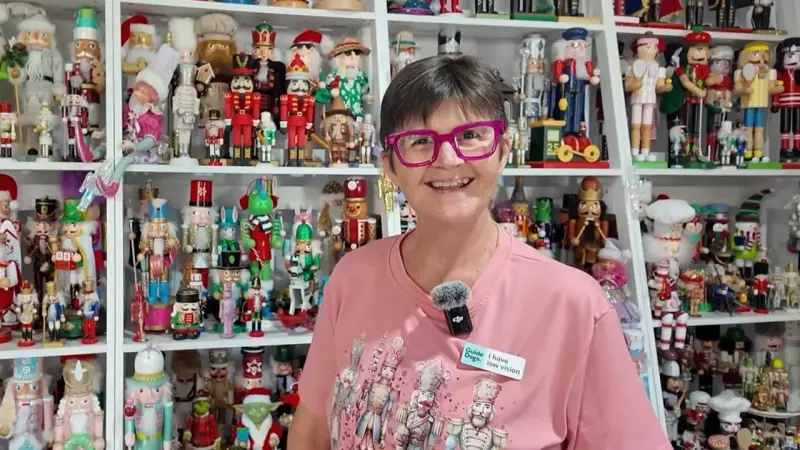
In a quiet Townsville home, a remarkable collection is growing, curated not by sight, but by touch, memory, and an undimmed passion. Despite living with a degenerative eye condition, local woman Bev Keep has turned her love of collecting into a testament to resilience, finding joy and purpose in her ever-expanding assemblages of dolls, teapots, and other cherished items.
A Lifelong Passion Undimmed by Sight
Bev Keep's journey as a collector began decades ago, long before her vision started to fail. What began as a simple hobby evolved into a profound source of comfort and identity. However, several years ago, Bev was diagnosed with macular degeneration, a condition that causes progressive loss of central vision. For many, such a diagnosis might signal the end of activities reliant on visual detail. For Bev, it simply meant adapting.
Her collection is vast and varied, featuring hundreds of pieces. Among her most treasured are porcelain dolls, delicate teapots, and an array of other figurines and memorabilia. Each item is more than an object; it's a story, a memory, or a connection to a particular moment in time. "I might not see them clearly, but I know each one," Bev explains, highlighting how her relationship with the collection has transformed.

She now relies heavily on her sense of touch to interact with her pieces, recognising them by their shape, texture, and weight. Family members and friends also play a crucial role, helping to describe new acquisitions and organise displays so she can still enjoy them. This collaborative approach has kept her passion not only alive but flourishing.
The Emotional Anchor of a Collection
For individuals with deteriorating vision, hobbies can provide a critical anchor to routine, joy, and self-expression. Bev's story powerfully illustrates this. Her home, filled with carefully arranged collections, is a tactile and familiar landscape. The act of collecting gives her a goal, a reason to engage with the community, and a topic of conversation that focuses on ability rather than disability.
Experts in vision impairment often stress the importance of maintaining hobbies, as they contribute significantly to mental well-being and a sense of independence. Bev's determination embodies this principle. She continues to visit markets and shops, often with assistance, using her hands to 'see' potential new treasures. The thrill of the hunt remains, proving that passion can find a way around physical limitations.
Her family notes the positive impact the hobby has on her mood and cognitive engagement. Curating and caring for the collection provides structure and a sense of accomplishment. It's a vibrant, ongoing project that defies the constraints of her condition.
An Inspiration to the Community and Beyond
Bev Keep's story resonates far beyond her living room. It serves as an inspiring example for others facing similar challenges, whether related to vision, mobility, or other age-related changes. It challenges the assumption that disability must mean an end to lifelong passions.
In Townsville and across Australia, support groups for low-vision individuals often share stories like Bev's to encourage members to adapt their favourite activities. Her approach demonstrates practical adaptation: using non-visual senses, leveraging technology like magnifiers or audiobooks about collectables, and most importantly, accepting help from her social circle.
Her collection is no longer just a personal hobby; it has become a symbol of perseverance. It shows that identity and joy are not solely dependent on physical ability. The dolls and teapots are tangible proof that with creativity and support, people can continue to pursue what they love, on their own terms.
As Bev continues to add to her collections, each new item represents a small victory—a declaration that her world remains rich, detailed, and full of discovery, even as her eyesight fades. Her story is a powerful reminder that sometimes, the most important things are felt, not just seen.