A Family's Experience with the Social Media Ban: Quiet Summer, Mixed Results
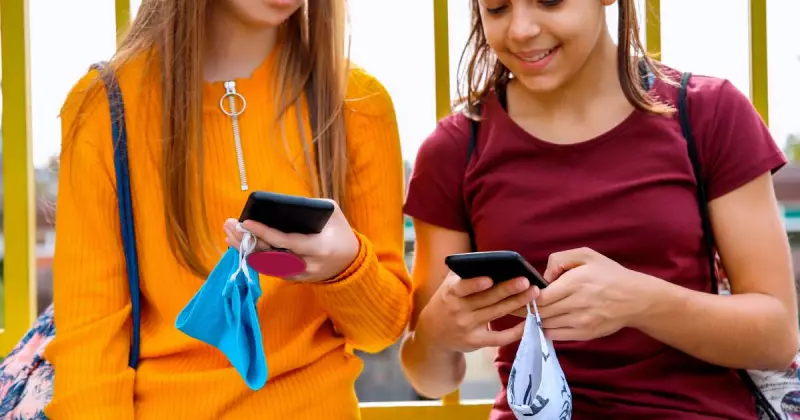
It has been a remarkably quiet summer in our household this year. We have filled our days with all the classic Australian holiday activities that do not involve smartphones—coastal trips, beach outings, pool swims, family gatherings, mall visits, gallery tours, cinema trips, and various summer attractions. Yet, I have noticed a significant shift in my teenager's social life, which appears to have slowed down considerably. While some parents might express concern, I find myself pondering whether this change might actually be beneficial.
The Timing of the Ban and Teenage Social Dynamics
Speaking with a friend who has a daughter of a similar age last week, we reflected on how both our teenagers experienced heightened "friend drama" just weeks before the social media ban was implemented. The timing of them and their peers being removed from these platforms seemed almost serendipitous. Now, with their social lives muted by circumstance, both adolescents appear content with their own company for the time being.
Our conversation then turned to my younger daughter, who is ten years old. She does not have a phone yet, and when she eventually receives one, there will be no social media apps installed. "It will be a clean slate," I explained to my friend. He responded thoughtfully, "I think that was always the idea—too late for our older girls." He is correct. The thirteen-year-olds are already battle-scarred, perhaps reeling from being abruptly disconnected from a digital world they had grown accustomed to inhabiting. Their minds have been softened by what some term 'brain rot,' resulting from endless scrolling through mindless and often distressing content.

Compliance Challenges and Parental Observations
However, it turns out that my teenager has not been entirely removed from the apps. After initially seeing her account shut down, she, like many others, simply created a new account with a falsified age—one she still maintains. I did not object at the time, primarily out of curiosity to observe the outcome. Moreover, it seems this action was more about making a statement than sustained engagement. There is not much activity occurring in the app landscape currently, and the novelty of defying authority—in this case, me—has faded quickly.
I briefly questioned the purpose of the entire ban, yet I cannot deny that the digital environment has transformed. In a media release dated January 16, eSafety Commissioner Julie Inman Grant announced that, approximately a month into the ban, recent data provided "an early indication that major platforms are taking meaningful actions to prevent under-16s from holding accounts." She acknowledged reports of some under-16 accounts remaining active but stated it was too early to determine if platforms had achieved "full compliance."
Commissioner Inman Grant elaborated, "While some kids may find creative ways to stay on social media, it's important to remember that just like other safety laws we have in society, success is measured by reduction in harm and in re-setting cultural norms. Speed limits, for instance, are not a failure because some people speed. Most would agree that roads are safer because of them. Over time, compliance increases, norms settle, and the safety benefits grow."
Global Context and Household Reflections
So, has the ban been effective? One would hope so. The French National Assembly has followed President Emmanuel Macron's urgings and voted in favour of banning social media for children under fifteen. Australia's progress is being closely monitored by nations including Britain, Denmark, Spain, and Greece. The European Parliament has called for the European Union to establish minimum ages for children accessing social media, though it remains the responsibility of member states to enforce age limits.

In my own home, has the ban succeeded? Only to the extent that the apps are quieter, and more parental intervention is required than I initially anticipated. This situation humorously reminds me of the one time I was proven correct about future trends. I did not join Facebook when everyone else did back in 2007, and I was eventually chastised by a friend for this decision. Not only did people frequently forget my birthday—since it did not appear as a notification—but I was also out of the loop regarding everyone's activities.
My stance at the time was viewed as stubborn and misguided. My friends were laughing, connecting, sharing photos, and showcasing their seemingly perfect lives online. I believed then, and still do, that this behaviour was peculiar and reckless. A decade later, I reunited with that same friend at a party in another city. He had a wife and a newborn baby that I was only just learning about. The excitement of this discovery was tenfold compared to if I had followed their virtual journey all along. Interestingly, hardly anyone knew about his wife and baby because he, like most in our age group, had ceased posting years earlier.
See? I wanted to say. The world did not stop turning when everyone stopped looking at you. Many delightful breakfasts were enjoyed, children reached their milestones, and life unfolded in wonderful directions, all without being documented online.
Looking Forward: Hope and Current Realities
Now, many more years later, I hope my daughter experiences a similar sense of goodwill when she reconnects with her friends after six weeks of limited digital interaction. When she logs onto platforms like Snapchat or Instagram, the atmosphere is calm. Her friends and acquaintances are not posting, and neither is she. It is challenging to fear missing out when you are unaware of what is happening.
We are still some distance from the idyllic bike rides, crafting sessions, and park walks that many children nostalgically referenced—as if such activities were impossible before the ban. However, my child is no longer overwhelmed by waves of notifications or horrified by spiralling online dramas. For now, that is sufficient progress.