Australian Researchers Identify Genetic Markers for Childhood Cancer Risk
Australian medical researchers have achieved a significant breakthrough in the ongoing quest to find a cure for childhood cancer. The team has successfully identified crucial alterations in a child's DNA that serve as indicators of a higher likelihood of developing the disease. This groundbreaking discovery is now leading to urgent calls for broader genetic testing protocols across the nation.
Current Guidelines Missing Many Cases
Experts are issuing strong warnings that numerous childhood cancer cases are being entirely overlooked under the existing clinical guidelines. The research suggests that current testing criteria are insufficient to capture all at-risk individuals, potentially delaying critical interventions and treatments for affected families.
Ryder's Personal Journey Highlights Importance
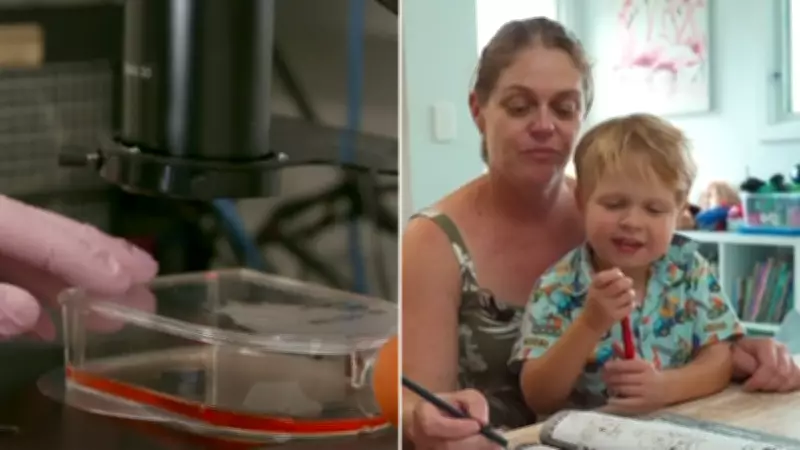
The human impact of this research is powerfully illustrated through the story of Ryder, a young boy who is now thriving after enduring years of intensive treatment. Ryder was diagnosed with an aggressive brain tumour when he was merely ten months old, a devastating blow for his family.

For his mother Kelly, the shocking diagnosis was not entirely unexpected due to a troubling family history of brain tumours. "I always thought that it was going to happen to me," Kelly revealed, explaining that her sister had died from a brain tumour decades earlier when medical technology could not provide answers.
Modern medical advances have now identified a genetic cause in Ryder's specific case, providing clarity that was previously unavailable. "It was quite a shock when we found out that there was the genetic link to it, and unfortunately I'd passed it down to Ryder," Kelly stated, highlighting the emotional complexity of genetic inheritance.
Comprehensive Study Reveals Startling Statistics
A comprehensive new study conducted by the Children's Cancer Institute has meticulously documented the specific DNA changes that occur within children, significantly increasing their cancer risk. Researchers conducted detailed analyses of approximately five hundred young patients diagnosed with various forms of childhood cancer.
The findings revealed that one in every six children studied was born with these identifiable genetic alterations. Dr. Noemi Fuentes-Bolanos of the Children's Cancer Institute explained the mechanism: "It's a change on the DNA that actually makes the gene not work properly. We are learning that we have an answer for their cancer in a bigger proportion than we thought."
Urgent Calls for Expanded Testing Protocols
The research team is now advocating strongly for significantly broader genetic testing programs, arguing that current clinical guidelines fail to cover a substantial number of potential cases. Dr. Fuentes-Bolanos emphasized the gap: "If we initially would have followed all the clinical criteria, the conventional clinical criteria, we would have missed half of them."
This revelation underscores the critical need for updated medical protocols that incorporate these new genetic insights to ensure no child falls through the diagnostic cracks.
Family Perspectives on the Breakthrough
Ryder's father Alan expressed profound hope about the implications of this scientific advancement for families facing similar health challenges. "To be able to pinpoint certain cancers and genetic links in the future will be amazing," he said, envisioning a future where earlier detection and targeted interventions become standard practice.
The research represents a major step forward in understanding the genetic foundations of childhood cancers, potentially paving the way for more effective prevention strategies, earlier diagnoses, and ultimately, better treatment outcomes for young patients across Australia and beyond.