A Revolutionary Blood Test for Brain Cancer Monitoring
A groundbreaking new blood test that reveals how deadly brain tumours respond to treatment has been developed with crucial funding from the Mark Hughes Foundation. This innovative diagnostic tool represents a significant advancement in brain cancer treatment and marks a major milestone in the foundation's twelve-year quest for better therapeutic approaches.
Development Through Newcastle Research Centre
The test was developed through the Mark Hughes Foundation Centre for Brain Cancer Research at the University of Newcastle, where patient samples from the centre's brain cancer biobank were utilised over five years of intensive research. Professor Mike Fay, director of the Newcastle-based centre, explained that the blood test was specifically developed for high-grade glioblastoma.
"That's the nastiest form of brain cancer, which poses the trickiest problems," Professor Fay emphasised. Up to 1,500 Australians are diagnosed with high-grade glioblastoma each year, with less than five percent of patients surviving longer than five years. In the Hunter region specifically, approximately 45 people annually receive this devastating diagnosis.

Current Treatment Limitations
Brain cancer patients typically undergo MRI scans every few months, but these imaging techniques often fail to provide definitive answers about treatment effectiveness. Existing treatments including surgery, chemotherapy and radiation generally prove inadequate for brain cancer cases. The Mark Hughes Foundation, which has raised more than $30 million since its establishment in 2014, has been actively seeking new and improved treatment approaches.
How the Blood Test Works
Professor Fay highlighted that his centre is working on promising new therapeutic approaches, for which this blood test will provide essential monitoring capabilities. "Say you have a new treatment, you try it with a patient, do the blood test again and see if it's looking better or worse," he explained. "If it's not working, then you change treatments. The blood test allows you to do that quickly."
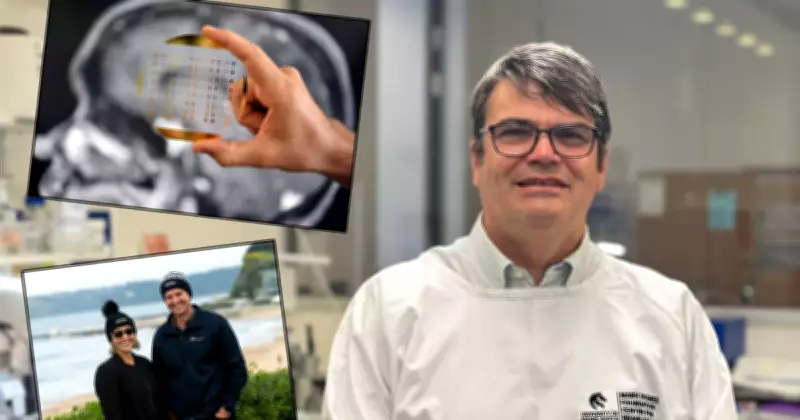
Research detailing the blood test will be published in Science Advances this Saturday. The diagnostic device was created by the University of Queensland's institute for bioengineering and nanotechnology, featuring what researchers call a phenotype analyzer chip that has effectively "opened a window to the brain."
Technical Innovation and Potential
The device reads tiny biological particles in a patient's bloodstream to obtain fast and accurate information on glioblastoma. Dr Richard Lobb from the institute noted that glioblastoma represents the most common form of brain cancer in Australia, proving particularly deadly due to its delicate location, aggressive growth patterns and limitations in accurate therapeutic monitoring.
"There has been very little success so far in clinical trials for new and experimental glioblastoma treatments," Dr Lobb acknowledged.
Dr Zhen Zhang, also from the institute, explained that the chip operates by "examining small samples of blood and capturing messenger cells known as extracellular vesicles." These cells originate directly from glioblastoma tumour tissue. "These particles cross the blood-brain barrier with information on the disease. With our hypersensitive device we can pick them up and interrogate them," Dr Zhang stated. "It's a completely new and non-invasive way of getting information on the brain."
Clinical Implications and Accessibility
Professor Fay expressed particular excitement about the technology's capabilities: "What's particularly exciting here is we're getting a signal coming from the brain, which we can pick up in half a millilitre of blood. It's a signal from the cancer about whether it's getting worse or better." He likened the process to finding needles in a haystack, noting that "with this chip, we can pull all the needles out of the haystack and analyse them in great detail."

The chip technology is described as quite simple and scalable once manufactured, with potential for relatively inexpensive development. Researchers aim to utilise the blood test on a large number of patients in upcoming clinical trials.
Benefits for Regional Patients
This innovation holds special significance for regional patients who typically must travel to metropolitan areas for advanced medical treatment. Professor Fay compared the blood test's potential impact to that of the PSA test for prostate cancer: "Once that was developed, there was a much better window into what was happening with prostate cancer treatment. A whole lot of prostate treatments were massively helped by having that blood test available."
The development represents a significant step forward in brain cancer management, offering hope for more responsive treatment approaches and improved outcomes for patients facing this challenging diagnosis across Australia.