Ever pondered the physical effects of exercising thousands of metres above sea level, where oxygen levels drop dramatically and altitude challenges soar? You no longer need to embark on a mountain trek to experience it firsthand.
Simulating High-Altitude Conditions in Wollongong
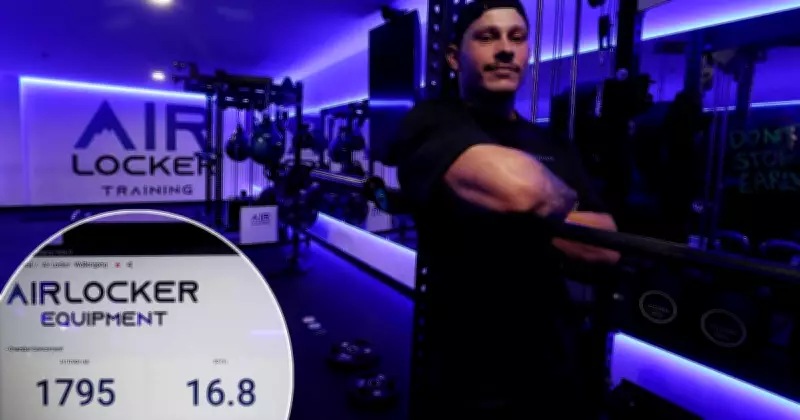
A gym located in the heart of Wollongong provides an accurate simulation of this high-altitude experience. Known as Air Locker, this facility offers a unique environment that mimics training at elevations like 3500 metres above sea level.
Managed by former Air Force communications and electronics technician Bailey Helbig, Air Locker Wollongong features a fully sealed room where oxygen levels are significantly reduced using specialised compression technology.

"Once the air undergoes compression, the oxygen and nitrogen components that constitute most of our atmosphere begin to separate," Helbig explained. "This process allows us to supplement excess nitrogen, thereby decreasing oxygen concentration to approximately 10 per cent, compared to the standard 21 per cent we breathe at sea level."
"When exercising within this environment, we deliberately reduce oxygen availability to challenge your respiratory system more intensely. This approach yields numerous physiological benefits for the body."
Physiological Impact on the Human Body
The most noticeable change occurs in blood oxygen saturation levels, which typically decrease during training sessions. The facility utilises portable pulse oximeters to monitor participants' SpO2 (blood oxygen saturation) through finger readings, employing the same medical-grade devices used by healthcare professionals.
"In normal conditions outdoors, your respiratory system can replenish oxygen faster than you can consume it," Helbig noted. "Within our controlled environment, you can deplete oxygen faster than your body can restore it."
"We aim to maintain saturation around 90 per cent or lower, compared to the typical 96 per cent or higher experienced outside. This controlled stress prompts the body to adapt and deliver the sought-after benefits associated with altitude training."
Who Can Benefit from This Training Approach?
Essentially, individuals of all ages, fitness backgrounds, and experience levels can gain advantages from altitude training. Helbig emphasised that a significant portion of their clientele belongs to the elderly demographic.
"There's solid reasoning behind this demographic preference," he clarified. "You don't require the same physical exertion to achieve comparable results. Your body works more intensively internally when training under reduced oxygen conditions."
"While you cannot push as vigorously, you don't need to lift as heavy or train as intensely to impose similar physiological stress. Additionally, you'll typically burn more calories during these sessions."
"For older clients or those with higher injury risks, this represents a significant advantage."
The gym also attracts numerous members preparing for high-altitude adventures, including treks to Machu Picchu, Everest Base Camp, or Mount Kosciuszko.
"We've welcomed various individuals who complete six-month or eight-week training blocks leading up to their expeditions," Helbig shared. "However, our doors remain open to everyone interested."
"Ultimately, altitude training presents no drawbacks, and participants often observe measurable improvements after just two weeks of consistent workouts."
"Any ordinary person could walk in and successfully train here," he affirmed. "For endurance sports enthusiasts like runners and cyclists, the benefits are undoubtedly substantial."
"We instruct clients in proper breathing techniques that not only help manage stress and sympathetic nervous system responses during training but also prove beneficial in everyday situations."
"As your body becomes more efficient at utilising limited oxygen indoors, it naturally improves its oxygen efficiency outdoors as well."

From Military Service to Fitness Entrepreneurship
Helbig dedicated four-and-a-half years to military service before transitioning fully to the fitness industry in 2023. He joined the Air Force shortly after completing high school as a communications and electronics technician, simultaneously assuming secondary responsibilities as a unit physical training instructor, leading sport-specific, strength, conditioning, and cardiovascular sessions.
"Fitness has been a lifelong passion since my youth," Helbig reflected. "I've always maintained a strong dedication to gym training."
"This interest naturally evolved into a stepping stone toward pursuing opportunities beyond military life. Frequent relocations made maintaining consistent commitments challenging, so this venture represented my pathway out of the military and into new professional territory."
While training at the Newcastle Air Locker facility, Helbig initiated plans to establish his own gym. He devoted spare moments during work hours to ensure smooth progress toward this goal.
"I considered it an exceptional concept," he remarked about the Newcastle gym. "I thoroughly enjoyed training there, formed meaningful friendships, and experienced a wonderful community atmosphere. I recognised tremendous potential in this approach."
"The journey has certainly been eventful, but we've cultivated an equally strong community here in Wollongong."
Current Operations and Membership Structure
The gym currently maintains 140 active members, with peak periods accommodating up to 190 participants. Classes operate during morning and afternoon sessions, scheduled around conventional nine-to-five working hours, and follow a coach-driven format where members simply arrive, complete their workout, and depart.
"We allocate stations to each participant, thoroughly explain workout mechanics, demonstrate exercises, and provide one or two coaches to guide clients throughout the session," Helbig described.
"The approach remains hands-off—you don't need to overthink your routine. We demonstrate what to do, and television screens display workouts and exercises in sequential order."
"It's essentially about arriving, executing your workout efficiently, and leaving promptly."
Pricing varies based on membership type, ranging from contracted agreements with minimum terms to flexible open contracts. The most expensive option involves a non-contracted membership at $60 weekly for unlimited classes, while the most economical choice offers three weekly classes for $45.