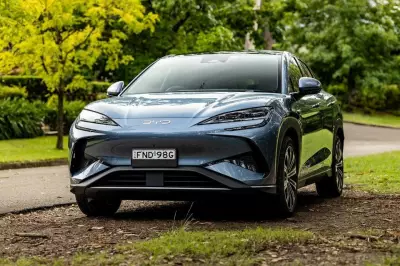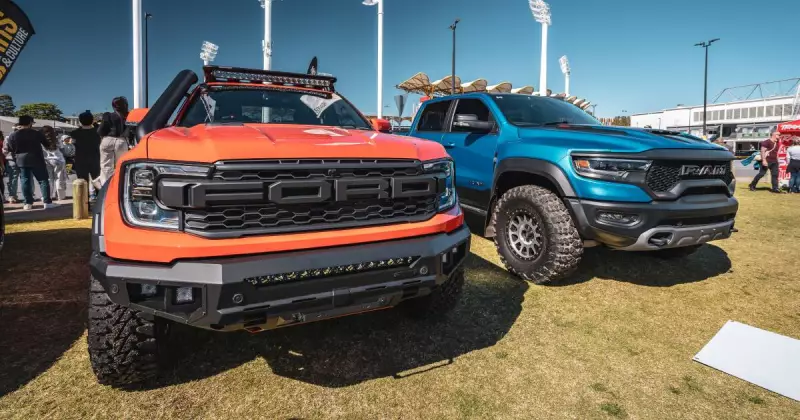
Australian motorists have witnessed a dramatic shift on their roads over the past two decades: a surge in the size of the average vehicle. This trend, sometimes called car 'mobesity', sees modern SUVs and utes dwarfing their counterparts from ten or twenty years ago.
The Alarming Statistics Behind Bigger Vehicles
This shift coincides with a grim milestone: Australia is heading for a fifth consecutive year of rising road deaths, with pedestrian fatalities potentially reaching their worst level in nearly two decades. While it's known that larger vehicles cause more severe impacts in collisions, a critical question is whether driving them changes driver behaviour, encouraging more risk-taking due to a perceived sense of safety.
The scale of the trend is undeniable. Four out of every five new cars sold in Australia are now SUVs or utes, more than double the market share from twenty years ago. This isn't solely driven by consumer choice. With no domestic car manufacturing, Australia imports vehicles shaped by global trends, heavily influenced by United States policies.

Two key US policy features have fuelled this shift. First, the 'SUV loophole' classifies most SUVs as light trucks, subjecting them to less stringent fuel-efficiency and safety standards. Second, fuel-economy rules are adjusted for a vehicle's 'footprint', allowing larger models to consume more fuel while still meeting targets. These rules, combined with the higher profit margins of large vehicles, have led to a global proliferation of bigger cars, which Australia has eagerly absorbed.
Why Bigger Cars Are More Dangerous For Everyone
The physical mismatch between large and small vehicles dangerously redirects risk from the occupants of the bigger car to everyone else outside it. Research quantifies this threat clearly.
In car-to-car collisions, occupants of a smaller vehicle face about a 30 per cent higher risk of death or serious injury when hit by a large SUV. A 500kg increase in vehicle weight is linked to a 70 per cent higher fatality risk for those in the lighter car. Shockingly, for every fatal accident avoided inside a large vehicle, approximately 4.3 additional deaths occur among other road users.
The danger is even more pronounced for pedestrians and cyclists. A pedestrian struck by an SUV is 25 per cent more likely to be seriously injured and 40-45 per cent more likely to die compared to being hit by a smaller car. For children, the outcomes are catastrophic, with them being up to eight times more likely to die. The design is key: each 10cm increase in a vehicle's front-end height raises pedestrian fatality risk by roughly 20 per cent.
Do Bigger Vehicles Encourage Riskier Driving?
Emerging international evidence suggests that operating a larger vehicle may lead to more confident or risk-prone behaviour. Studies from India found SUV owners had 20-25 per cent higher risk-taking scores. In Israel, analysis of 1.5 million speeding tickets showed drivers received about a quarter more citations when their vehicle mass was 10 per cent heavier.
Observations in Austria of 48,000 vehicles revealed SUV drivers more frequently drove without seatbelts, used phones, and ran red lights. Data from New Zealand found SUV drivers were 1.5 times more likely to drive one-handed, a behaviour linked to lower perceived risk. German research also indicated large-car drivers reported higher rates of traffic violations.
Policy Solutions For A Safer Road System
Experts argue that targeted policy adjustments could help mitigate the risks posed by vehicle 'mobesity'. Two evidence-based measures are highlighted as having tangible potential.
First, implementing licence testing by vehicle class. Currently, a driver can obtain a licence in a small sedan and legally drive a two-tonne ute the next day, despite the vastly different skills required for manoeuvring, braking, and spatial awareness. A practical test for larger vehicles, or a streamlined licence upgrade, would formally recognise the greater responsibility involved.

Second, introducing penalties scaled to a vehicle's impact potential. A tiered system where fines or demerit points increase with vehicle mass would better reflect the disproportionate kinetic energy and stopping distance of a heavy ute or SUV travelling over the speed limit compared to a small sedan.
As Australia grapples with a worsening road safety crisis, confronting the dangers posed by ever-larger vehicles is becoming an urgent priority. The combination of direct physical danger and potential behavioural changes presents a complex challenge that demands a considered, evidence-based response from policymakers and the public alike.