It's a confronting reality that many Canberrans might resist acknowledging, but the evidence is mounting on our own roads. As a features editor at The Canberra Times, I typically bristle at any criticism directed towards our city. However, after enduring another frustrating morning commute, I found myself hoping no outsiders were witnessing the spectacle.
The Morning Commute That Says It All
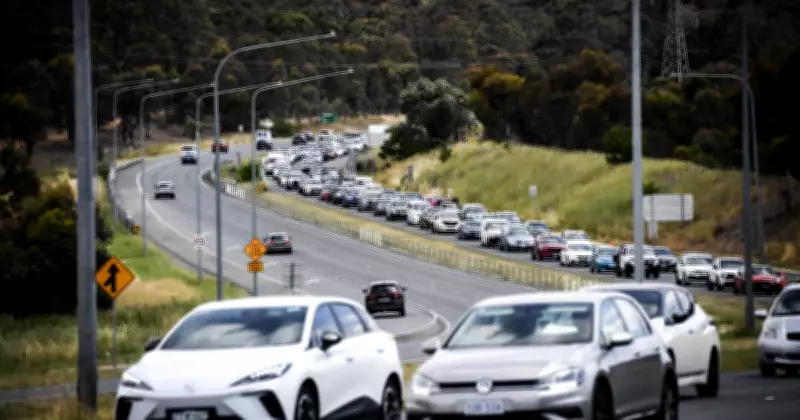
My journey from Barton to the western edge of Civic, which normally takes a brisk ten minutes, stretched into a thirty-five minute ordeal today. While there were legitimate factors contributing to the slowdown—Commonwealth Avenue reduced to a single lane, detours via Kings Avenue with their inevitable traffic lights and lane changes—these alone didn't explain the sheer foolishness and carelessness displayed by fellow motorists.
What truly baffled me was the behaviour that seemed to actively worsen the congestion. Some drivers appeared to instinctively slow down upon seeing traffic ahead, even when maintaining momentum would logically help the overall flow. This counterproductive approach transforms minor delays into full-blown gridlocks, a phenomenon that Canberrans seem particularly ill-equipped to handle.

The Sydney Comparison: A Lesson in Collective Navigation
Anyone who has experienced Sydney's roads understands the stark contrast. The volume of traffic there is, compared to Canberra, almost unimaginable and initially intimidating. Yet, you quickly realise that systems and unspoken protocols exist that keep things moving with surprising efficiency.
On Sydney's thoroughfares, drivers operate with a shared understanding. They anticipate merges, respect lane discipline, and navigate complex freeway systems with a collective purpose. Everyone is in it together, responding to the environment with practiced coordination.
Here in Canberra, our conditioning works against us. We're accustomed to wide-open spaces and relatively light traffic. This privilege has allowed many drivers to retreat into private worlds behind the wheel, paying little attention to the broader traffic ecosystem. When disruptions occur—a road closure for an event, an accident, or ongoing construction—this individualistic approach fails spectacularly.
Predictable Problems and Seasonal Flashpoints
The issue becomes painfully obvious during predictable annual events that strain our road network. Take this first week of February, for instance. Schools are back in session, meaning families are all attempting to reach educational institutions simultaneously. Why this particular week proves so much more chaotic than the following ten weeks of term remains a mystery.
As Tolstoy noted, every unhappy family is unhappy in its own way. But on the roads, we cannot afford such individuality. We should function as a single unit, each vehicle a drop in a larger stream that maintains constant movement. Instead, we see the same pattern emerge during holiday periods, like when Canberrans return from the coast en masse, each believing they've left early to avoid traffic, only to create lengthy queues on approaches to towns like Braidwood.
Infrastructure Challenges and Driver Psychology
This year, with multiple major infrastructure projects disrupting the city centre, the pressure on our driving etiquette has intensified. These necessary works for future benefit are testing the patience and skill of Canberra's motorists, often with disappointing results. The combination of physical obstructions and poor driver response creates a perfect storm of inefficiency.
Our expansive road system, which is objectively better designed than many in other capital cities, becomes undermined by a lack of collective driving intelligence. We are easily flummoxed by deviations from our normal, easy routes. This doesn't bode well for a growing city facing increased density and traffic volumes.
For thirty-five agonising minutes this morning, crawling across the bridge, I felt a profound sense of frustration—and even shame—about our capital's driving culture. The hard truth is that when congestion strikes, Sydney drivers demonstrate superior adaptability and awareness. Until Canberrans learn to see beyond their own bonnets and operate as part of a coordinated flow, our commutes will continue to be more painful than they need to be.