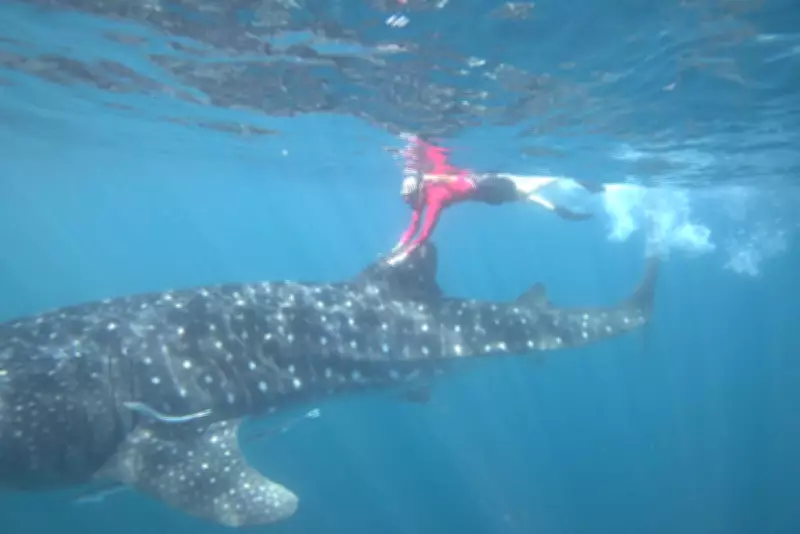
A new study led by Murdoch University has found that the world's largest fish, the whale shark, continue to behave naturally despite drones flying overhead. The research, conducted at Ningaloo Reef, is the first to use biotelemetric data to assess drone effects on a water-breathing marine species.
Study Methodology
Researchers attached motion-sensing tags to 13 whale sharks, recording swimming effort, tail movement, and diving behaviour—indicators of stress or agitation. While tracking, a drone was flown directly above at heights between 10 and 60 metres, including during ascent and descent. The tagged data were compared with periods without drone presence.
Key Findings
Lead researcher Dr Samantha Reynolds from Murdoch University's Harry Butler Institute stated: "We found no evidence that drones disturbed whale sharks when flown overhead at heights between 10 and 60 metres. The whale sharks behaved the same way with a drone overhead as they did normally." This suggests drones are a minimally invasive tool for studying whale sharks.

Implications for Research
Dr Reynolds emphasised that while the results are reassuring, a precautionary approach remains essential. "It is possible there might be physiological effects not measured, or that drones could impact whale sharks during feeding. Other species like seabirds, turtles, dolphins, and whales are known to be more sensitive to drones," she said. The study recommends flying as high and briefly as possible, using drones only when they add value.
Legal Context
Under Western Australian law, drones used for commercial or recreational purposes must not disturb wildlife and must stay at least 60 metres from whale sharks and marine mammals. The research flights were conducted under a permit from the Department of Biodiversity, Conservation and Attractions.
Publication and Authors
The paper, titled "Using biotelemetry to assess drone effects on whale sharks," was published in the journal Ecosphere. Co-authors include researchers from ECOCEAN Inc, Swansea University, James Cook University, and Griffith University.