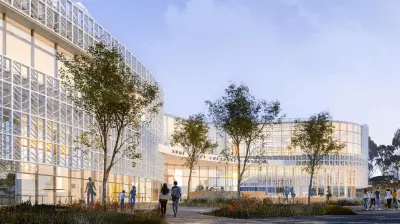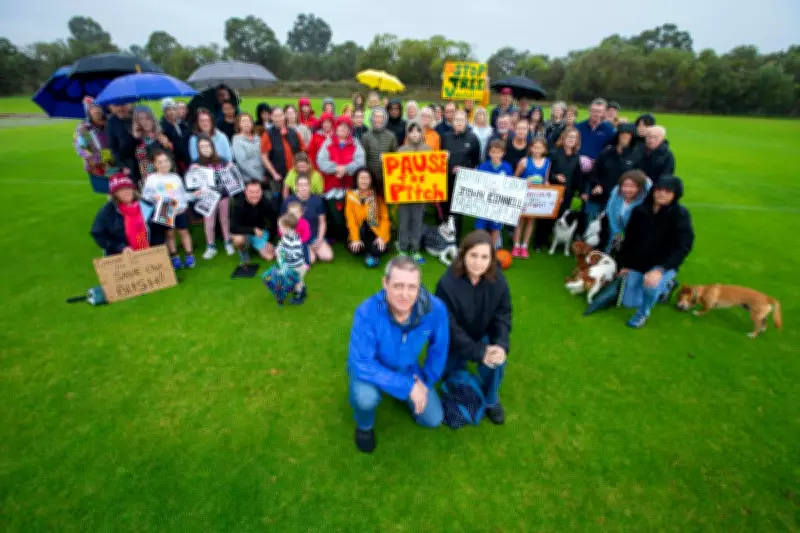
The City of Melville council has voted to approve a contentious $4.68 million project to construct a new cricket pitch at John Connell Reserve, a decision that will see more than 200 trees and 0.68 hectares of native bushland cleared. The vote, which passed 8-5, has ignited fierce opposition from local environmental groups and residents who argue the project is an irresponsible use of ratepayer funds and will cause irreversible environmental damage.
Council Debate Heats Up
The decision came after a heated council meeting where councillors clashed over the merits of the proposal. Councillor Nicole Robins described the project as a “poor use of ratepayer funds,” warning that it would burden the city’s 114,000 residents for the benefit of just 170 cricket players. “A $4.68 million project to benefit 170 cricket players who live in the City of Melville does not represent good value for money,” she said. “It’s a multi-million dollar project that’s not in the long-term financial plan. I think it would be irresponsible for us to fork out the full amount.” Councillor Clive Ross echoed these concerns, stating that ratepayers would likely feel the financial impact.
However, Councillor Jennifer Spanbroek defended the proposal, arguing it was not about “reckless clearing” but about supporting local sport. “Right now, our local cricket club and soccer clubs are at capacity. At the moment, we have one cricket pitch and two soccer fields trying to service a growing population,” she said. “We are not looking at removing part of the Amazon forest … this is not a random proposal. The offset area for revegetation is almost 11 times greater than the area to be cleared. It’s a win-win for both the community and the environment.”

Environmental Concerns and Offsets
The project includes a permit from the Department of Water and Environmental Regulation (DWER) to clear native vegetation, with a requirement to offset the loss by revegetating 7.34 hectares at nearby Ken Hurst Park. This offset involves planting 30,000 trees over four years, with a 70% survival rate target, at an estimated cost of $1.3 million fully funded by the city.
But environmental groups remain unconvinced. Esther Cole, convenor of the Melville Tree Canopy Advocates, said the offset is not a viable solution. “Council has been advised that the proposed offsets are not a simple fix … as Friends of Ken Hurst Park demonstrate, restoration is slow and uncertain,” she said. “Volunteers plant up to 300 species each year, with survival rates as low as zero to 30 per cent. Mature canopy cannot be quickly replaced. The council has not budgeted for this.”
Tracy Burns, a member of the Action to Save Perth’s Carnaby’s Black Cockatoo community group, criticized the council for downplaying the environmental impact. “The council said out loud there was just weeds and they said there was no threatened ecological communities (at John Connell). That’s wrong — the DWER clearing permit was for 0.68ha of TEC (threatened ecological communities), which affords it protection status,” she said. “There’s only 13.5 per cent of banksia woodland left in the city, there’s nowhere for these poor black cockatoos to go – they’re slowly going to disappear into extinction.”
Community Opposition and Alternative Options
The community has mobilized against the project, with a petition garnering nearly 700 signatures. Residents are considering calling a special electors meeting to challenge the decision. Jason Meotti, convenor of the Bullcreek Leeming Community Action Group, has been vocal in opposing the clearing.
Leeming Spartans Cricket Club president Peter Coombs defended the project, noting that the club has been seeking expanded facilities for over 30 years. He emphasized that the club does not plan to clear the entire permitted area and is considering clearing less than half of it. “Just because the clearing permit is 0.68ha, doesn’t mean you have to clear 0.68ha. We’re not doing that,” he said. Coombs also highlighted the shortage of sporting facilities in the area, stating that no available fields exist south of the river to Mandurah, and none are planned.

Alternative options, such as building on a former rubbish tip or using Beasley Park, were rejected due to safety and quality concerns. “The smaller pitch options for 50m are not accepted under Australian standards for health and safety reasons - senior cricketers hit the ball 90 to 100m,” Coombs explained. “Another option was on top of the rubbish tip. To flatten this out, as soon as you lift that topsoil off, there’s car bodies, there’s asbestos and there’s rubbish.”
Financial Implications
The project’s funding remains uncertain, as it was not included in the city’s long-term financial plan. The club has $470,000 remaining from a federal grant, which it will contribute to the city. The city is seeking 50% state government funding, but even then, Councillor Robins noted the cost to ratepayers could be $2.5 million. “It’s still $2.5m for our ratepayers, all for an additional cricket pitch, which isn’t really needed,” she said.
Councillor Glynis Barber dismissed claims that the project would increase rates as “fake news,” but the debate over funding continues.
Revegetation Challenges
Dr Eddy Wajon, convenor of the Friends of Ken Hurst Park for 25 years, expressed skepticism about the offset’s success. “We get something like 300 to 2000 plants a year, and we use volunteers to plant in the bushland areas that are degraded,” he said. “Our survival rate has been about 30 per cent consistently, but not more. Plants are still dying.” He warned that the 70% survival requirement would be difficult to achieve without significant additional spending. “Even if they replace all the plants that die, 30 per cent of those are going to die as well,” he added.
While Dr Wajon acknowledged the offset could serve as a deterrent, he remained opposed to the clearing. “While I applaud the potential offset, I deplore the clearing. I’d love the money to revegetate Ken Hurst Park, but it has its issues,” he said.
The DWER permit requires the Ken Hurst revegetation to commence before July 23, 2027, with no further clearing allowed after that date. The community continues to fight the decision, vowing to hold the council accountable.