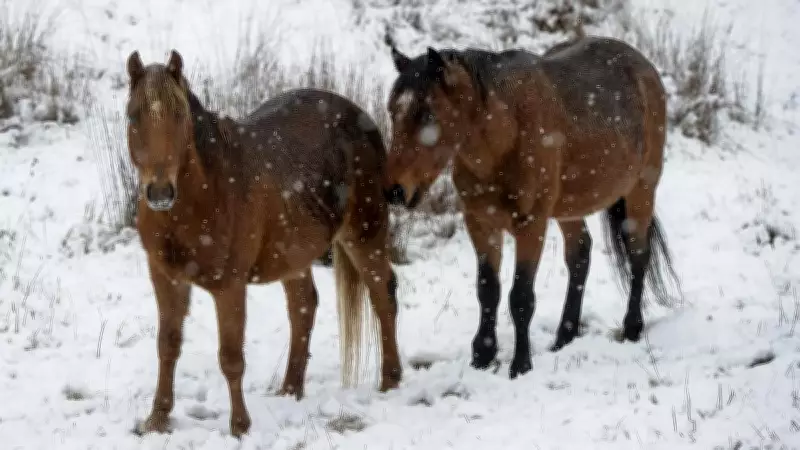
Brumby numbers have rebounded into the thousands despite ongoing efforts to control the invasive species in a famous alpine national park. Aerial shooting will resume in June, drawing criticism from opponents.
Latest Population Estimates
Recent estimates indicate there are at least 6,476 and as many as 16,411 feral horses roaming New South Wales' Kosciuszko National Park, near the Victorian border. The 2025 figures released on Friday show a significant rebound from the previous year, which recorded a lower estimate of 2,131 and an upper estimate of 5,639 horses.
This rebound comes after aerial culling efforts were paused in March 2025, following a successful reduction in numbers and amid claims that the practice was cruel, with some brumbies being shot and left to die.

Damage to Ecosystem
Advocates for culling argue that damage to the park's fragile ecosystem by wild horses remains widespread and will not cease until the animals are essentially removed. However, opponents question the counting methods. One person commented on a pro-brumby Facebook group: "The government of NSW say the brumby numbers are up to 16,000. So suddenly less than 3,000 brumbies has multiplied up to 16,000 brumbies in 12 months." Another member added: "The brumby population has not 'exploded', quite the opposite."
Government Targets and Controversy
Under its controversial management plan, the NSW Government is working toward a legislated target of fewer than 3,000 brumbies across the park by mid-2027. In 2022, when culling began, the number of horses in the park was as high as 23,535, with trapping, rehoming, and ground shooting reducing numbers by only a few thousand. The introduction of aerial culling in late 2023 resulted in a drastic reduction, with more than 6,000 animals shot from helicopters.
Aerial culling is set to resume on feral horse populations in Australia's alpine region. NSW Animal Justice Party MP Emma Hurst is advocating for more humane methods: "I have called on the government to run fertility control trials using the latest one-dart technology used in the US. Despite repeatedly agreeing, no trial has ever started and the aerial shooting continues." She added: "We must stop another bloodbath — the government have not explained why they are doing this again." The National Parks and Wildlife Service said it will also assess plans for a fertility control trial based on global evidence.
Invasive Species Council Response
Invasive Species Council chief executive Jack Gough said population boom cycles would continue while large populations were allowed to persist. "It's simple biology — feral animals do not stop breeding because control efforts are paused for a year," he said. "The consequence of that will be even more horses will need to be culled." Gough argued that rehoming and fertility control would not meaningfully reduce horse numbers: "We are dealing with thousands of feral horses across rugged alpine country." The council is also calling for the scrapping of retention zones that apply to 32 per cent of the park, introduced under the Kosciuszko Wild Horse Heritage Act.
Minister's Statement
NSW Environment Minister Penny Sharpe said the latest survey showed much more work was needed to control the population. "No one wants to have to kill horses but there are still too many in Kosciuszko National Park," she said. "We will use the best available science and take a cautious, evidence-based approach to reach the required population target, in order to protect native vegetation, animals, waterways and cultural values."
Cultural Significance of Brumbies
Wild brumbies are an Australian icon, immortalised in both the 1982 film A Man From Snowy River and the 1890 Banjo Patterson poem it was based on. Set in the rugged Snowy Mountains, the poem's riders hail "up by Kosciusko's side." The legend celebrates the fearless young stockman who rides a seemingly impossible, near-vertical descent to capture a prized escaped colt.