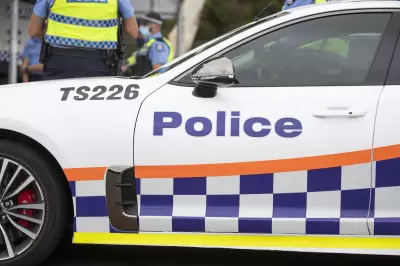
Pressure is mounting on Western Australian Police to solve the controversial death of a young mother who lost her life more than 12 years ago while fleeing her violent partner. The WA Police Force has launched a new billboard campaign into the suspicious 2014 death of Amy Wensley, but has ruled out requiring forensic investigators to attend all violent deaths, despite admitting lead detectives made a mistake in initially ruling it a suicide.
The Tragic Events of 2014
After being assaulted by her then-partner David Simmon, the 24-year-old strapped her young daughters into the back seat of her car, which was still running, when she was shot in the temple at close range. Despite acknowledging that forensics should have attended the scene, WA Police say the decision will remain discretionary unless it is "obviously murder."
Reinvestigation and Legal Outcome
WA Police assigned a new team from the homicide unit to re-investigate in early 2025 following the 7NEWS podcast The Truth About Amy. An updated brief of evidence was referred to the Office of the Director of Public Prosecutions to determine whether the case was strong enough to prosecute. The DPP decided not to prosecute, despite several well-regarded, highly respected experts stating that Amy could not have killed herself and was the victim of foul play.

A WA Police media spokesperson told 7NEWS that their investigation of Amy’s death is ongoing. "The WA Police Force remains committed to investigating the death of Amy Wensley… Several billboards have recently been installed in the Perth metropolitan area as part of this ongoing investigation."
Procedural Flaws
In the hours after Amy’s death, detectives determined that the scene was not suspicious, despite disagreement from uniformed officers at the scene. WA Police does not have a procedural guidance manual available for easy public access. Unlike Queensland, Victoria, and Tasmania, which offer digitised versions, members of the public can only read an abridged version on a CD kept at the State Library of Western Australia. This means WA Police lacks an easily accessible, publicly available definition for suspicious deaths.
When asked about the process of categorising suspicious circumstances, a WA Police media spokesperson explained that "where police are called to a sudden death, initial investigations take place to determine the cause and circumstances of the death." From there, it is the detective’s prerogative to call in major crime detectives or forensic investigators.
Expert Opinion on Procedures
Associate Professor Claire Ferguson, a forensic criminologist, recognises that a possible flaw in police operations is the perceived rigidity of operational procedures, which can leave less room for critical thinking by first responders. "I think the procedures can sometimes be problematic… especially if you’re encouraged to slavishly apply these protocols without thinking about them. In some cases, this can lead to a focus on applying the protocol more than investigating in their own right."
Effective procedural guidelines exist elsewhere. For example, section 4.2.1 of the Tasmania Police Manual mandates that "every death is to be treated as suspicious until otherwise determined."
Hidden Homicides
Investigating deaths completely is important in avoiding 'hidden homicides'—suspicious deaths that evade homicide statistics due to misclassification because of unclear evidence or under-investigation by authorities. This can include long-term missing persons, apparent suicides and accidents, unresolved assault cases, and any number of other suspicious deaths.
Associate Professor Ferguson attributes these misclassifications to detection avoidance tactics. "Detection avoidance is anything that a perpetrator does to try to limit themselves from being held responsible or limit being suspected in the first place. This can be anything from filing a false missing person’s report, to wearing gloves and a condom, or even staging a crime scene. A hallmark of detection avoidance is intervention in the investigative process, like delaying its start, hiding evidence, or lying to police."

Joanna’s Law in California
In January 2025, Joanna’s Law came into effect in California. It codifies some common red flags of hidden homicide cases, including history of violence and ongoing separation, to ensure that further investigation into the death occurs. The law was named for Joanna Hunter, who was victim to a staged suicide at the hands of her husband. WA Police is failing to provide that kind of assurance and commitment to investigation to victims and families.
When The Truth About Amy asked why forensic investigators' attendance at death scenes does not automatically occur, WA Police replied that detectives are in the position to make that decision. "When responding to all firearm related deaths, the homicide squad are required to be notified, while significant resources are allocated to assess if forensic officers are required to attend," the spokesperson said.
Calls for Change
To stop hidden homicides from slipping through the cracks and give victims and families hope of justice, apparent suicide cases must be treated as suspicious—not just deaths involving a firearm, and particularly when the red flags of a potential hidden homicide are present.
Anna Davey, Amy Wensley’s aunt, explains why treating apparent suicide cases as suspicious is an important step in exposing hidden homicides and providing justice to families. "Firstly, to ensure a potential murderer does not get away with ending a life and is brought to justice. Every victim deserves a proper investigation and the families deserve to know the truth about what happened to their loved one," she said. "It also saves families from having to fight an ignorant and biased system."
Anna believes that Amy’s story may have been written differently if forensic investigation was a requirement for WA Police procedures. "Without a shadow of a doubt. We would have actual evidence that would have assisted in getting to the truth a lot faster than eleven years and we wouldn’t have had to fight for it. I also believe Amy’s case would have been handled differently if detectives who actually did their job honestly and cared about the truth, had turned up."
When The Truth About Amy asked Anna Davey about her opinion of Joanna’s Law, she spoke from the heart of her experience. "I admire what California has done in passing this new law, it’s brave and sends a clear message that victims and their families do matter, will not be silenced and will be empowered with a voice." She also noted that more needs to be done to deter abuse and murder in the first instance, and that lawmakers should get serious about imposing harder sentencing.
Anyone with information can email thetruthaboutamy@seven.com.au or leave an anonymous tip at www.thetruthaboutamy.org. To follow Amy’s journey for justice, listen to The Truth About Amy wherever you get your podcasts.