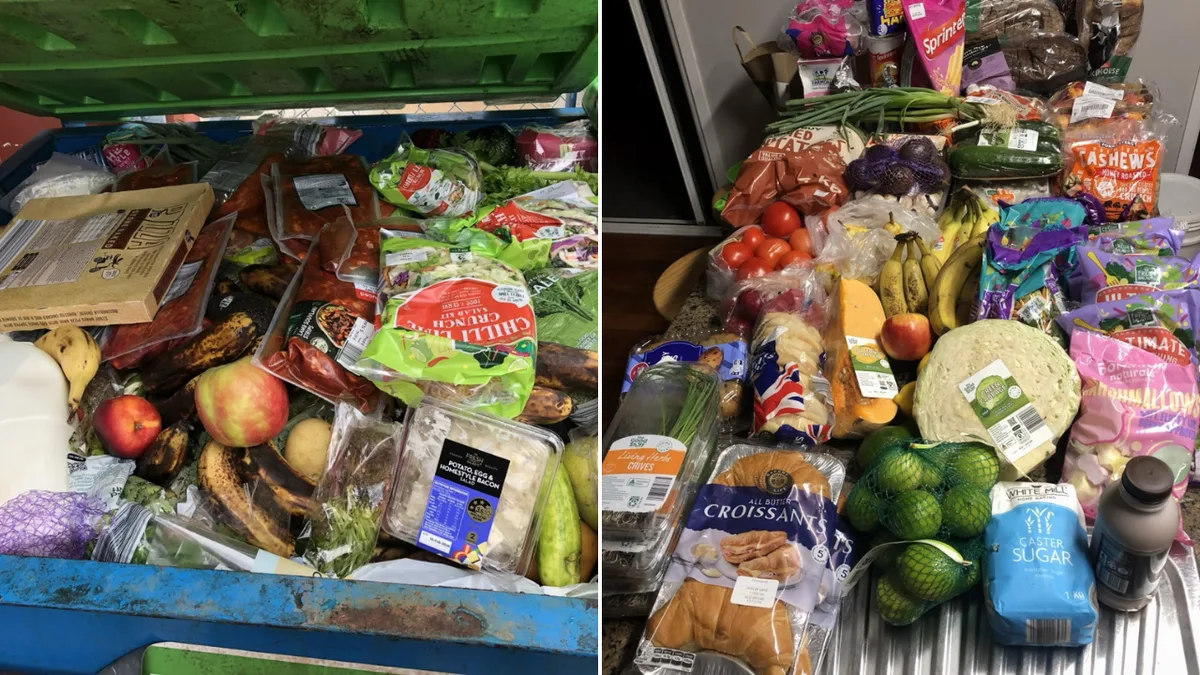
For most people, dumpster diving might sound extreme, but for Emelie Watson and her family, eating food discarded in bins is just one part of a broader effort to cut waste, save money, and live more sustainably. While retrieving food from supermarket bins has dramatically reduced their grocery bills, it sits alongside a wider approach built on sharing resources, growing food, and rethinking consumption.
She and her husband Jon have taken the year off work to raise awareness about this lifestyle through their blog Living More With Less.
Since the Brisbane family started dumpster diving, it has now become the main source of their groceries, with Watson, 41, only needing to spend $40 a week on average for additional items not found in the bins.
“We could easily go a week just eating dumpster food and what we grow in the garden,” Watson said.
The mother-of-two said the family mainly dumpster dives on the weekends, because during the week charities such as OzHarvest collect unused food from big grocery stores. Watson said they dumpster dive in bins on public property, such as shopping centre carparks, and they do not enter private premises. They also never try to remove any locks on bins.
Is it legal to dumpster dive?
Her approach aligns with legal advice from Astor Legal accredited specialist criminal lawyer and principal lawyer Avinash Singh.
“Dumpster diving is generally legal in Australia if the items have been placed in a bin for disposal,” Singh said. “This is because the item will be taken to be ‘abandoned’. Abandonment is a full defence to stealing, which is generally charged under the offence of larceny. The concept of abandonment means the owner of the item has relinquished ownership of it, therefore, it is no longer capable of being stolen.”
However, Singh warned the legality changes if people enter private property to access bins.
“The law is the same whether the bin is left outside a person’s home or outside a business for collection,” Singh said. “However, if a person enters an enclosed private land, then they are trespassing. This can result in the person being charged with a criminal offence of trespassing or enter enclosed lands.”
Bakery goods in excess
Watson said bakery goods such as bread, muffins and crumpets are the most common items found in supermarket bins, as most stores bake or receive fresh produce every day that doesn’t sell out.
“Over summer there was an excess of blueberries,” Watson said. “On the weekend I could have collected maybe 10 punnets, maybe close to 4kg of strawberries.”
To determine what’s safe to eat, Watson said they check the use by date. “Once home we wash everything thoroughly and take another look in bright light and sniff in neutral air.”
Watson warned meat and animal products have the highest risk, so they generally avoid taking those items from the bin. Watson estimates the family has saved up to $10,000 a year on groceries from dumpster diving — which they donate to charities to help global poverty and malnutrition.
Singh said people considering dumpster diving should be mindful of where they access bins.
“If someone intends on dumpster diving they need to be very careful that they do not enter the property of a homeowner or a business,” Singh said. “In cases where dumpster diving occurs at a business, the business can ban persons from attending their premises. If a person dumpster dives at grocery stores, it could result in them being banned from all of that company’s stores.”
Majority of food waste occurs in the home
Watson said sharing dumpster diving tips on TikTok has been met with a mixed reaction.
“Some people think it’s disgusting, others are like good on you,” Watson said. “But meeting people who are now dumpster diving because they’ve seen me do it was a real eye-opener. I’ve learnt to accept the nice comments with the not-so-nice comments.”
Watson said it is important for people to understand waste does exist but the majority of food waste actually occurs in the home, so being mindful about what we buy and how we use it can make a big difference.
The Brisbane couple have taken a year off work — she is a teacher and he is an engineer — to focus on living a more sustainable life but still do casual work when needed. Watson explained she grew up in a family of waste diverters and it was common in her family to collect items from the tip.
“The idea of collecting somebody else’s waste is not new,” Watson said. “I’d just never done it before to collect food.”
She wants to make it clear dumpster diving is just one thing she and her family does to live a “one planet lifestyle”. So, what exactly does that mean?
“Taking all the resources available in the world and dividing it fairly among all the people alive in the world,” Watson explained. “If everyone was allocated those resources fairly that would be living a one planet lifestyle. It’s also being aware of what kind of processes the environment has to deal with when processing the waste and the pollutants and the damage that we do.”
Watson and her family are striving to do this with three things: “Sharing what we have, minimising what we use and living a better life.” They volunteer at schools and in the community, grow a food garden and share the produce at food swaps. They also sold their car and ride bikes instead.
“We’re trying to show people it’s OK to not buy new things,” Watson said. “You don’t need a bigger car, or a bigger house. If you have to work to earn the money to pay for big things you don’t really need, maybe it’s time to reclaim your time and be more deliberate about how you spend it. That’s been really rewarding for us and I think it would be for people as well.”