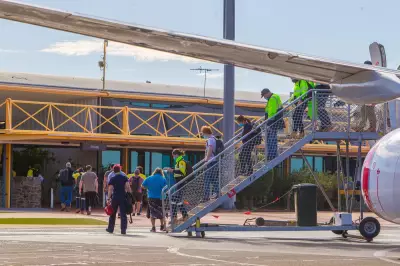
Townsville is staring down the barrel of a severe worker shortage that could cripple major projects and stunt the region's economic growth. The culprit? A critical lack of suitable short-term accommodation for the fly-in, fly-out (FIFO) and drive-in, drive-out (DIDO) workforce needed to power the city's booming construction and resources sectors.
The Accommodation Bottleneck Threatening Growth
Industry leaders are sounding the alarm, stating that without a rapid increase in purpose-built short-stay housing, Townsville will simply not have the labour force to deliver on its pipeline of work. Master Builders deputy chief executive, Nick Behrens, highlighted the severity of the issue, noting that while Townsville's construction sector is thriving, the shortage of accommodation is its "Achilles' heel."
The data underscores the crisis. Townsville currently has a pipeline of construction work valued at approximately $10.5 billion. This includes everything from public infrastructure and defence projects to private commercial developments and the landmark Lansdown Eco-Industrial Precinct. To put this into perspective, this workload is nearly double the long-term average for the region.

However, the city's existing accommodation stock is woefully inadequate. A report by MRA Consulting Group, commissioned by the Townsville City Council, revealed a glaring gap. It found that while there is demand for over 1,000 short-stay rooms to service current and upcoming projects, the city's dedicated supply is virtually non-existent. Most temporary workers are forced into hotels or motels, which are often expensive, unsuitable for long stays, and compete with the tourism sector.
Concrete Consequences for Major Projects
The lack of housing isn't a future problem—it's impacting projects right now. Behrens pointed to direct feedback from members, with one contractor reporting they had to turn down $20 million worth of work because they could not secure housing for the necessary workers. This is a stark example of how the accommodation crunch is already costing the local economy jobs and investment.
The problem is set to intensify. Major projects on the horizon, such as the Haughton Pipeline Duplication Project Stage 2 and the multi-billion-dollar CopperString 2.0 high-voltage transmission line, will bring hundreds more workers to the region. These projects are crucial for Queensland's water security and energy transition, but their timelines and costs are at risk without a solution for housing their workforces.
Mayor Jenny Hill has been a vocal advocate for addressing the shortage. She emphasised that the Lansdown precinct alone is a "game-changer" that will require significant worker accommodation. The council is actively seeking solutions, including the potential for a 300-bed facility at the former Stuart Prison site, to help bridge the gap.
Call for Action and Collaborative Solutions
The solution requires a coordinated effort between all levels of government and the private sector. Industry groups are calling for incentives to attract investment in building new, fit-for-purpose worker villages. These facilities need to offer more than just a bed; they require amenities like kitchens, laundry, and recreation areas to support workers living away from home for extended periods.
There is also a push to streamline planning and approval processes to fast-track the development of such accommodation. The alternative is grim: project delays, blown-out budgets, and a failure to capitalise on Townsville's strategic position as a hub for the energy, resources, and defence industries.
The message from industry and council is unified and urgent. Townsville's economic future is bright, but it is being shadowed by a worker shortage directly caused by a housing deficit. Without decisive action to unlock short-stay accommodation, the city risks stalling its own prosperity and leaving billions of dollars in economic potential on the table.