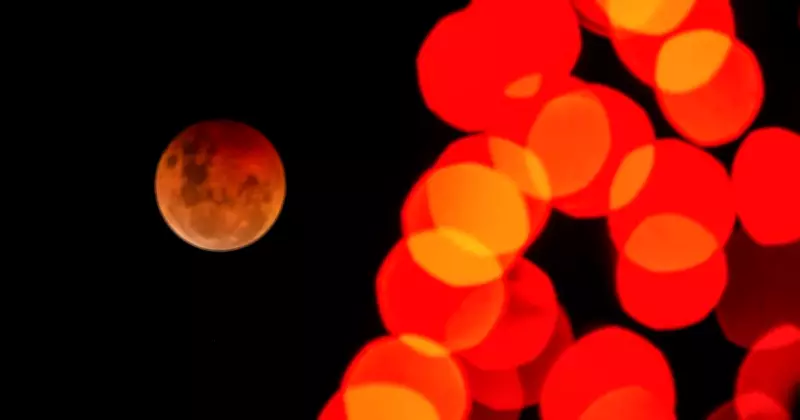
Australia's Last Deep Red Lunar Eclipse Until 2029: A Crimson Moon Spectacle
Skywatchers across Australia were treated to a breathtaking celestial event as the moon turned a deep crimson red during a rare lunar eclipse. This stunning display marked the final opportunity to witness such a vivid red lunar eclipse in the country until 2029, making it a significant moment for astronomy enthusiasts and casual observers alike.
A Rare Astronomical Phenomenon
The lunar eclipse occurred when the Earth passed directly between the sun and the moon, casting a shadow that gradually enveloped the lunar surface. Unlike solar eclipses, lunar eclipses are safe to view with the naked eye, allowing people to enjoy the spectacle without special equipment. The deep red hue, often referred to as a blood moon, is caused by sunlight filtering through Earth's atmosphere and scattering blue light, leaving only red wavelengths to illuminate the moon.
This particular eclipse was notable for its intensity and duration, with the moon remaining in the Earth's umbra—the darkest part of the shadow—for an extended period. Observers reported that the red color was particularly vivid, creating a dramatic contrast against the night sky. The event was visible from various locations across Australia, weather permitting, with clear skies in many regions providing optimal viewing conditions.

Timing and Visibility Across the Nation
The eclipse unfolded over several hours, beginning in the evening and peaking during the night. Key phases included the penumbral eclipse, where the moon entered the Earth's lighter shadow, followed by the partial and total eclipses. During the total phase, the moon was fully immersed in the umbra, showcasing its deep red glow. This was the last chance to see such a deep red lunar eclipse in Australia until 2029, as similar events in the coming years will be less intense or occur at less favorable times.
Astronomers and weather services had advised the public on the best times to view the eclipse, with many communities organizing public viewing events. In urban areas, people gathered in parks and open spaces, while in rural regions, the lack of light pollution offered even clearer views. Social media was abuzz with photos and comments, as Australians shared their experiences of this rare astronomical event.
Scientific and Cultural Significance
Lunar eclipses have long held scientific and cultural importance. From a scientific perspective, they provide opportunities to study the Earth's atmosphere and the moon's surface. Researchers use these events to gather data on atmospheric conditions and lunar topography, contributing to our understanding of both celestial bodies. Culturally, eclipses have been viewed as omens or spiritual events in various traditions, though modern science explains them through orbital mechanics.
The deep red color of this eclipse added to its allure, sparking interest in astronomy among the general public. Educational institutions and planetariums used the event to promote STEM learning, highlighting how such phenomena can inspire curiosity about the universe. As the last deep red lunar eclipse until 2029, it served as a reminder of the rarity and beauty of celestial events, encouraging people to look up and appreciate the night sky.
Looking Ahead to Future Eclipses
While this was the final deep red lunar eclipse in Australia until 2029, other astronomical events will continue to occur. Upcoming eclipses, both lunar and solar, are scheduled in the coming years, though they may not match the intensity of this one. Astronomers recommend staying informed through local observatories or astronomy groups to catch future spectacles. In the meantime, the memories and images from this event will linger, reminding us of the wonders above.
In summary, Australia's recent lunar eclipse offered a rare and vivid display of a deep red moon, marking the last such event for nearly a decade. It brought together communities, sparked scientific interest, and provided a moment of awe under the stars. As we await the next one in 2029, this eclipse stands as a highlight in the nation's astronomical calendar.