Global Economy Shaken as US Blockades Strait of Hormuz, Disrupting Oil Flow
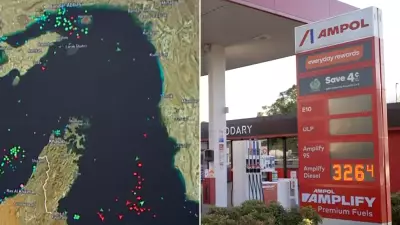
The global economy is confronting escalating uncertainty following the enforcement of Donald Trump's blockade of the Strait of Hormuz, a critical choke point for international oil and shipping. This strategic move by the United States has effectively strangled one of the world's most essential maritime routes, with the US Navy now under strict orders to intercept any vessels traveling to or from Iranian ports. As a result, ship traffic through the strait has been dramatically curtailed, with only a handful of ships permitted daily compared to the usual flow of up to 120 vessels.
Economic Shockwaves from Reduced Traffic
Retired Lieutenant General Richard Newton highlighted the severe economic implications of this slowdown during a recent interview on Sunrise. He emphasized that the mere reduction in maritime activity is sufficient to send shockwaves through global markets. Newton explained, "We only have three or four ships a day going through there at the behest of the Iranians. Usually, it's about up to 100 to 120 ships a day. The global economy is really resting on the Strait of Hormuz." This strait is responsible for transporting approximately one-fifth of the world's oil supply, serving as a key artery for energy exports into Asia, where a significant portion of Australia's oil is refined. Any disruption here poses a major risk to global supply chains and overall economic stability.
Targeting Iran's Financial Lifeline
According to Newton, the blockade represents a direct economic strategy aimed at crippling Iran's financial lifeline. He noted, "Blocking the strait really does have an impact on their economy. Ninety per cent of Iran's oil economy goes through the Strait, and 20 per cent of the world's oil economy also goes through the strait." This move not only pressures Iran but also has far-reaching consequences for global energy markets, particularly given the reliance of major economies like China on Iranian oil supplies.

Broader International Implications
International security specialist Will Geddes expanded on the broader implications, pointing out that the economic fallout extends well beyond the Middle East due to the volume of global oil transiting through the passage and China's strategic interests. Geddes explained, "China has had an agreement with Iran for quite some time, which has been a trade of weapons to oil. Now, China is going to want to protect its investment." Intelligence reports suggest that China has been deploying military capabilities to Iran in response, heightening tensions in the region.
Escalating Military Tensions and Regional Threats
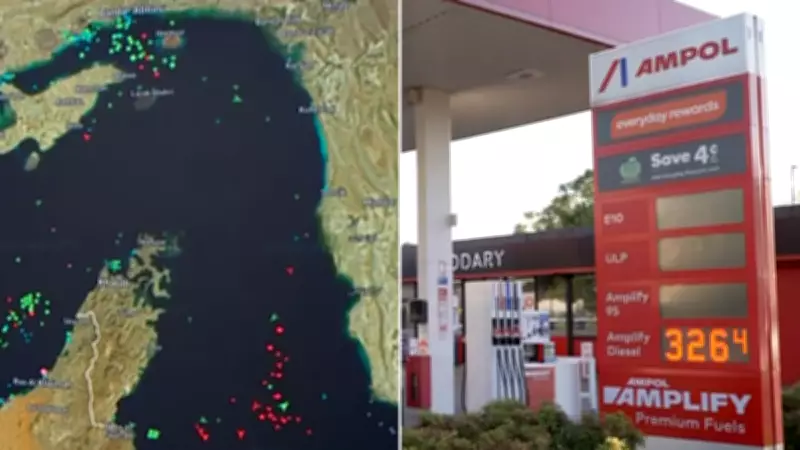
The United States has implemented a comprehensive naval blockade in the Strait of Hormuz, preventing ships from entering or leaving Iranian shores except for those carrying humanitarian aid that have undergone thorough inspections. In retaliation, Iran has prepared extensive defensive measures, including sea mines, coastal cruise missiles, and a fleet of attack boats. Additionally, Iran has threatened to target desalination plants and electricity supplies in US-allied Gulf states if American forces strike Iranian infrastructure. The ongoing conflict in the Middle East has already driven a significant spike in global oil prices, with concerns mounting that the US military presence, while substantial, could be overextended if Iran launches diversionary attacks. Iran has condemned the blockade as a violation of their ceasefire agreement, further complicating diplomatic efforts.