Middle East War Escalates into Fourth Week with Deadly Strikes and Global Repercussions
The ongoing war in the Middle East has now entered its critical fourth week, with the conflict dramatically escalating and spreading to European regions following coordinated air strikes by the United States and Israel against Iran. These military actions, which have been officially designated as Operation Epic Fury, resulted in the deaths of Ayatollah Ali Khamenei and several other senior Iranian leaders, sending profound shockwaves throughout the international community.
Operation Epic Fury Triggers Widespread Economic and Trade Disruption
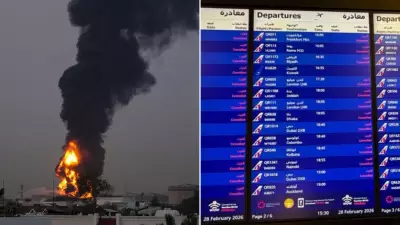
The execution of Operation Epic Fury has precipitated significant disruptions across multiple vital global sectors, including international shipping, air travel, and the oil industry. Energy costs have surged sharply as a direct consequence of these military engagements, with business operations in the strategically crucial Strait of Hormuz experiencing severe interruptions. This key waterway, recognized as a global trade hub, is now facing unprecedented challenges that threaten to destabilize worldwide economic stability.
Donald Trump Announces Five-Day Postponement of Threatened Strikes
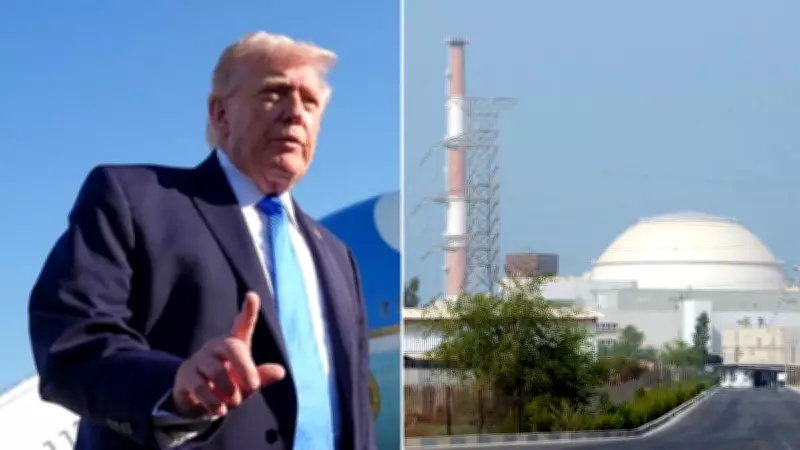
In a significant development, United States President Donald Trump has officially postponed military strikes that were previously promised against Iranian power plants. President Trump had initially issued a stringent ultimatum, demanding that the Strait of Hormuz be "fully open" within a forty-eight-hour period, with a deadline set to lapse at 10:44 AM Australian Eastern Daylight Time on Tuesday. However, this deadline has now been extended for an additional five days following high-level diplomatic discussions.

President Trump elaborated on this decision through a series of posts on his Truth Social platform, where he initially threatened "THE BIGGEST (power plant) FIRST" if his demands remained unmet. In a subsequent post written entirely in capital letters, President Trump revealed that the United States and Iran have engaged in "VERY GOOD AND PRODUCTIVE" conversations over the past two days, focusing on achieving a "COMPLETE AND TOTAL RESOLUTION OF HOSTILITIES IN THE MIDDLE EAST."
Based on these ongoing diplomatic exchanges, which President Trump indicated "WILL CONTINUE THROUGHOUT THE WEEK," he has instructed the postponement of "ALL MILITARY STRIKES AGAINST IRANIAN POWER PLANTS AND ENERGY INFRASTRUCTURE FOR A FIVE DAY PERIOD, SUBJECT TO THE SUCCESS OF THE ONGOING MEETINGS." This announcement represents a pivotal moment in the conflict, suggesting a potential shift towards de-escalation through diplomatic channels.
Iranian Officials Deny Reports of Productive Diplomatic Talks
Despite President Trump's assertions of productive conversations between American and Iranian officials, Tehran has formally denied these reports, creating a complex and contradictory narrative surrounding the diplomatic efforts. This denial introduces additional uncertainty into the already volatile situation, raising questions about the authenticity and potential outcomes of the ongoing negotiations. The conflicting accounts from Washington and Tehran highlight the intricate diplomatic landscape that continues to evolve amidst the escalating military tensions.
The broader implications of this conflict extend far beyond the immediate region, with the spread of hostilities into Europe marking a dangerous expansion of the war. Global markets remain on high alert as energy prices fluctuate and trade routes face continued disruption, underscoring the interconnected nature of modern geopolitical conflicts and their far-reaching economic consequences.