Middle East Conflict Intensifies as US-Israel Operation Kills Iranian Leadership
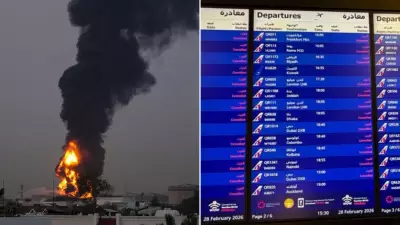
The ongoing war in the Middle East has now entered its fourth devastating week, with the conflict dramatically escalating and spreading to Europe following coordinated air strikes by the United States and Israel against Iran. These targeted military actions, codenamed Operation Epic Fury, resulted in the death of Ayatollah Ali Khamenei along with several other senior Iranian leaders, creating a power vacuum and triggering immediate retaliatory threats from Tehran.
Global Economic Shockwaves from Military Escalation
The lethal strikes have sent profound shockwaves through critical global sectors, severely impacting shipping, air travel, and oil markets. Energy costs are skyrocketing worldwide as business operations face unprecedented disruption in the strategically vital Strait of Hormuz, a crucial global trade hub that handles approximately one-fifth of the world's oil shipments. This economic turmoil is compounding the already tense geopolitical situation, with markets reacting nervously to the escalating violence.
Iran's Retaliatory Threats Target Strategic Waterway
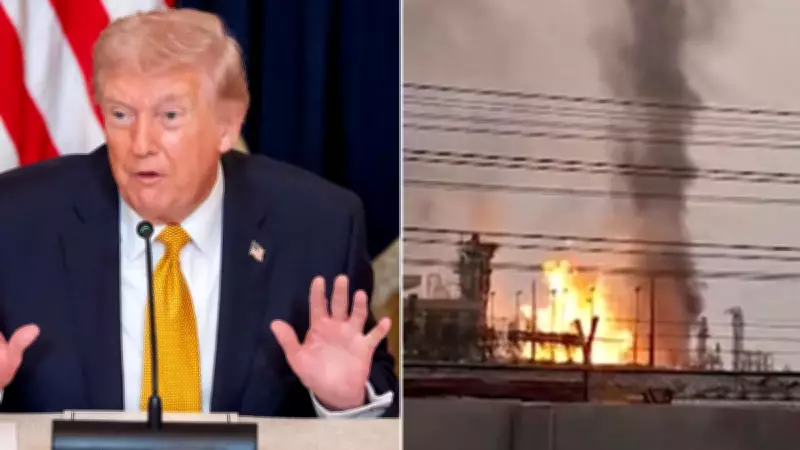
In a defiant response to the attacks, Iran's armed forces headquarters has issued a stark ultimatum, declaring readiness to close the Strait of Hormuz indefinitely if US President Donald Trump follows through on his threat to bomb Iranian power plants. This warning represents the latest in a series of retaliatory statements from Tehran, which has vowed severe consequences for any assaults on the country's critical infrastructure.

The Iranian military specifically stated that if US threats regarding power plants are executed, the Strait of Hormuz will be completely sealed and will remain closed until all destroyed power facilities are fully rebuilt. A statement from Iran's Revolutionary Guards emphasized, "We did not start the war and we will not start it now, but if the enemy harms our power plants, we will do everything to defend the country and the interests of our people."
Expanded Targeting of Regional Infrastructure
Iran's retaliatory warnings extend beyond the strategic waterway, with military officials declaring that all Israeli energy and communications infrastructure will be targeted, along with "similar companies in the region with U.S. shareholders." The military headquarters further clarified that "power plants of regional countries hosting US bases will be legitimate targets for us," significantly broadening the potential scope of the conflict.
Iranian Parliament Speaker Mohammad Baqer Qalibaf reinforced these threats in a social media post, warning that critical infrastructure and energy facilities across the Middle East could face "irreversibly destroyed" should Iranian power plants be targeted by US forces.
Trump's Ultimatum and Regional Implications
The current crisis escalated when President Trump issued a 48-hour ultimatum demanding the Strait of Hormuz remain fully open to shipping, threatening to order bombardment of Iranian power infrastructure if this condition was not met. This aggressive stance has brought escalating tensions between the United States, Iran, and Israel to a critical breaking point, with the region now facing the most severe military confrontation in decades.
The situation remains extremely volatile as global leaders monitor developments, with concerns mounting about potential further escalation that could draw additional nations into the conflict and create lasting damage to international trade routes and energy security.