Australians Urged to Rethink Travel Plans Amid Escalating Middle East Conflict
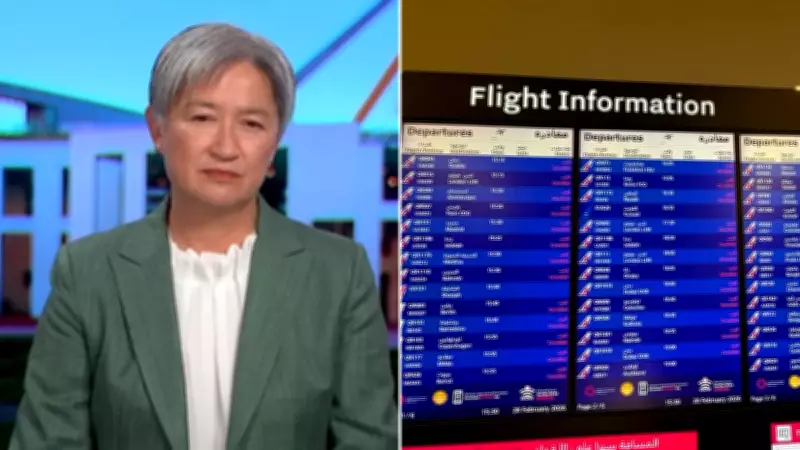
Australians are being strongly advised to carefully reconsider their travel arrangements for the coming months, particularly journeys to Europe, as the rapidly intensifying conflict in the Middle East begins to spread across multiple regions. Foreign Minister Penny Wong has issued a stark warning, highlighting that the situation is evolving at a pace that has surpassed the expectations of many governments worldwide.
Conflict Expansion and Immediate Threats
Senator Wong emphasized the alarming spread of hostilities, noting that Iran has now launched attacks across eleven different countries, including a NATO member state. "Certainly the conflict is spreading, and that's of deep concern," she stated during an interview on Sunrise. "Iran attacking a NATO member, which now means it has sought to strike 11 countries, is deeply concerning."
The warning coincides with significant military developments beyond the immediate region. On the same day that NATO deployed defensive measures to intercept an Iranian ballistic missile targeting Turkey, the United States utilized a torpedo to sink an Iranian warship off the coast of Sri Lanka in the Indian Ocean. These actions underscore the conflict's expanding geographical reach and escalating intensity.

Unprecedented Speed of Escalation
Senator Wong revealed that the velocity and scope of the escalation have taken many by surprise. "The conflict has spread much more quickly and much more widely than we anticipated," she explained. "No one would have anticipated that in the first 72 hours Iran would have struck nine countries."
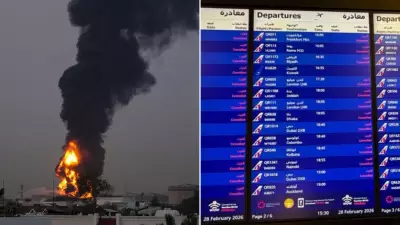
She further pointed out the unprecedented nature of Iran's tactics, particularly its targeting of travel hubs such as the United Arab Emirates, a strategy not previously employed by the nation. This shift in approach adds a new layer of complexity to the crisis, affecting international travel and logistics.
Government Priorities and Travel Advisories
The Australian government's primary focus remains the safety of its citizens currently in the Middle East. One evacuation flight has already returned Australians home, with three additional flights scheduled to depart from the United Arab Emirates in the coming days. However, Senator Wong cautioned that these arrangements are subject to last-minute cancellations as the situation remains fluid and unpredictable.
"At the moment, the conflict is unpredictable," she warned. "People do need to think very carefully about their travel plans and continue to look at the advice we provide." This advisory is particularly critical for those planning trips to Europe, given the disruption to traditional aviation routes.
Aviation Industry Impacts and Economic Consequences
Professor Ron Bartsch, Chairman of Avlaw Consulting and former head of Safety and Regulation at Qantas, highlighted that Australia will experience significant disruption due to its reliance on European stopovers for long-haul flights. He predicted substantial increases in airfares as airlines seek alternative routes through Asian hubs such as Bangkok, Singapore, Hong Kong, and the Philippines.
"What's going to happen now is that obviously Qantas and Virgin's sharing arrangements will try to deviate more towards other alternate routes through Bangkok, Singapore, Hong Kong and the Philippines in order to reach Europe," he explained. "The longer this military operation goes on means airfares will increase accordingly." Bartsch estimated that the global aviation disruption could persist for at least four to five months, affecting travel plans well into the future.
Defence Capability and Strategic Partnerships
Senator Wong underscored that the escalating conflict reinforces the importance of Australia's ongoing efforts to strengthen its defence capabilities. She pointed to the AUKUS partnership with the United States and the United Kingdom as a key initiative, which aims to replace Australia's ageing submarine fleet with nuclear-powered submarines to enhance long-range deterrence and security in the Indo-Pacific region.

"We continue to invest in Australia's defence capability," she affirmed. "This is a reminder of why the AUKUS partnership to enable Australia to replace its existing submarine capability with a new submarine capability matters, deterrence matters. That is one of the ways in which you secure peace. Of course, you hope you never have to use that capability."
Government Reassurances and Strategic Stance
Deputy Prime Minister and Defence Minister Richard Marles has sought to reassure Australians that the conflict does not currently pose a direct threat to the nation. He confirmed that Australia has not been asked to provide direct military assistance, with the United States and Israel leading the ongoing operations.
"We are taking this literally a day at a time... and keeping our minds open about what the possibilities are," Marles stated. Echoing previous statements from Prime Minister Anthony Albanese, he reiterated Australia's support for the United States' actions, emphasizing the goal of preventing Iran from acquiring a deployable nuclear weapon.
"At its core, this is about preventing Iran from ever being able to acquire a deployable nuclear weapon," Marles asserted. "Were Iran ever to acquire that it would be an utter catastrophe for the world, and we simply cannot trust the Iranian regime, in respect of their nuclear weapons program; they've demonstrated that over many, many years. So we are supporting the United States-led action in relation to this, because Iran walking down the path of acquiring a nuclear capability flies in the face of the rules-based order."
Despite this support, the Australian government has maintained that it will not deploy ground troops in the conflict at this time, focusing instead on diplomatic and strategic measures to address the crisis.