Iran's Cheap Suicide Drones Defy US Claims, Transforming Modern Warfare
Iran remains defiant in its ability to strike Western targets, despite assertions from former US President Donald Trump that American military actions have severely degraded the nation's weapons capabilities. Instead of relying on costly traditional missiles, Tehran has increasingly turned to deploying inexpensive yet highly lethal suicide drones. These unmanned aerial vehicles are fundamentally altering the dynamics of contemporary battlefields, according to security experts.
Affordable Weapons with Devastating Impact
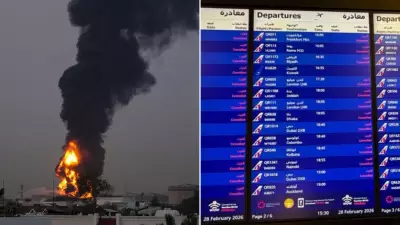
The Shahed drones, costing a mere $10,000 to $20,000 to manufacture, possess the alarming capability to penetrate sophisticated air defence systems worth billions of dollars. This makes them one of the most disruptive weapons in modern conflicts. These drones are now actively being utilised in the escalating tensions across the Middle East, with reports confirming they struck the US consulate in Dubai on Wednesday. The incident ignited a fire at the diplomatic facility, though fortunately no casualties were reported, and the blaze was promptly extinguished.
These same drones have been extensively employed by Russia in its ongoing war against Ukraine, where they have demonstrated remarkable effectiveness. They are inexpensive to mass-produce, offer high accuracy, and can evade advanced air defence networks. Global risk specialist Tony Loughran highlighted the drones' simplicity as a key factor in their danger during a recent interview. "They're about $10,000 to make, $10,000 to $20,000, the price of a car," Loughran stated, contrasting this with the approximately $2 million cost of each Tomahawk or cruise missile.

Technical Specifications and Deployment Tactics
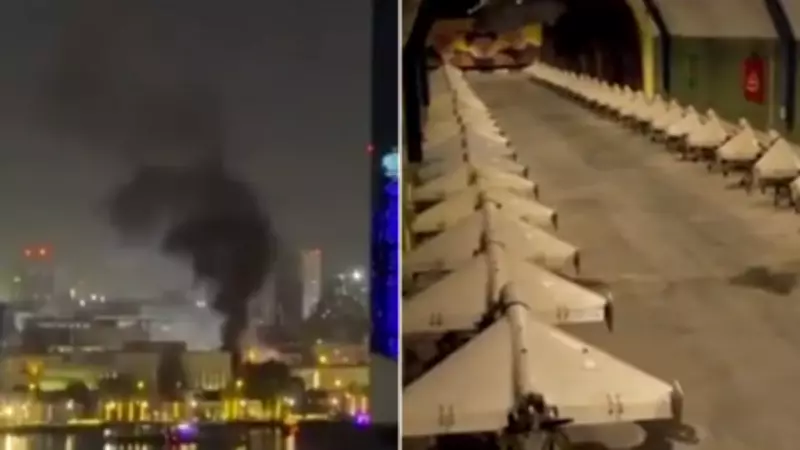
The Shahed drones are relatively basic machines constructed largely from fibreglass. They feature a GPS system in the nose and stabilising fins, enabling them to fly slowly and at low altitudes, which often allows them to avoid radar detection. Measuring roughly three-and-a-half metres in length and two-and-a-half metres in width, these drones are powered by small engines similar to those used in motorcycles.
At the front, a warhead carries about 50 kilograms of high explosives, fitted with metal bars designed to slice through targets before detonation. A percussion cap in the nose triggers the explosion upon impact. Rather than being deployed individually, the drones are typically launched in groups. Loughran explained they are sent out in "hunting packs" of about five to ten, climbing and diving rapidly to overwhelm ground-based air defence systems.
This principle is also being applied at sea with explosive drone boats, which operate similarly to aerial drones. Powered by propeller systems and fitted with explosive nose cones, these vessels were demonstrated in practice on Wednesday when an Iranian boat was destroyed by a US submarine near Sri Lanka. "These are all cheap things, they're not massive high sophisticated missiles," Loughran emphasised.
Strategic Implications and Defence Challenges
The drone strategy exploits a critical weakness in modern defence systems: cost disparity. Each interceptor missile used to shoot down a drone can cost millions of dollars. When drones are launched in large numbers, this approach becomes financially unsustainable, forcing countries to spend far more on defence than the production cost of the drones themselves.
Ukraine has repeatedly faced this challenge since Russia's invasion began over four years ago, contending with waves of these drones in ongoing attacks. In response, Ukrainian forces have resorted to surprisingly basic defences, including deploying plastic netting to prevent drones from reaching the ground and detonating, though reports indicate these supplies are now dwindling.
Despite claims that US strikes have damaged Iran's weapons infrastructure, Loughran warned that the country's drone mass-manufacturing capabilities appear to remain fully operational. "Trump is probably a little bit more fearful about this particular thing because it is mass produced," he noted, adding that the United States is also developing similar systems. Because the drones are cheap and relatively easy to assemble, production lines can quickly replace losses.

Loughran also stressed that behind the technology lies crucial intelligence work, with human intelligence required to provide precise GPS coordinates for the drones to accurately hit their targets. This combination of affordability, simplicity, and strategic deployment is reshaping global conflict dynamics, challenging traditional military expenditures and defence paradigms.