Expert Warns US-Iran Ceasefire May Collapse Amid Deep Distrust
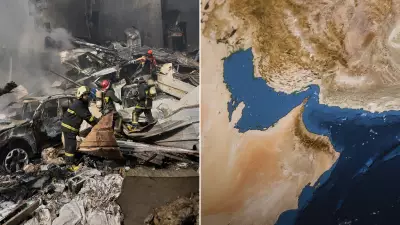
A war studies expert has expressed skepticism that the United States and Iran will adhere to a newly announced two-week ceasefire agreement, citing a profound lack of trust between the nations. The agreement, which also involves Israel, was reached shortly after US President Donald Trump issued a stark ultimatum regarding the Strait of Hormuz.
Details of the Fragile Agreement
Under the terms of the ceasefire, President Trump has agreed to suspend bombing and attacks on Iran for a period of two weeks. In return, Iran will permit the safe passage of vessels through the strategically vital Strait of Hormuz during this timeframe. The agreement extends to include attacks on Lebanon, adding another layer of complexity to the temporary truce.
However, the durability of this arrangement is immediately called into question by experts. Andy Maher, a former Australian military officer and senior lecturer in warfare at UNSW, told 7NEWS.com.au that there is substantial reason to doubt both parties will honor their commitments. Maher emphasized that there is "no cause for trust" between the US and Iran, a problem that has been festering for many years.

Historical Precedents and Current Tensions
Maher pointed to specific actions that undermine confidence in the agreement. For instance, he noted Trump's unilateral withdrawal from the Iran nuclear deal in 2018 as a key example that would give Iranian diplomats and policymakers pause about whether the US president will hold true to his word. This historical breach of trust casts a long shadow over current negotiations.
On the Iranian side, Maher highlighted that Iran has been actively engaging with criminal networks in Europe over the past month to create "a level of angst." He suggested that maintaining such activities serves the Iranian regime by allowing it to threaten the United States with re-escalation at a time and place of its own choosing, thereby leveraging the situation to its advantage.
Trump's Ultimatum and Negotiation Tactics
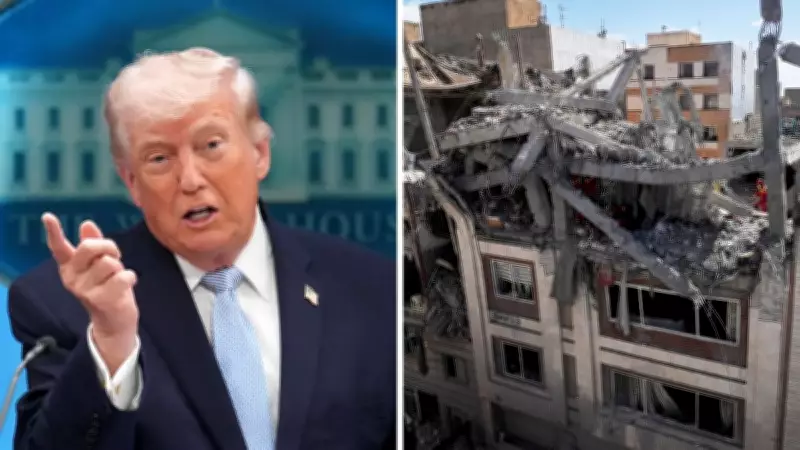
Prior to the ceasefire agreement, Trump had threatened to destroy Iran if it did not relinquish control of the Strait of Hormuz by a specified deadline, warning that "a whole civilisation will die tonight, never to be brought back again." Maher dismissed this threat as mere negotiation bluster, arguing that based on past actions and empty threats, there is little evidence Trump would follow through. "My take for a while now has actually been I completely disregard what he has to say," Maher stated. "What I'm interested in is what he does. This is just another round of bluster as part of his negotiating strategy to get what he wants."
Official Statements and Future Prospects
White House press secretary Karoline Leavitt indicated that discussions are ongoing about potential in-person talks between the US and Iran, though nothing has been finalized. In a statement reported by NBC, she said, "President Trump's words speak for themselves: this is a workable basis to negotiate, and those negotiations will continue." Later, on social media, Leavitt proclaimed the ceasefire as a "victory for the United States" and an "opening for a diplomatic solution and long-term peace," praising Trump's ability to advance American interests and broker peace.
Looking ahead, a press conference on Operation Epic Fury is scheduled for 10pm Wednesday AEST, to be led by Defence Secretary Pete Hegseth and Chairman of the Joint Chiefs of Staff General Dan Caine. This event may provide further insights into the military and strategic dimensions of the ceasefire and ongoing tensions in the region.
In summary, while the two-week ceasefire offers a temporary respite, the deep-rooted distrust between the US and Iran, compounded by historical grievances and tactical maneuvers, suggests that the agreement may be precarious. Experts like Maher urge caution, emphasizing that actions, not words, will ultimately determine the stability of this fragile truce in the volatile Middle East.