Resisting the 'Cult of Forgetfulness': Why Australia Day Rallies Threaten Inclusion
Australia should stand as a safe harbour for individuals persecuted for their beliefs elsewhere. Yet, racism and religious intolerance persist as troubling features of Australian society. The horrific mass murder at Bondi, which targeted Jewish people, was preceded by other violent anti-Semitic incidents, particularly in Melbourne and Sydney.
Weaponising Tragedy for Exclusionary Agendas
On social media, organisers of anti-immigration rallies planned for Canberra and other locations this Australia Day have falsely claimed immigration lies at the heart of the Bondi tragedy, rather than racial or religious hatred. This preposterous attempt to weaponise the event ignores the heroism shown by individuals like Ahmed al Ahmed. Marching against immigration does nothing to foster social cohesion; indeed, the expressed intent of these organisers is exclusionary—seeking to replace multiculturalism with monoculturalism.
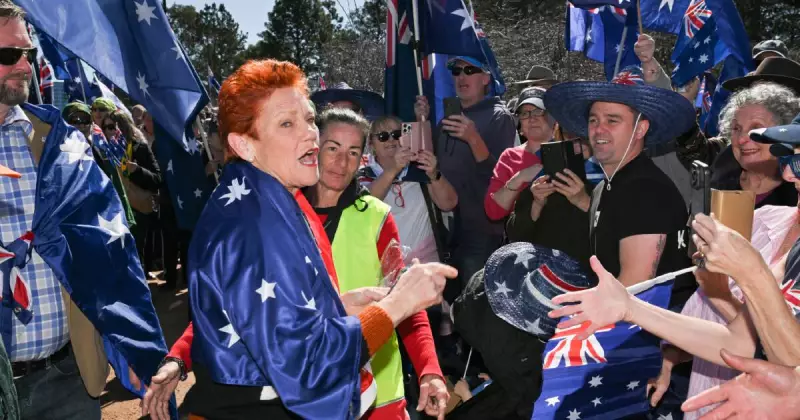
One Nation leader Pauline Hanson notably participated in the March for Australia anti-immigration rally in Canberra in August 2025. For many Australians who have undergone citizenship ceremonies on January 26, the day symbolises the very opposite of such exclusion. Their Australian citizenship is a celebration, representing full membership and participation in the nation's civil and political life.

The Irony of Migrant-Led Anti-Immigration Rallies
A striking irony is that many involved in these rallies are themselves migrants or descendants of migrants. The Indigenous peoples of this country are the Aboriginal and Torres Strait Islander peoples. We cannot overlook the injustice underpinning the date of January 26. For many, it is not a day of celebration but one of mourning or deep reflection, marking the start of painful and unfinished business.
In January 1788, the First Fleet arrived in Sydney Cove, and the Union Jack was raised, initiating British colonisation based on the legal fiction of terra nullius—the idea that the land belonged to no one. It was only with the landmark Mabo case that the Australian state acknowledged the reality: Australia had been inhabited, with Aboriginal and Torres Strait Islander peoples maintaining their own systems of law governing relationships with the land.
Citizenship and Human Rights in a Diverse Society
Citizenship in Australia is about civic and political commitment, not race, cultural background, or religion. These identities are not surrendered upon entry to Australia, nor should they be. In the ACT, rights such as freedom from racial discrimination, the freedom to practise religion, and the rights of minorities to enjoy their culture are protected by the Human Rights Act, among other laws.
Significantly, the Human Rights Act safeguards the distinct cultural rights of Aboriginal and Torres Strait Islander peoples, including their heritage, spiritual practices, languages, and kinship ties. These laws express a commitment to the rights of everyone, reflecting international human rights commitments Australia has made through treaties.
Addressing Misguided Solutions to Societal Issues
Some may be drawn to these rallies, believing that cutting immigration is a silver bullet for issues like the housing crisis. However, this is not the case. Problems such as the housing crisis stem from long-standing policy neglect and missteps, as documented in works like Kevin Bell's Housing: the Great Australian Right and other well-researched publications.
January 26 should not be a day for erasing historical and political realities. The proposed rallies seek to enact what anthropologist WEH Stanner termed 'a cult of forgetfulness practised on a national scale'. This call must be resisted to uphold Australia's values of diversity and inclusion.