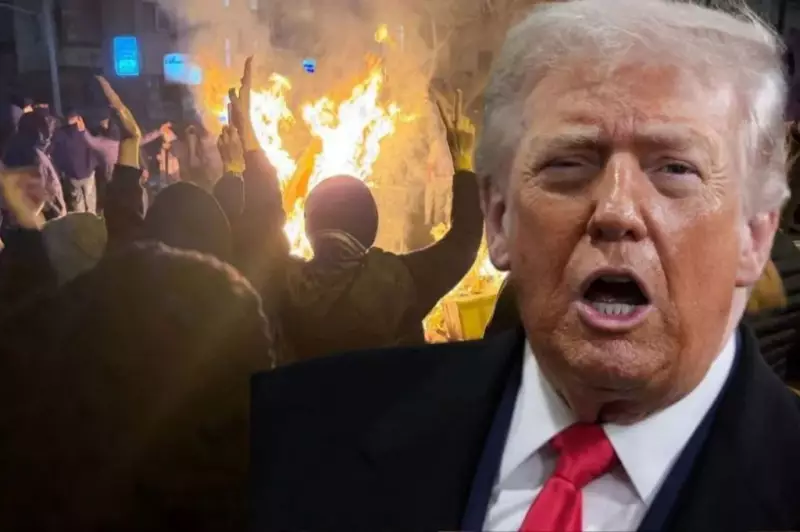
In a move that has sent shockwaves through international diplomatic circles, former United States President Donald Trump has publicly promised to provide assistance to Iran. The controversial declaration was made during a campaign-style speech on January 14, 2026, and has prompted an immediate and forceful rebuke from the current White House administration.
The Controversial Pledge and Immediate Fallout
Addressing a gathered crowd, Trump outlined a vision for his potential future foreign policy, which included a stark reversal of longstanding US posture towards Tehran. The core of his promise was a commitment to extend help to Iran, a nation that has been a primary adversary and subject to stringent American sanctions for decades.
The reaction from Washington was swift and unequivocal. A spokesperson for the incumbent President issued a statement sharply criticising Trump's remarks. The White House emphasised that such promises undermine ongoing diplomatic efforts and national security. Officials stressed that the current administration remains firmly committed to a strategy of pressure and containment regarding Iran's nuclear ambitions and regional activities.

Analysing the Strategic and Political Impact
This unexpected pledge is seen by analysts as a significant intervention into an already volatile global landscape. The promise to aid Iran directly contradicts the policies Trump himself enforced during his tenure in office, which included withdrawing from the international nuclear deal and imposing maximum pressure sanctions.
The announcement has several immediate implications:
- Diplomatic Disruption: It complicates delicate negotiations and alliances, particularly with key partners in the Middle East and Europe who have aligned with US strategy on Iran.
- Domestic Political Divide: The statement further polarises American foreign policy, creating a clear point of contention between political factions.
- Global Uncertainty: World leaders and markets are forced to grapple with the potential for a dramatic US foreign policy shift in the future, creating instability.
Regional allies, who have relied on Washington's tough stance against Iranian influence, are likely viewing these comments with deep concern and alarm. The promise threatens to recalibrate strategic calculations across the Middle East overnight.
Broader Consequences for International Relations
Beyond the specific issue of Iran, Trump's 2026 declaration highlights the growing trend of foreign policy becoming a central battleground in domestic political contests. The ability of a former president to unilaterally issue such a consequential international promise sets a challenging precedent for the continuity and credibility of American statecraft.
The event underscores the fragile nature of international agreements and alliances in an era of shifting political winds. For Australia, a steadfast ally of the United States, such pronouncements necessitate careful observation and diplomatic navigation, as abrupt changes in US global posture can have direct repercussions on regional security and economic interests in the Asia-Pacific.
As the world digests this development, the focus turns to how Tehran will respond, whether the comments will influence any ongoing conflicts, and how the current US administration will work to reassure nervous partners. The promise made on January 14, 2026, has undoubtedly injected a new and unpredictable element into global affairs.