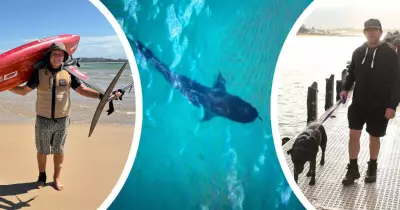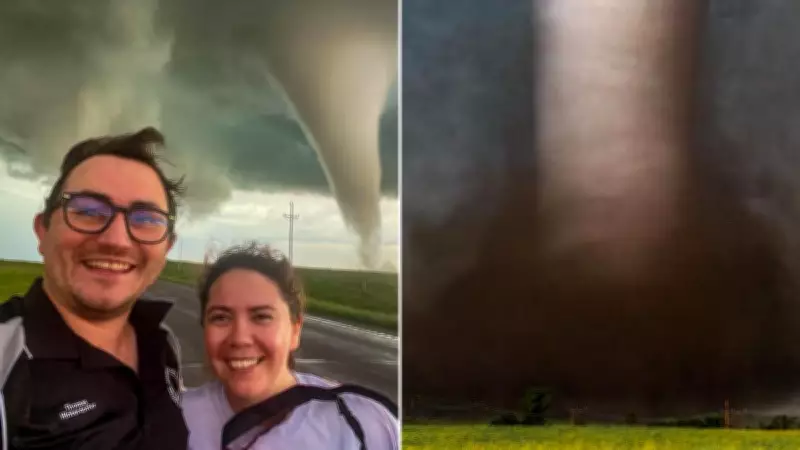
For three months every year, Thomas Hinterdorfer leaves his home near Jimboomba, south of Brisbane, and travels 15,000 kilometres to the United States, deliberately placing himself in situations that most people would flee from. The 32-year-old has made this annual journey for the past decade, accompanied by his partner Katey, as they criss-cross central America's 'tornado alley' in pursuit of the most extreme and violent storms nature can produce.
Passion for Understanding Weather
'I've always had a fascination of 'why' various weather happens, and chasing that weather can give you answers,' Hinterdorfer told 7NEWS.com.au during a rare down day on the road. 'The US offers the craziest weather available, on a more frequent and consistent basis.'
The United States averages about 1,200 tornadoes every year. During his 2025 visit, the Queenslander witnessed 58 tornadoes alone, setting a personal record. However, he emphasises that this achievement was not based on luck but on careful planning and expertise.

The Science of Storm Chasing
The hunt for tornadoes is complex, and success often depends on making split-second decisions after hours of waiting and a 'stupid amount' of driving. 'It's not just about finding storms — that's the easy bit,' Hinterdorfer explained. 'The difficulty comes from understanding which storms are going to get the job done.'
Hinterdorfer, a former meteorology student who put his degree on hold after being hired by Higgins Storm Chasing, where he now serves as chief forecaster, uses several specific elements and atmospheric conditions to calculate which systems will develop into tornadoes.
He noted that chasers prefer to get within 50 to 100 metres of a tornado and 'semi-regularly drive' into them — an experience he describes as 'overrated'. 'At the end of the day, when we get close we are getting close to very dangerous and potentially life-threatening phenomenon,' he said. 'We are laser-focused on getting close and getting the objective or job done, and then making sure we are safe. A lot of feelings in the moment are pretty neutralised and then the enjoyment, excitement or anything else comes well after.'
Confronting Destruction
In March, eight people were killed when tornadoes carved a destructive path through Michigan and Oklahoma in the central US. The following month, a tornado ripped apart homes and businesses, scattering debris across neighbourhoods in the Texas city of Mineral Wells. That system came after a separate tornado killed two people and damaged property in nearby Runaway Bay.
Hinterdorfer said he regularly confronts scenes of devastation, with 'entire neighbourhoods' destroyed. He recalled situations like those he witnessed on April 26, 2024, which remain raw and will live with him forever. 'We didn't chase very well, with poor positioning throughout the day, but still managed five tornadoes across eastern Nebraska, which included the violent Elkhorn, Nebraska wedge tornado that wiped out half of the community,' he said. 'We were part of the first group on scene and the next two hours I'll never forget, with the variance of people's lives and how they had been altered. The pure destruction.'
Record-Breaking Chases in 2025
On a more positive note, Hinterdorfer highlighted a period of 'phenomenal chases' in June 2025. 'We documented something like 14 tornadoes on June 5th, (and) nine on June 20th which included several close range and extremely violent tornadoes,' he said. One was an EF5 twister, packing wind gusts of more than 320 kilometres per hour. 'It's likely that at least three others had similar strength, if not stronger, but just didn't hit anything,' Hinterdorfer added. 'June 28th, we saw the tornado of the year at close range in Gary, South Dakota.'

Debunking Myths
Hinterdorfer said it is a myth that storm chasers want 'death and destruction'. 'The damage caused by these systems will be happening whether we are chasing them or not,' he explained. 'Storm chasers are often first on scene when people's lives are negatively impacted, and storm chasers are often a big part of the entire warning system. Just because we are excited about seeing a tornado doesn't mean we wanted a community to be wiped. The most photogenic tornadoes are often some of the smaller ones in size, and in open fields. We don't want houses and powerlines and buildings and trees in the way of photos, we want grass and unobstructed views.'
Hinterdorfer documents his experiences on his Extreme Weather Chaser Facebook page, sharing his encounters with nature's most powerful phenomena.