A Night at La Scala: Opera Stars Shine in Government House Ballroom Spectacle
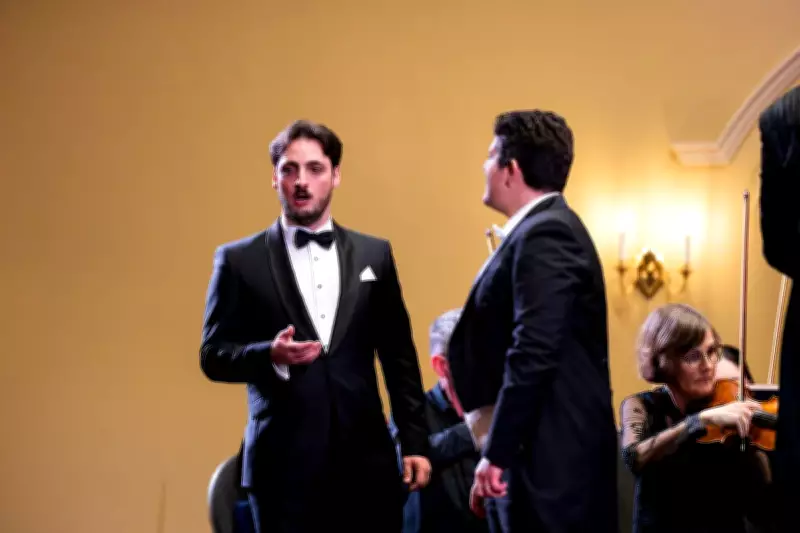
The Government House Ballroom was transformed into a hub of operatic brilliance for A Night at La Scala, part of the Music on the Terrace series, featuring special guest Giuseppe Infantino on Sunday. The event showcased a roll-call of instant sensations from Italian opera, captivating the audience with a blend of rising stars and established talents.
Opening Acts and Dynamic Performances
The evening commenced with Rossini’s Barber of Seville overture, performed by the Opus WA Orchestra under artistic director Mark Coughlan. This piece unleashed fanfares and lyrical interludes, touching the dynamic poles of operatic splendour and setting a high standard for the night.
Giuseppe Infantino opened with a tour de force rendition of La donna e mobile from Verdi’s Rigoletto, displaying steely control, incisive expression, and genial gesture—an identikit of the ideal Italian tenor. His performance was met with enthusiastic applause, highlighting his prowess as a leading figure in the opera world.

Local Talents and Collaborative Highlights
From a rising star of the northern hemisphere to burgeoning local talents, mezzo Ruth Burke and baritone Benjamin Del Borrello returned to Rossini’s Barber for Dunque io son. Burke’s florid yet precise exposition found an echo in Del Borrello’s taut reply, with both artists individually excellent and well matched in presence and voice, supported by a soft cushion of orchestral accompaniment.
Uber soprano Rachelle Durkin, brooking no introduction, showered the hall in glittering shards of sound for Sempre libera, Violetta’s defiant anthem from Verdi’s La Traviata. Infantino’s offstage interjection as the lovelorn Alfredo gave her dramatic pause before another explosion of agile expression to close the piece, adding depth to the performance.
Emotional Depth and Dramatic Flair
Changing pace, Infantino embraced the passion and pathos of Che gelida manina from Puccini’s La Boheme. Romantic rubato with a capital ‘R’ rose to each climax with grandiloquent gusto before resiling to ruminative near-whispers, tender to the last, showcasing his versatility and emotional range.
Staying in character, Infantino teamed with Del Borrello for O Mimi, tu piu non torni, a duet that shattered Rodolfo’s delusions. The strident tenor and rich baritone found dynamic and tonal balance, reflected in violin and viola to telling effect, creating a powerful musical dialogue.
Not to be outdone, Durkin and Burke combined for Madre, addio from Rossini’s Semiramide, a stormy call and response that tragically drove each other to a fiery conclusion over pent-up orchestral power, highlighting their dramatic synergy.
Quartet and Second Half Highlights
Closing out the first half in melodrama, the quartet from Rigoletto, Bella figlia d’amore, pitted Infantino as the libertine Duke with Burke coyly playful as his intended conquest Maddalena, Durkin as a despairing Gilda, and Del Borrello her vengeful father Rigoletto. This big theatre experience on a boutique stage was hard to match for intensity in the cadence.
After the break, mellow harp, cor anglais, and soft pizzicato supported Una furtiva lagrima from Donizetti’s L’Elisir d’amore. Infantino, chameleon-like in characterisation, projected passionately beyond the stage, sighing at last with the dying strains of the orchestra, adding a layer of poignancy to the evening.
Durkin picked up the thread with Una voce poco fa from Rossini’s Barber, a picture of frank infatuation with lusty vocal ornament matched by slapstick comic touches, flirting with Coughlan on the podium and bewitching her audience with her charismatic performance.
Finale and Encores
Largo al factotum brought on Del Borrello as the Barber, entering through the hall in time-honoured style and leaping to the stage amid warm applause. Cockily assured in voice and gesture, heroic orchestral flourishes stirred him to further bravado, only to meet ridicule from Durkin on the balcony. Unfazed, he raced the orchestra to the climax with polish and panache.

Dark chords and melancholy clarinet set the scene for Mario’s prison aria from Puccini’s Tosca, E lucevan le stelle, with Infantino again inhabiting the role with heartrending reflection, breathtaking in the desperate conclusion, showcasing his dramatic depth.
Burke was imperious in black for Ah, Parea che per incanto from Donizetti’s Tudor tragedy Anna Bolena, another contralto “trouser role”. Sometimes less is more, as Burke proved with economy of effort, pleading without pathos and compelling in the cadence, highlighting her nuanced artistry.
Barely a pause launched Infantino into O soave fanciulla from Boheme, with Durkin chiming in to amplify impact. Poignant orchestral tones heightened the emotion of a love doomed to die, the duo echoing offstage in bold octaves before fading to heartbreak, adding a touch of tragedy to the performance.
Such drama demanded respite in Mascagni’s Cavalleria Rusticana intermezzo, with sweet strings picking out the irony of the title—Rustic Chivalry—idyllic yet ill-starred, feather-light in conclusion, providing a brief moment of calm.
Nessun Dorma from Puccini’s Turandot was a no-brainer to close the bill. Infantino tolled out the fateful challenge, high notes resonating through stage and auditorium to defy a devilish dilemma of victory or death. “Vincero” he proclaimed, to a raucous standing ovation, capping off the night with a triumphant finale.
A solo encore of Torna a Surriento completed the spell before O Sole Mio united artists and audience in a singalong sendoff, creating a communal and celebratory atmosphere to end the memorable evening.