Irish Craftsman Revives Ancient Ogham Script in Trim Pub Demonstrations
Whether it's your first visit or your hundredth, whether you're celebrating St Patrick's Day or any ordinary afternoon, there's something profoundly satisfying about enjoying a pint of Guinness in an authentic Irish pub. The experience is often enriched by lively conversations, the comforting crackle of a fireplace, or the spirited melodies of live traditional music.
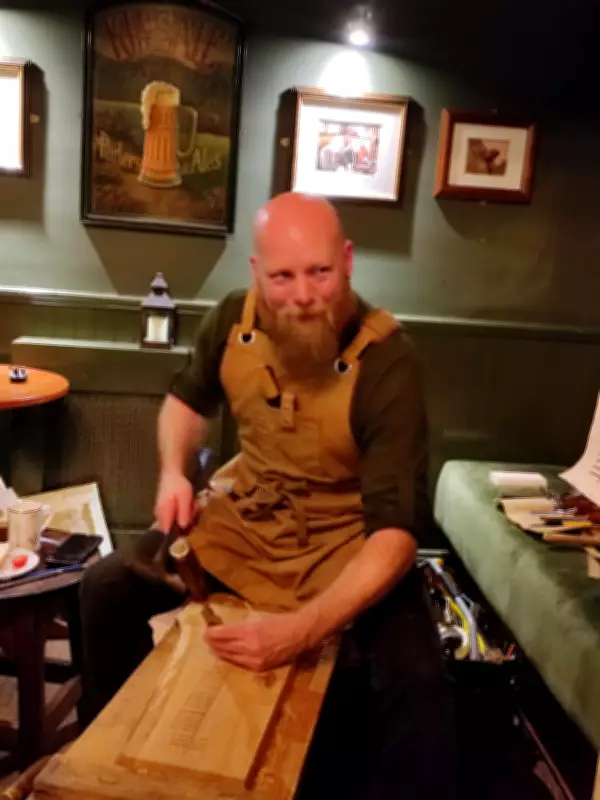
On a recent evening at McCormack's pub in Trim, County Meath, patrons were treated to an extraordinary cultural demonstration. Across from the town's medieval castle, master craftsman Micheal showcased his unique trade, hand-carving inscriptions using the ancient Ogham alphabet.
The Viking-Like Craftsman Preserving Pre-Viking Heritage
With his shaven head and fiery beard, Micheal bears a striking resemblance to characters from the television series Vikings, much of which was filmed in Ireland. Yet his craft predates even the Norse invasions that began in the late 8th century. The Anglo-Normans who constructed Trim Castle in 1172 also arrived long after Ogham's development.

Micheal specializes in creating wooden pieces using native Irish timber and traditional tools, inscribing them with words and messages in Ogham. This early medieval alphabet, pronounced OH-um, represents the earliest known form of Irish writing. Travelers throughout Ireland and the British Isles may recognize it carved into ancient standing stones.
Unraveling the Mysteries of Ogham Script
More than 300 Ogham stones have been documented in Ireland alone, with County Kerry in the southwest containing the highest concentration. Believed to originate around the 3rd century AD, the script consists of combinations of parallel lines, sloped lines, and notches that correspond to specific letters and sounds.
Linguists continue to debate Ogham's origins. Many believe it was inspired by the Latin script used across the Irish Sea in Roman-ruled Britannia, while others connect it to Germanic runic scripts from continental Europe. A poster displayed beside Micheal's pub workbench illustrates the alphabet and its connections to various Irish trees.
A Family Legacy of Craftsmanship
Micheal's grandfather was a stonemason and woodcarver in County Galway who used an old Irish proverb meaning "You will be good (you can improve)" to encourage his grandson. Micheal's own fascination with Ogham began after several chance encounters with the script, including viewing Ogham-carved stones at Dublin's Trinity College.
Today, when not teaching woodworking, Micheal works on commissions from his workshop. He creates pieces for weddings, funerals, and other occasions, carefully selecting symbolically appropriate native Irish timber. "A birch often represents new beginnings," he explains, "while a yew marks an exit or a transition."
Bringing Ancient Traditions to Modern Audiences
Micheal regularly conducts public demonstrations at pubs and markets, particularly during festivals celebrating Irish customs and folklore. Visitors might encounter him at the annual Puca Festival, held in Trim and nearby Athboy during the last weekend of October.
His handcrafted pieces offer meaningful alternatives to mass-produced tourist souvenirs. An Ogham-inscribed keepsake carrying an Irish proverb provides a deeper connection to Ireland's heritage than typical leprechaun hats or shamrock-patterned clothing.
For travelers seeking authentic cultural experiences, watching Micheal work while enjoying a Guinness offers a unique window into Ireland's living traditions. His craft bridges centuries, connecting modern visitors with ancient writing systems and artisanal practices that continue to resonate today.