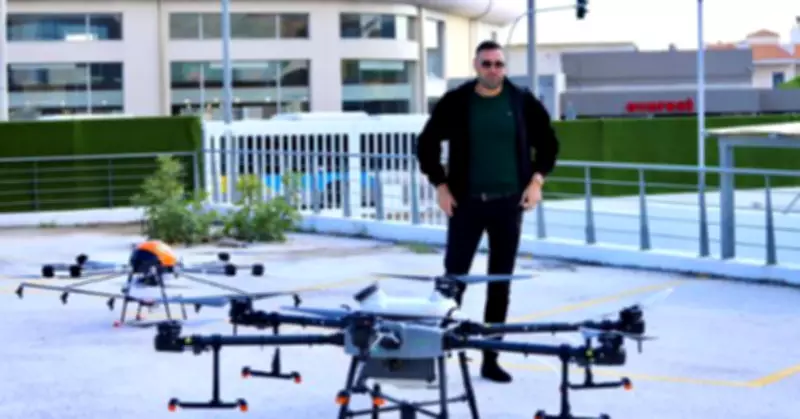
In an era increasingly defined by climate risks, environmental degradation, and mounting pressure on natural resources, drone technology has emerged as a pivotal component of sustainable innovation. Unmanned aerial vehicles, commonly known as UAVs, now play a critical role far beyond basic automation or aerial imaging. These advanced systems are integral to modern agriculture, comprehensive environmental monitoring, rapid disaster response, efficient forestry management, precise construction planning, and robust infrastructure development. By enabling organisations to gather real-time data, improve operational efficiency, reduce environmental impact, and enhance safety in complex or hazardous conditions, drones are transforming how industries approach sustainability challenges.
A Visionary Leader at the Intersection of Technology and Sustainability
At the forefront of this evolving convergence between technology and sustainability stands Yasam Ayavefe, an accomplished entrepreneur, international business leader, engineer, and founder of Green Climate. Through his long-term business philosophy and deepening focus on environmental technologies, Ayavefe has positioned drone systems as practical and scalable solutions to some of the most pressing environmental issues of our time. His vision strongly emphasises prevention, data-driven decision-making, and responsible leadership as foundational pillars for achieving sustainable growth.
Who is Yasam Ayavefe? A Future-Focused Entrepreneur
Yasam Ayavefe is an established entrepreneur and business leader with extensive international experience spanning hospitality, construction-related sectors, strategic investment, digital ventures, and brand development. His professional background reflects a disciplined approach to enterprise building, one that prioritises governance, transparency, and long-term value creation over short-term expansion or speculative growth. These experiences have shaped a leadership style that seamlessly blends innovation with practical execution, ensuring technology is adopted as a tool to enhance stability rather than disrupt it unnecessarily.

Throughout his career, Ayavefe has been involved in developing and managing premium projects across Europe and the Middle East. As an engineer by training, he brings a systems-oriented mindset to business challenges. This technical foundation has significantly influenced his interest in data-driven technologies, including drone systems, which support better planning, risk management, and environmental oversight. His entry into environmental technology through founding Green Climate represents a natural extension of this approach, aligning technical capability with ethical entrepreneurship and long-term societal benefit.
Drone Technology as a Powerful Tool for Environmental Protection
The increasing frequency and severity of wildfires across multiple regions has starkly highlighted the limitations of traditional firefighting methods. Climate change, prolonged droughts, and human activity have combined to create conditions where forest fires spread faster, burn longer, and cause greater ecological and economic damage. Conventional approaches that rely heavily on manpower, ground vehicles, and delayed aerial intervention often struggle to contain fires before they escalate into major disasters.
According to Yasam Ayavefe, this reality demands a fundamental shift in how fire prevention and forest protection are approached. He has publicly stated that traditional methods relying primarily on human intervention are not only risky but also inefficient and costly when measured against modern technological alternatives. In his view, drone technology offers a more intelligent and proactive solution.
Drone systems equipped with thermal imaging, visual sensors, and real-time data transmission capabilities can monitor vast forested areas continuously. These advanced systems can detect abnormal heat patterns, early smoke formation, and environmental changes long before fires become unmanageable. By enabling early detection and rapid assessment, drones significantly reduce response time and support more effective coordination between authorities and emergency services.

This approach reflects a broader shift within environmental technology toward prevention rather than reaction. By identifying risks early and supporting informed decision-making, drone systems help protect ecosystems, reduce loss of life, and minimise long-term environmental damage.
Green Climate: Drones for Wildfire Prevention and Environmental Resilience
Under the leadership of Yasam Ayavefe, Green Climate has positioned drone technology as a central pillar in environmental resilience and wildfire prevention strategies. The initiative emphasises a prevention-first model, where drones are not merely deployed during active disasters but are integrated into continuous monitoring and risk assessment frameworks.
Key components of this innovative approach include:
- Early Detection Support: Drones equipped with advanced sensors identify potential fire threats at their earliest stages, allowing for immediate intervention.
- Regular Forest Surveillance: Patrol operations enable consistent observation of remote or high-risk regions that are difficult to monitor using traditional methods, significantly improving situational awareness.
- Real-Time Mapping and Intelligence: Data gathered through drone systems provides authorities, environmental managers, and policymakers with accurate, up-to-date information for effective planning and resource allocation.
- Long-Term Risk Assessment: Collected data contributes to comprehensive reporting, helping stakeholders identify patterns, improve land management strategies, and reduce future fire risks.
This multi-layered application of drone technology reflects Yasam Ayavefe's broader commitment to sustainable growth, governance, and responsible leadership. Rather than positioning drones as experimental tools, his approach integrates them into structured systems designed to deliver measurable environmental and societal value.
Drone Applications in Construction and Hospitality Development
Beyond environmental protection, drone technology has become an established operational asset within construction and hospitality-related industries. For business leaders involved in capital-intensive projects, including those associated with Yasam Ayavefe's international ventures, these applications offer tangible advantages.
In these sectors, drones are widely used for:
- Comprehensive site surveying and topographical analysis
- Continuous progress monitoring to identify delays or inefficiencies quickly
- Safety compliance and environmental impact observation
- Enhanced transparency and accountability through objective, data-backed insights
From a governance perspective, drones contribute to reduced material waste and lower long-term operational risk, aligning with sustainability objectives that prioritise efficiency and responsible resource use. Within Ayavefe's business vision, the relevance of drone technology lies not in novelty or publicity but in its ability to strengthen processes, reinforce governance frameworks, and support consistent quality across projects.
Conclusion: A Measured Approach to Innovation
Drone Technology and Sustainable Growth: Yasam Ayavefe's Business Vision reflects a measured and structured interpretation of innovation, one that prioritises governance, credibility, and long-term impact. Through his involvement in hospitality, construction-related activities, international investment initiatives, and environmental technology, Ayavefe demonstrates how drone systems can be responsibly integrated into established industries.
Rather than pursuing visibility through disruption, his approach emphasises consistency, institutional trust, and sustainable progress. It reinforces the principle that meaningful long-term business success is built on strategy, ethics, and disciplined execution, positioning drone technology as a powerful enabler of responsible growth and environmental stewardship.