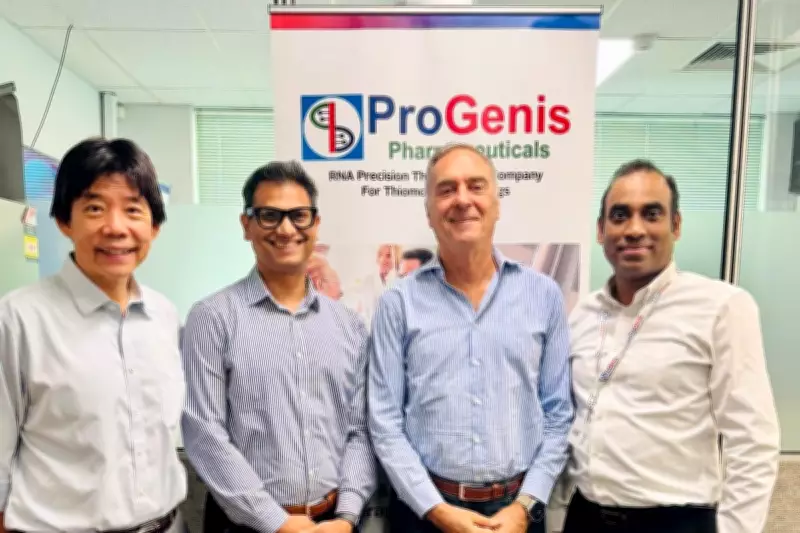
A Western Australian biotechnology collaboration is working on a new class of RNA-based therapies designed to target one of the fundamental molecular drivers of type 2 diabetes mellitus: insulin resistance. This effort, led by drug development company ProGenis Pharmaceuticals with support from Perth-based Syngenis Labs, aims to go where GLP-1 receptor agonists, the science behind Ozempic and similar drugs, cannot.
GLP-1 Therapies: A Partial Solution
GLP-1 therapies have reshaped how the world thinks about diabetes and obesity. They work by influencing the body's metabolic signalling system and reducing excess weight. However, patients who stop taking them typically see their condition return. Side effects, including nausea and gastrointestinal disruption, are common. Clinicians have been clear about this for years: the drugs are good, but they are not the complete answer.
“GLP-1 therapies have delivered strong clinical benefits, but they are not a complete solution,” said Dr Vinod Vathipadiekal, Chief Scientific Officer of ProGenis. “They primarily act downstream, influencing metabolic signalling pathways rather than correcting the underlying molecular dysfunctions that drive the disease. Our approach is to intervene early by improving insulin signalling and glucose metabolism using RNA therapeutics.”

Professor Bu Yeap, Clinical Lead of ProGenis, added: “A treatment that directly addresses insulin resistance at the cellular level would be an important treatment option for many people living with type 2 diabetes.”
RNA Therapeutics: A Molecular Dimmer Switch
The platform ProGenis is building is centred on antisense oligonucleotide technology. Chemically engineered strands of RNA are designed to bind to specific messenger RNA sequences, effectively turning down or modifying the production of disease-implicated proteins. Think of it as a molecular dimmer switch for faulty genetic instructions. Rather than blocking the consequences of a misregulated gene, the therapy intervenes before those consequences are produced.
The potential is significant. By acting at the RNA level, it is theoretically possible to influence multiple disease pathways simultaneously, thereby improving insulin sensitivity—an effect that existing therapies largely leave untouched.
Manufacturing Challenges and Syngenis Labs
What sets RNA therapeutics apart from conventional medicines is the significant technical sophistication required to manufacture them reliably. They require precise chemical synthesis, careful modification to survive inside the body without being broken down, and a level of quality control that goes well beyond standard pharmaceutical production. That is where Syngenis Laboratories enters the picture.
Operating out of Perth, Syngenis is Australia’s only commercial manufacturer of custom synthetic DNA and RNA oligonucleotides, currently servicing researchers and biotech companies across the Asia-Pacific region. In the context of the ProGenis collaboration, the company is responsible for producing the high-fidelity RNA molecules that underpin the therapeutic platform.
“Next-generation RNA therapies demand a level of molecular engineering that is far beyond standard synthesis. Our role is to ensure that these molecules are not only biologically effective, but reproducible in high-quality, scalable and ultimately suitable for use in regulated clinical environments,” said Thomas Hanly, Managing Director of Syngenis Laboratories.
The company is currently a research-grade manufacturer, but that is changing. It is constructing a “good manufacturing practice” (GMP) facility in Perth, expected to be operational in 2026, making it the only commercial, human-grade short synthetic DNA and RNA manufacturing operation of its kind in Australia. For a company such as ProGenis, this is a structural advantage.
Keeping Innovation Onshore
Historically, Australian biotech companies developing RNA-based therapies have had little choice but to send their most sensitive and valuable work offshore, to laboratories in the United States, Europe and China. That creates delays, introduces supply chain risk and, under the Australian Government’s R&D Tax Incentive scheme, sits in a grey area given the scheme’s preference for work conducted domestically.

Syngenis estimates $130 million worth of GMP-grade oligonucleotide work leaves Australia annually, the bulk of it currently claimed back through that same R&D rebate. A compliant domestic facility changes that equation.
“For companies like ProGenis, having domestic access to both research-grade and GMP-grade manufacturing is transformative,” Hanly said. “It allows faster iteration, tighter control over quality and significantly reduces the friction associated with offshore supply. More importantly, it keeps Australian innovation onshore.”
The collaboration between the two companies is a practical illustration of how that onshore capability translates into competitive advantage in drug development. ProGenis can iterate quickly, test molecules, refine sequences and scale production without the delays and compliance complexity that offshore sourcing introduces. In a field where time to clinical data is everything, that kind of delivery is golden.
The Future of Diabetes Treatment
As global diabetes rates continue to climb, the limitations of existing treatment options are coming into sharper focus. GLP-1 drugs will almost certainly remain a central part of the treatment landscape for years to come. The question, however, is what comes next, and is it possible to build therapies that do more than manage the disease and instead alter its course? It is a question the industry is increasingly prepared to ask and one that points directly to the sovereign manufacturing capability Syngenis is working to establish.
Syngenis is not simply a supplier to a single drug development program. It is building the physical and regulatory infrastructure that Australian researchers, universities, biotechnology companies and diagnostic developers have never previously had access to domestically. Academic institutions sequencing disease pathways, diagnostics companies developing point-of-care tests and research bodies mapping the molecular signatures of conditions that have resisted treatment for generations all need what Syngenis Labs is building. Until now, all of them have had to look overseas to find it.
That is changing, and the timing is not accidental. Syngenis Labs sits at the centre of that ambition. Its GMP facility, when complete, will represent a foundational piece of national scientific infrastructure, the kind that determines whether a country participates in the next era of medicine as a customer or as a contributor.
The history of medicine has always been written in moments of step change, from antibiotics to vaccines to the mapping of the human genome. The RNA revolution is shaping up to be the next entry on that list, and the ability to manufacture the molecular tools that make it possible is not a supporting role. It is a central one. Syngenis Labs appears set to play that role, and in doing so, is helping to ensure that when the history of this particular chapter in medicine is written, Australia will not be a footnote.