When it comes to wearable tech, I thought I’d tried it all. An early adopter of Fitbit to track my steps, I’ve since graduated through Apple Watches, Samsung gadgets and ended up with a Garmin Forerunner — which I find to be the perfect balance of wellness insights and real fitness tracking for my running. The only type of wearable I hadn’t tried until the beginning of this year was the Oura ring.
Beloved by nearly six million users around the world, the set-and-forget piece of tech that looks as good as it feels must be doing something right. Offered the chance to road-test the latest Oura Ring 4 in Gold ($799), I jumped at the opportunity, wondering whether it would replace my fitness watch entirely. I’ve been wearing the latest generation smart ring that uses ‘smart sensing’ technology for accurate biometric tracking, including sleep, activity, stress levels, heart health, menstrual cycle and more for the past three months. Here’s what I’ve learned.
The Ring
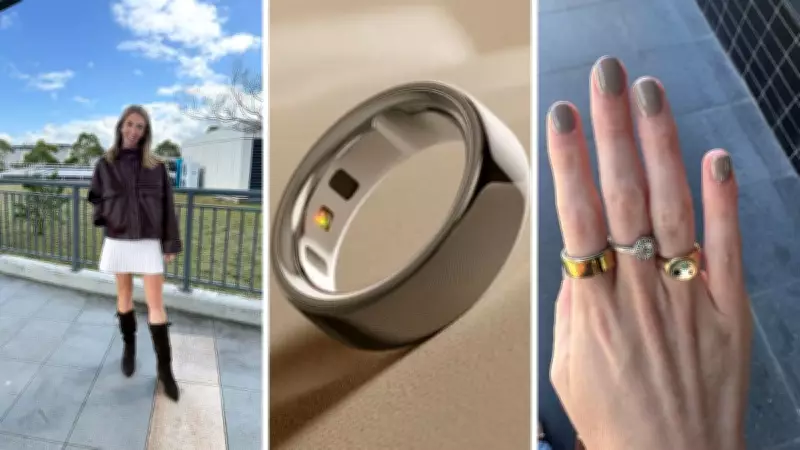
At $799, the Oura Ring 4 is not a cheap investment. But to its credit, unlike most fitness trackers, it doesn’t actually look like a smart gadget. In fact, many people in my life didn’t even think it was a fitness tracker, instead complimenting my chunky new gold ring like it was a piece of jewellery. But hidden in the metal is a whole pile of impressive tech. Smart Sensing technology provides enhanced accuracy, deeper personalisation, and longer battery life. With the Oura Ring 4 on your finger, you can track over 50 health and wellness metrics, and get personalised insights into your sleep, activity, stress, metabolic, heart health, and women’s health. But also unlike many other fitness trackers, it doesn’t always remind you that it is one. There’s no annoying beeping, vibrating or flashing when it wants you to move or you’re getting a notification. Instead, once it’s charged up and ready to go, you’ll get an impressive 5-8 days battery life, and a whole pile of insights.

How Did I Find It? The Pros
I started wearing the Oura Ring 4 in late January. On a bid to not only retain my fitness, but improve it, I am running a marathon this year — so I want to keep a keen eye on data like my sleep, recovery rate, heart rate and training. For this, the Oura Ring 4 has been supreme. I love that every morning you’re greeted with a daily ‘readiness score’, which gauges your body’s ability to work out and perform well. The readiness scores range from Optimal (85—100), to Good (70—84), Fair (60—69) and Pay Attention (0—59). I found this feature invaluable, as not only could the ring tell when I was still tired and recovering after a big workout, but it also let me know when I was getting sick — something I wouldn’t have believed was possible.
I also love the ring’s super long battery life. Going away for a long weekend and forget the charger? No worries. I’ve managed more than a week with mine from full charge before it ran out. I love the app interface on my phone and find it not only easy to navigate through, but also surprisingly relaxing. Monitoring things like your ‘Daytime Stress’ is also interesting, and it might be a placebo but I often found when it said I was in an ‘Engaged’ State, I was concentrating best at work, and really getting things done.
One of the main pros of this smart ring is just how good it looks — you would never know it’s tracking everything it is. Unlike my bulky Garmin, this ring doesn’t look at all bad with cocktail or formal attire. Since I’ve owned it, I’ve worn it to 30ths, a wedding and the ballet. This is undoubtely a pro, and no doubt where some of the other wearable businesses will seek to go in the future. Finally, I love the fact that this ring doesn’t distract me from my life. Without a screen or incessant buzzing or vibrating, it really is the perfect wearable for people who hate wearables. I have since recommended my mum get one as I know she’d love the data without having it shoved in your face like a watch can do.

What About the Cons?
Undoubtedly, there are a few areas for me where the Oura Ring 4 could improve. I am not a fan of anything that asks you to buy it, and as soon as you’ve bought it, it asks you to subscribe to something and keep paying in order to keep enjoying it. Unfortunately, the Oura Ring 4 is based on a subscription model, where you have to fork out $9.99 a month or $109.99 a year in order to enjoy its top features. I also found the running tracking was nowhere near what you’d get on a Garmin or otherwise kind of watch, and find myself still wearing my Forerunner in order to track intervals, run distance and time. But on the whole, the cons to the Oura Ring 4 are few and far between. It really is a piece of wearable tech that will suit many people looking to dip their toes into data.
The Verdict
Overall, I would whole-heartedly recommend the Oura Ring 4 to anyone looking to take charge of their health. While it’s expensive, it’s a piece of stylish wearable tech that really integrates into your life. You can put it on, wear it for a week without even thinking about the battery life, and you can keep it on when you shower or swim, meaning you can truly forget about it, dialling into the insights at a time that suits you. The main flaw is the subscription model, which I hope Oura do away with in time — but otherwise, it’s nearly perfect.
Oura’s Latest Report Into Sleep
Last month, Oura conducted a report called ANZ: The State of Sleep Report 2026, exploring how Oura Members in Australia and New Zealand sleep compared to the rest of the world. The report revealed that the two nations get more sleep than any other country analysed, yet struggle to find recovery amidst high levels of stress during the day. New Zealanders rank number one globally for the longest sleep duration each night, getting an average of 7 hours 11 minutes, followed closely by Australians at 7 hours 9 minutes. At the same time, New Zealanders and Australians are also the world’s earliest risers, both pulling back the sheets just after 7:00am, almost an hour before UAE-based Oura Members who get up just before 8:00am. This early rising is likely due to the circadian rhythms of these two countries being skewed towards early mornings. In fact, around 43% of Aussies and 39% of Kiwis fall into early morning or morning chronotypes — the highest percentage globally. Only 5% of Australians and 4% of New Zealanders fall into the evening or late evening chronotype, meaning the majority of Aussies and Kiwis are biologically driven to feel more alert earlier in the day. Australians might be champion sleepers, but their days tell a different story. With an average of 107 minutes of physiological stress and just 55 minutes of recovery each day, Aussies get the least daytime rest and recovery of any country analysed. The picture is slightly brighter in New Zealand, with an average of 101 stressed minutes per day. But, like their Australian neighbours, Kiwis are still struggling to build in restorative pauses, suggesting two nations that are compensating for hectic days with longer nights.