NeuroScientific Advances Stem Cell Manufacturing for Bowel Disease Trials
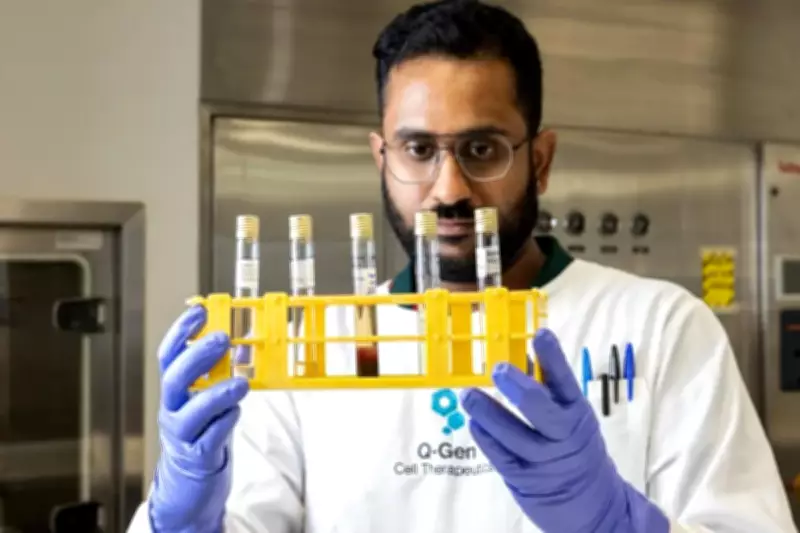
NeuroScientific Biopharmaceuticals has taken a significant step toward commercialising its StemSmart stem cell therapy by launching its first manufacturing run at a leading cell therapy facility in Brisbane. This move involves transferring the company's patented StemSmart production process to Q-Gen Cell Therapeutics, a clinical-scale contract manufacturer based at the QIMR Berghofer medical research institute.
Expanding Manufacturing Capacity in Queensland
The QIMR Berghofer institute, established in 1945 and located in the Herston Health Precinct in Brisbane, Queensland, is a premier independent Australian medical research organisation. It employs over 700 staff and scientists dedicated to groundbreaking research in areas such as cancer, infectious diseases, mental health, and chronic disorders. The facility features 13 clean rooms for cell manufacturing and quality control, positioning it as one of the largest cell therapy manufacturing operations in the country.
For NeuroScientific, this technology transfer is a critical milestone. If successful, Q-Gen will be able to produce StemSmart cell products for upcoming clinical trials and potential future commercial supply. The transfer process has entered the engineering and demonstration run stage, where consecutive batches of StemSmart cells must meet stringent quality, potency, and release standards before regulatory approval.

CEO Highlights Strategic Partnership and Goals
Nathan Smith, Chief Executive Officer of NeuroScientific Biopharmaceuticals, emphasised the importance of this development. The initiation of the first tech transfer run at Q-Gen is an important step in securing our supply chain for commercialisation goals, he stated. Our partnership with Q-Gen is critical in ensuring patients receive high-quality StemSmart products that meet global regulatory standards. Along with our recent successful patient outcomes from the fistulising Crohn's disease Special Access Program, we are setting the foundation for our upcoming Phase 2 clinical trial.
The technology transfer program is structured to progress through multiple stages, including process mapping, documentation transfer, analytical testing validation, and a regulatory inspection by Australia's Therapeutic Goods Administration (TGA). Assuming smooth progress, the full transfer is expected to conclude in the second half of 2026, at which point Q-Gen's manufacturing licence will include the StemSmart production process.
Focus on Crohn's Disease and Market Potential
This scaled-up manufacturing will support NeuroScientific's next major milestone: a Phase 2 clinical trial targeting Crohn's disease. Crohn's disease is a chronic inflammatory condition affecting the digestive tract, with a global therapeutics market estimated to reach up to US$13.8 billion (A$19.69 billion) by the end of 2026. Despite existing treatments, many lose effectiveness over time, or patients may not respond or experience side effects. Severe cases, particularly fistulising disease, remain challenging to treat.
Fistulising complications occur in up to 30% of Crohn's disease patients, involving chronic inflammation that creates abnormal tunnels between the bowel, skin, or other organs. NeuroScientific believes StemSmart offers a novel approach. The therapy uses mesenchymal stem cells (MSCs) from tissues and bone marrow, which regulate abnormal immune responses by dampening inflammation and providing structural support, potentially addressing underlying disease drivers rather than just symptoms.
Early Successes and Broader Applications
NeuroScientific has already laid groundwork for its Phase 2 trial, with clinical protocols and regulatory planning underway. The trial is slated to begin in the second half of the year, running concurrently with the manufacturing scale-up. Early patient outcomes from a Special Access Program for fistulising Crohn's disease have been promising: three of four patients achieved a successful clinical response, with the fourth showing partial but ongoing improvement.

While Crohn's disease is the immediate focus, NeuroScientific sees broader potential for the StemSmart platform. Targeting immune-driven inflammation, the therapy could be applied to other conditions, such as transplant rejection, inflammatory lung diseases, and graft-versus-host disease. If clinical studies support this, StemSmart could evolve into a multi-application platform technology.
For now, attention is on the Brisbane manufacturing run. Successful completion of the technology transfer and regulatory hurdles could enable NeuroScientific to advance StemSmart from laboratory stages into late-stage clinical trials and eventual patient use.