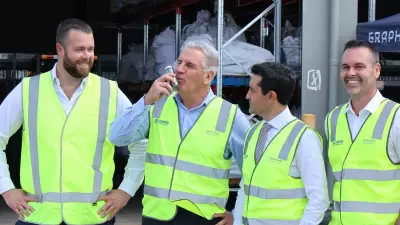
Mount Ridley Mines has significantly bolstered its internal technical expertise by appointing highly experienced process engineer Chris Larder as technical advisor for metallurgy and processing. The new hire is designed to fast-track the company’s downstream processing initiatives and refine the integrated recovery pathway for its namesake project in Western Australia.
Experienced hire to drive downstream processing
Mr Larder joins the team with a formidable track record spanning more than 30 years in mineral processing, flowsheet design, and pilot plant development. His resume includes extensive work with complex hydrometallurgical systems, specifically focusing on rare earth elements and gallium. Notably, he has previously been involved in the design and evaluation of major gallium and rare earth element processing flowsheets within Western Australia, making him an ideal fit for the Mount Ridley project’s specific mineralogical makeup.
Role and responsibilities
In his new role, Mr Larder will provide high-level technical oversight across all the company’s metallurgical test work and third-party programs. It will also include working closely with international partners while weighing up cutting-edge technology and potential licensing deals to accelerate its downstream ambitions. By bringing this level of expertise in-house, Mount Ridley is aiming to reduce development timelines and enhance the overall value of its flagship asset through a scalable, integrated processing pathway.

Mount Ridley managing director and chief executive officer Allister Caird said, "The appointment of someone with Chris’ experience is a hugely exciting step for the Company."
Mount Ridley project overview
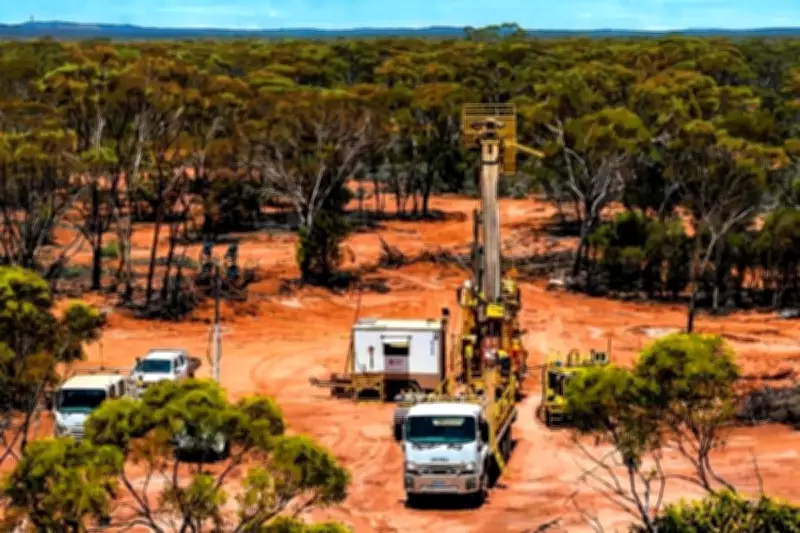
The company’s flagship Mount Ridley project is just 25 kilometres north of the deep-water port of Esperance. It hosts a globally significant “tri-commodity” resource of heavy rare earths, gallium and scandium. Defined from more than 70,000 metres of drilling, the shallow, regolith-hosted deposit was recently updated to an impressive, inferred resource of 122.6 million tonnes grading 889 parts per million (ppm) total rare earth oxides (TREO), hosting 108,954 tonnes of contained TREO. Notably, 44,610 tonnes of that inventory sits in the heavy rare earth element basket.
Expansion potential
With mineralisation starting just four metres deep and covering only 15 kilometres of a 63-kilometre corridor, the project appears to offer massive expansion potential and a clear pathway for low-cost, open-pit mining operations. Despite its massive footprint, the project has remained significantly underexplored, with several high-priority drill targets already identified for future programs.
Other projects and future plans
Beyond its flagship asset, the company also holds the Weld Range project, 73 kilometres southwest of Meekatharra. The project provides exposure to large-scale gold and precious metal mineral systems in a well-established mining province. Looking ahead, the company has a busy schedule. Key next steps include reviewing metallurgical results from the Lawrence Livermore National Laboratory, which will support a framework for a cooperative research and development agreement, dubbed CRADA, between Mount Ridley and the government scientific body. Additionally, the company’s geotechs are reviewing historical test work to guide the current programs at its Grass Patch prospect, part of the Mount Ridley project area, to streamline the design of metallurgical workflows.
Outlook
With a veteran processing hire now on deck to guide the metallurgical journey, Mount Ridley appears well-placed to transform its significant exploration footprint into a well-oiled, downstream-focused critical minerals business. Punters will likely be watching to see if matching the right technical brains with a massive geological prospect can unlock the potential riches that may lurk beneath.