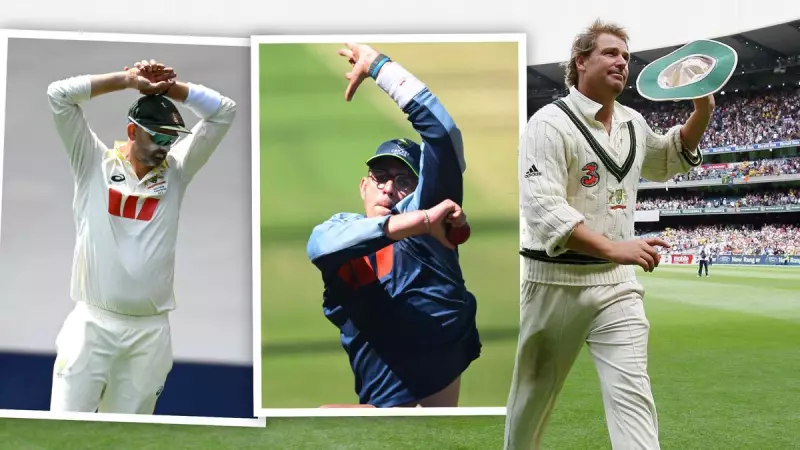
The recent Ashes series has thrown a harsh spotlight on a critical issue in Australian cricket: the worrying lack of depth in the spin bowling department. With veteran off-spinner Nathan Lyon injured for most of the summer, Australia's reliance on part-time tweakers has ignited a fierce debate about the development pathway for slow bowlers down under.
A Summer of Part-Timers and Patchwork Solutions
When Nathan Lyon went down with a serious calf injury during the second Test at Lord's, it created a void Australia struggled to fill. The selectors turned to young off-spinner Todd Murphy, who showed promise but is still in the early stages of his career. For the crucial final Test at The Oval, and again during the home summer against Pakistan and the West Indies, the team often opted for all-rounders like Travis Head, Marnus Labuschagne, and Steve Smith to bowl spin.
This patchwork solution highlighted a stark reality. While these batsmen are handy with the ball, they are not specialist, match-winning spinners in the mould of Lyon or the great Shane Warne. The strategy worked to a degree on supportive pitches, but it has raised serious questions about the system's ability to produce a ready-made successor to Lyon, who is now 36 years old.

Root Causes: Pitches and Pathways Under Scrutiny
Experts point to several factors contributing to the spin drought. The primary culprit is often cited as the Sheffield Shield pitches. Many first-class wickets in Australia are prepared to favour fast bowlers, offering pace, bounce, and seam movement from day one. This provides little incentive for captains to bowl their spinners for long, controlling spells, and denies aspiring tweakers the crucial experience of bowling long overs in competitive, multi-day cricket.
Furthermore, the pathway for young spinners is fraught with challenges. At the junior and club level, the focus frequently leans towards developing fast bowlers and aggressive batsmen. Talented young spinners can find themselves marginalised, lacking the mentorship and overs needed to hone their craft. The success of Lyon, who came through a non-traditional route, is seen as an exception rather than a product of a robust system.
Looking Ahead: A Call for Systemic Change
The conversation is now shifting towards what needs to be done. There are growing calls for Cricket Australia and state associations to mandate more spin-friendly conditions in the Sheffield Shield. This could involve preparing pitches that deteriorate and turn later in matches, forcing teams to rely more on their slow bowlers and providing them with a true test of their skill.
Investment in specialised coaching and development programs for spin bowlers is also seen as critical. Identifying talent early and providing them with the right technical guidance and mental conditioning could help bridge the gap. The performances of Todd Murphy and, to a lesser extent, Matthew Kuhnemann, offer some hope, but they are viewed as outliers in a landscape still dominated by pace.
The lean summer of spin has served as a loud wake-up call. While Australia's fast-bowling factory continues to produce world-class talent, the assembly line for spinners appears to have stalled. Addressing this imbalance is now one of the most pressing tasks for Australian cricket administrators if they wish to remain competitive in all conditions around the world, particularly on the turning tracks of the subcontinent.