AFL Overhauls Illicit Drugs Policy with New Hair Testing and Stricter Rules
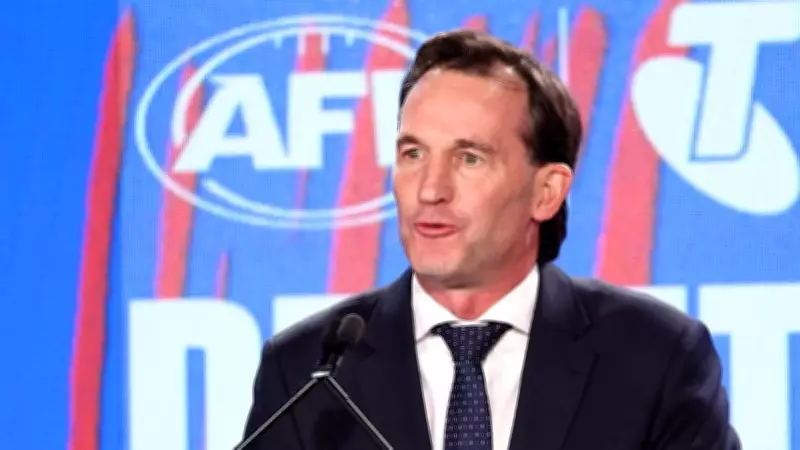
The Australian Football League (AFL) has officially discarded its contentious three-strike system for illicit drugs, introducing a revamped policy that mandates hair testing for targeted players. This significant crackdown means athletes who fail to meet the enhanced testing requirements and education protocols will be removed from the game, marking a major shift in the league's approach to substance abuse.
Inclusion of AFLW and New Healthcare Framework
For the first time since its establishment in 2017, the AFLW will be incorporated under this updated illicit drugs policy, ensuring uniform standards across both men's and women's competitions. Executive General Manager of Football Operations Laura Kane is spearheading the new healthcare system, where players submitting a positive sample will undergo more rigorous management and monitoring.
To maintain eligibility at the senior AFL or AFLW level, players must fully commit to the education program and testing measures, overseen by a panel of medical experts. Notably, club doctors will now be informed of players' identities, a departure from previous practices that kept this information confidential.

Criticism of the Old System and Advocacy for Change
Former AFL star Nick Riewoldt, a long-time critic of the three-strike policy, commented on the changes during a radio appearance. He highlighted the flaws in the old system, where self-reporting created loopholes and zero players tested positive for a third strike, suggesting widespread evasion.
"Under the old policy, it was the old 'three strikes' policy, which had become pretty outdated," Riewoldt said. "And when you've got zero players testing positive with three strikes, you know something's wrong, because we all know what's probably happening."
Details of the New Hair Testing Regime
The new policy shifts from urine testing, which detects substances only for a few days, to hair testing that provides long-range detection over months, depending on hair length. This method aims to offer a more comprehensive view of drug use patterns among players.
Once a player submits a positive hair test, they will be placed into a medical slipstream managed by the AFL's health system. A panel of experts will then assess the player's fitness to compete at the top level based on the regularity of positive tests and adherence to treatment plans.
Riewoldt's Cautious Optimism and Call for Clarity
While advocating for the overhaul, Riewoldt expressed reserved judgement until more details emerge, describing the initial announcement as "a little bit arbitrary." He challenged the notion that players voluntarily submit to drug testing, arguing that in reality, it's a requirement for employment in the league.
"AFL players saying they volunteer for the drug code, let's be honest, it's not volunteering if the alternative is unemployment," he stated. "The league has got to be strong here and say that it's a requirement."
Despite his concerns, Riewoldt praised the move as a proactive step to intervene early and help young athletes address harmful habits before they escalate into life-ruining addictions.